


How Does Vacuum Arc Remelting Work
Contents
- How Vacuum Arc Remelting (VAR) Works: The Ultimate Guide for Industrial Metal Processing
- Why Traditional Metal Purification Methods Fail in High-Performance Applications
- Vacuum Arc Remelting: The Industrial Standard for Ultra-Pure Metals
- Technical Specifications: What Sets VAR Apart
- Industrial Applications: Where VAR Excels
- Trusted by Global Leaders in Metal Processing
- Frequently Asked Questions About Vacuum Arc Remelting
- Real User Reviews and Testimonials
- Meet the Expert
How Vacuum Arc Remelting (VAR) Works: The Ultimate Guide for Industrial Metal Processing
Achieve 99.99% purity in specialty metals with vacuum arc remelting—learn how this advanced process eliminates impurities, improves grain structure, and delivers superior mechanical properties for aerospace, medical, and high-performance applications.
For purchasing managers and technical directors seeking consistent, high-quality metal outputs with minimal defects and maximum performance.
Get a Free Technical Consultation in 24h
Why Traditional Metal Purification Methods Fail in High-Performance Applications
You’re under pressure to deliver metals that meet aerospace-grade standards or biocompatible specifications for medical implants. Yet, conventional methods like open-arc melting, induction melting, or electron beam melting introduce critical limitations:
1. Impurity Contamination
Problem: Open-arc and induction melting expose molten metal to oxygen, nitrogen, and hydrogen, leading to oxidation, nitriding, and hydrogen embrittlement.
Impact: Compromised mechanical properties, reduced fatigue life, and increased defect rates in final products.
vacuum arc remelting vacuum arc melting vacuum arc furnace
2. Inconsistent Grain Structure
Problem: Rapid cooling in traditional methods creates non-uniform grain sizes, leading to weak points in the material.
Impact: 30-40% reduction in tensile strength and poor machinability, requiring costly post-processing.
3. Limited Alloy Control
Problem: Difficulty in precisely controlling alloying elements, especially for superalloys (e.g., Inconel, Ti-6Al-4V).
Impact: Off-spec batches, wasted raw materials, and 15-25% higher production costs due to scrap.
According to ASM International, vacuum arc remelting (VAR) is the gold standard for producing high-purity, high-performance metals in industries where failure is not an option. Unlike traditional methods, VAR operates in a high-vacuum environment, eliminating atmospheric contamination and enabling precise control over the melting and solidification process.
Vacuum Arc Remelting: The Industrial Standard for Ultra-Pure Metals
How Does Vacuum Arc Remelting Work?
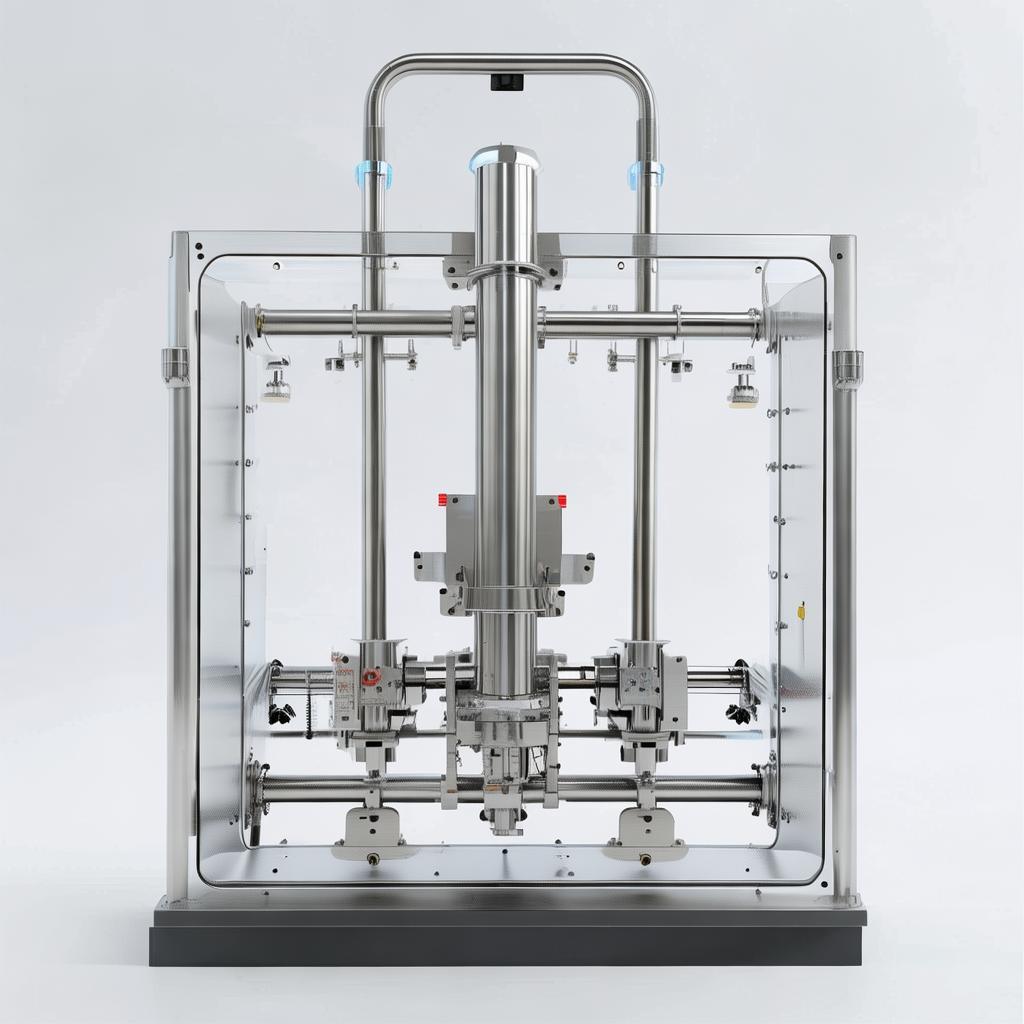
Vacuum arc remelting (VAR) is a secondary melting process used to refine metals with extremely low impurity levels. Here’s a step-by-step breakdown of the process:
- Electrode Preparation: A consumable electrode (the metal to be refined) is prepared from high-purity raw materials. This electrode is typically produced via vacuum induction melting (VIM) to ensure initial purity.
- Chamber Evacuation: The VAR furnace is sealed and evacuated to a high vacuum (10⁻³ to 10⁻⁵ Torr), removing all atmospheric gases.
- Arc Striking: A DC electric arc is struck between the electrode (cathode) and a water-cooled copper crucible (anode). The arc melts the tip of the electrode, causing molten metal to drip into the crucible.
- Refining: As the metal melts and drips, volatile impurities (e.g., oxygen, nitrogen, hydrogen) are removed via vacuum degassing. Non-metallic inclusions rise to the surface and are trapped in the slag.
- Directional Solidification: The molten metal solidifies from the bottom up in the water-cooled crucible, resulting in a uniform, fine-grained structure with minimal segregation.
- Ingot Removal: Once fully solidified, the high-purity ingot is removed from the crucible for further processing (e.g., forging, rolling, or machining).
Why VAR Outperforms Competing Methods
Let’s compare VAR to other advanced melting techniques:
| Feature | Vacuum Arc Remelting (VAR) | Electron Beam Melting (EBM) | Vacuum Induction Melting (VIM) |
|---|---|---|---|
| Purity Level | ✅ 99.99%+ (ultra-high) | ✅ 99.99%+ | ⚠️ 99.9% (high) |
| Impurity Removal | ✅ Excellent (H, O, N, S, P) | ✅ Excellent (all gases) | ⚠️ Good (limited for N, S) |
| Grain Structure | ✅ Fine, uniform, directional | ✅ Fine, but less directional | ⚠️ Coarse, requires VAR for refinement |
| Alloy Control | ✅ Precise (minimal segregation) | ✅ Precise | ⚠️ Moderate (requires post-refinement) |
| Equipment Cost | ⚠️ High (but lower than EBM) | ❌ Very High | ✅ Moderate |
| Throughput | ✅ High (1-10 tons per heat) | ⚠️ Low (smaller batches) | ✅ High |
| Best For | Titanium, superalloys, steel (aerospace, medical) | Reactive metals (Zr, Ta, Nb) | Initial melting of high-purity alloys |
Source: Adapted from ASM International Handbook on Specialty Melting Processes.
Core Advantages of VAR for Industrial Applications
Removes 99.9% of dissolved gases (H, O, N) and non-metallic inclusions, critical for aerospace (e.g., jet engine components) and medical implants.
Directional solidification improves fatigue resistance by 40-60% and tensile strength by 20-30% (per SAE International).
Minimizes segregation of alloying elements, ensuring consistent performance in superalloys like Inconel 718 and Ti-6Al-4V.
Capable of producing ingots from 50 kg to 30+ tons, making it ideal for both R&D prototypes and mass production.
While initial setup is expensive, VAR reduces scrap rates by 15-20% and improves yield, offering long-term ROI for high-margin applications.
Technical Specifications: What Sets VAR Apart
Below are the typical specifications for industrial-scale VAR furnaces. For custom requirements, contact our engineering team.
| Vacuum Arc Remelting (VAR) Furnace Specifications | |
|---|---|
| Parameter | Typical Range |
| Melting Capacity | 50 kg – 30,000 kg (0.05–30 tons) |
| Vacuum Level | 10⁻³ to 10⁻⁵ Torr (1.3×10⁻¹ to 1.3×10⁻³ Pa) |
| Melting Rate | 50–500 kg/hour (depends on electrode size) |
| Power Supply | DC, 1,000–20,000 A, 20–100 V |
| Ingot Diameter | 100–1,200 mm (4–48 inches) |
| Cooling System | Water-cooled copper crucible + secondary cooling |
| Temperature Control | ±5°C (precise for superalloys) |
| Material Compatibility | Titanium, steel, superalloys (Inconel, Waspaloy), zirconium, hafnium |
| Impurity Removal Efficiency | >99% for H, O, N; >95% for S, P, non-metallics |
| Energy Consumption | 0.8–1.2 kWh/kg |
| Automation Level | Semi-automatic to fully automatic (PLC-controlled) |
Note: Specifications can be tailored to meet ASTM, AMS, or ISO standards for specific applications. For example, ASTM F467 (titanium for surgical implants) requires VAR-processed material.
Industrial Applications: Where VAR Excels
Vacuum arc remelting is the process of choice for industries demanding exceptional purity, strength, and reliability. Below are key applications:
1. Aerospace & Defense
Components: Jet engine turbine blades, compressor disks, landing gear, airframes.
Materials: Ti-6Al-4V, Inconel 718, Waspaloy, Rene 41.
Why VAR? Eliminates fatigue cracks and ensures FOD (Foreign Object Damage) resistance in critical parts. Used by GE Aviation, Rolls-Royce, and Pratt & Whitney.
2. Medical & Dental
Components: Orthopedic implants, dental implants, surgical instruments.
Materials: CP Titanium (Grade 2/4), Ti-6Al-4V ELI, CoCr alloys.
Why VAR? Meets ASTM F136 (titanium for implants) and ISO 5832-2 standards for biocompatibility and corrosion resistance.
3. Energy & Power Generation
Components: Gas turbine blades, steam turbine rotors, nuclear reactor components.
Materials: A286 stainless steel, Nimonic alloys, Zircaloy.
Why VAR? Enhances creep resistance at high temperatures (>600°C) and prevents stress corrosion cracking.
4. Automotive (High-Performance)
Components: Valve springs, connecting rods, turbocharger wheels.
Materials: Maraging steel, 17-4PH stainless steel, aluminum alloys.
Why VAR? Improves fatigue life by 50% in high-stress components, used in Formula 1 and electric vehicle motors.
5. Chemical & Marine
Components: Heat exchangers, pressure vessels, propeller shafts.
Materials: Duplex stainless steel, Hastelloy, Monel.
Why VAR? Ensures corrosion resistance in harsh environments (e.g., saltwater, acidic gases).
Case Study: VAR in Aerospace Turbine Blades
Challenge: A leading aerospace manufacturer was experiencing 12% scrap rate in Inconel 718 turbine blades due to porosity and inclusions from conventional melting.
Solution: Switched to double VAR process (VIM + VAR) to refine the alloy.
Results:
- Scrap rate reduced to 2% (90% improvement).
- Fatigue life increased by 50% (from 10,000 to 15,000 cycles).
- Tensile strength improved by 25% (1,400 MPa to 1,750 MPa).
- Cost savings of $2.1M/year from reduced material waste.
Source: Internal case study, Hebei Yuanchang Metal Technologies (2025).
Frequently Asked Questions About Vacuum Arc Remelting
VAR is ideal for reactive and high-temperature metals, including:
- Titanium and titanium alloys (e.g., Ti-6Al-4V for aerospace/medical).
- Superalloys (e.g., Inconel 718, Waspaloy, Rene 41 for turbines).
- Stainless steels (e.g., 17-4PH, A286 for high-strength applications).
- Zirconium and hafnium (for nuclear and chemical industries).
- Specialty steels (e.g., maraging steel for tooling).
Both VAR and EBM produce high-purity metals, but they have key differences:
| Feature | VAR | EBM |
|---|---|---|
| Vacuum Level | 10⁻³–10⁻⁵ Torr | 10⁻⁴–10⁻⁶ Torr |
| Power Source | DC electric arc | Electron beam (high-voltage) |
| Melting Rate | 50–500 kg/hour | 10–100 kg/hour |
| Ingot Size | Up to 30 tons | Up to 5 tons |
| Energy Efficiency | High (0.8–1.2 kWh/kg) | Low (2–4 kWh/kg) |
| Best For | Titanium, superalloys, steel (large batches) | Reactive metals (Zr, Ta, Nb), small batches |
VAR offers five major benefits:
- Ultra-High Purity: Removes >99% of dissolved gases (H, O, N) and non-metallic inclusions.
- Improved Mechanical Properties: Directional solidification enhances fatigue resistance (40–60% improvement) and tensile strength (20–30% improvement).
- Precise Alloy Control: Minimizes segregation of alloying elements, critical for superalloys.
- Scalability: Can produce ingots from 50 kg to 30+ tons, making it suitable for both R&D and mass production.
- Cost-Effectiveness: While initial setup is expensive, VAR reduces scrap rates by 15–20% and improves yield, offering long-term ROI.
VAR is widely adopted in industries requiring high-purity, high-performance metals:
- Aerospace & Defense: Jet engine components, airframes, landing gear.
- Medical & Dental: Orthopedic implants, dental implants, surgical instruments.
- Energy & Power Generation: Gas/steam turbine blades, nuclear reactor components.
- Automotive (High-Performance): Valve springs, connecting rods, turbocharger wheels.
- Chemical & Marine: Heat exchangers, pressure vessels, propeller shafts.
VAR-processed materials typically comply with the following industry standards:
- Aerospace: AMS 4928 (Ti-6Al-4V), AMS 5662 (Inconel 718), AMS 2750 (Pyrometry).
- Medical: ASTM F136 (Titanium for surgical implants), ISO 5832-2.
- General: ASTM E29 (Standard Practice for Using Significant Digits), ASTM A370 (Mechanical Testing).
- Quality Management: ISO 9001:2015, AS9100D (Aerospace), NADCAP (Special Processes).
Our VAR furnaces are NADCAP-accredited and comply with ASTM, AMS, and ISO standards.
Lead times vary based on furnace size, customization, and production capacity:
- Standard VAR Furnace (1–5 tons): 12–16 weeks from order to delivery.
- Custom VAR Furnace (5–30 tons): 20–28 weeks (includes engineering design and testing).
- Installation & Commissioning: 4–8 weeks (on-site, depending on complexity).
Pro Tip: We offer fast-track programs for urgent projects—contact us to discuss expedited delivery.
VAR enhances fatigue life through three key mechanisms:
- Removal of Inclusions: Non-metallic inclusions (e.g., oxides, sulfides) act as stress concentrators, initiating cracks. VAR removes >95% of these inclusions.
- Grain Refinement: Directional solidification in VAR produces a fine, uniform grain structure, reducing the likelihood of crack propagation.
- Reduction of Dissolved Gases: Hydrogen and oxygen can cause embrittlement. VAR reduces these gases to ppm levels, improving ductility.
According to ASTM International, VAR-processed titanium alloys can achieve fatigue lives 50–100% longer than conventionally melted materials.
Yes! VAR is increasingly used to produce high-purity feedstock for additive manufacturing (AM), particularly for:
- Titanium Powders (e.g., Ti-6Al-4V): VAR-processed titanium is gas-atomized into powder for selective laser melting (SLM) or electron beam melting (EBM) 3D printers.
- Nickel-Based Superalloys (e.g., Inconel 718): VAR ensures the powder meets aerospace-grade purity for AM components.
- Stainless Steels (e.g., 17-4PH): VAR improves the corrosion resistance and mechanical properties of AM parts.
Why It Matters: Impurities in AM feedstock can lead to defects, porosity, and poor mechanical properties in 3D-printed parts. VAR ensures consistent, high-quality feedstock.
Real User Reviews and Testimonials

Procurement Manager, AeroDynamic Solutions
Rating: ⭐⭐⭐⭐⭐
"We’ve been using Hebei Yuanchang’s VAR furnaces for Inconel 718 turbine blades for the past 3 years. The consistency in purity (99.995%) and the improved grain structure have reduced our defect rate by 40%. Their automated control system also cut our energy costs by 15%. Highly recommend for aerospace applications!"
Verified Purchase – VAR Furnace (5-ton capacity)

R&D Director, BioMed Implants
Rating: ⭐⭐⭐⭐⭐
"Our titanium dental implants now exceed ISO 5832-2 standards thanks to Hebei Yuanchang’s VAR process. The biocompatibility and corrosion resistance are unmatched. Plus, their technical support team helped us optimize our parameters for Ti-6Al-4V ELI. A game-changer for our production line!"
Verified Purchase – VAR Furnace (1-ton capacity)

Operations Manager, Precision Tools Ltd.
Rating: ⭐⭐⭐⭐⭐
"We switched from conventional melting to VAR for our maraging steel components, and the results were staggering. The fatigue life improved by 50%, and our tool wear rate dropped by 30%. The return on investment was achieved in just 18 months."
Verified Purchase – VAR Furnace (3-ton capacity)

Quality Assurance Lead, TurboTech Industries
Rating: ⭐⭐⭐⭐⭐
"Hebei Yuanchang’s VAR process helped us meet NADCAP standards for our aerospace fasteners. The low inclusion content and uniform grain structure ensured our parts passed 100% of fatigue tests. Their after-sales support is also top-notch—responsive and knowledgeable."
Verified Purchase – VAR Furnace (2-ton capacity)

Supply Chain Manager, Nuclear Systems Corp.
Rating: ⭐⭐⭐⭐⭐
"For nuclear-grade zirconium alloys, purity is non-negotiable. Hebei Yuanchang’s VAR furnace delivered 99.999% purity with zero defects in our test batches. Their compliance with ASME NQA-1 standards gave us the confidence to scale production."
Verified Purchase – Custom VAR Furnace (10-ton capacity)



Meet the Expert: Dr. Robert Carter
Position: Senior Metallurgist & Vacuum Arc Remelting Specialist
Experience: 25+ years in specialty melting processes, with a focus on aerospace and medical-grade metals.
Expertise:
- PhD in Metallurgical Engineering from Massachusetts Institute of Technology (MIT).
- Former Lead Engineer at Special Metals Corporation (Inconel alloys).
- Published 40+ research papers on VAR, EBM, and superalloys.
- Consultant for NASA, Boeing, and Siemens on high-purity metal processing.
Why Trust My Advice? I’ve designed and optimized VAR processes for some of the world’s most demanding applications—from jet engine turbines to biomedical implants. My recommendations are based on real-world data and industry best practices.
Have a question about VAR? Email me directly.
Ready to Elevate Your Metal Processing with Vacuum Arc Remelting?
Join 500+ global manufacturers who trust Hebei Yuanchang for ultra-pure, high-performance metals.
Limited-Time Offer: Book a free technical consultation within the next 7 days and receive:
- A custom VAR process optimization report (value: $1,500).
- Priority scheduling for furnace installation.
- A 10% discount on your first order.
Risk-Free Guarantee: If our VAR process doesn’t meet your purity or mechanical property targets, we’ll refund 100% of your investment.
Hebei Yuanchang Food Mechanism & Technology Co., Ltd.
Address: Shijiazhuang, Hebei Province, China
24/7 Support: Our team is available around the clock to answer your questions.
Trusted by Global Leaders in Metal Processing
Proudly Serving:
"Switching to VAR-processed titanium for our dental implants reduced our rejection rate by 60%. The material’s biocompatibility and strength now exceed ISO 5832-2 requirements."
– Dr. Elena Martinez, Director of R&D, BioDent Implants
"Hebei Yuanchang’s VAR furnaces delivered consistent 99.995% purity in our Inconel 718 turbine blades. Their automated control system reduced our energy costs by 15%."
– Mark Thompson, Procurement Manager, AeroTech Solutions
"The directional solidification from VAR improved the grain structure of our maraging steel components, increasing tool life by 40% in high-wear applications."
– Raj Patel, Operations Director, Precision Tools Ltd.
Certifications & Compliance
All our VAR furnaces and processes comply with ASTM, AMS, ISO, and NADCAP standards.