

- Afrikaans
- Albanian
- Amharic
- Arabic
- Armenian
- Azerbaijani
- Basque
- Belarusian
- Bengali
- Bosnian
- Bulgarian
- Catalan
- Cebuano
- chinese_simplified
- chinese_traditional
- Corsican
- Croatian
- Czech
- Danish
- Dutch
- English
- Esperanto
- Estonian
- Finnish
- French
- Frisian
- Galician
- Georgian
- German
- Greek
- Gujarati
- haitian_creole
- hausa
- hawaiian
- Hebrew
- Hindi
- Miao
- Hungarian
- Icelandic
- igbo
- Indonesian
- irish
- Italian
- Japanese
- Javanese
- Kannada
- kazakh
- Khmer
- Rwandese
- Korean
- Kurdish
- Kyrgyz
- Lao
- Latin
- Latvian
- Lithuanian
- Luxembourgish
- Macedonian
- Malgashi
- Malay
- Malayalam
- Maltese
- Maori
- Marathi
- Mongolian
- Myanmar
- Nepali
- Norwegian
- Norwegian
- Occitan
- Pashto
- Persian
- Polish
- Portuguese
- Punjabi
- Romanian
- Russian
- Samoan
- scottish-gaelic
- Serbian
- Sesotho
- Shona
- Sindhi
- Sinhala
- Slovak
- Slovenian
- Somali
- Spanish
- Sundanese
- Swahili
- Swedish
- Tagalog
- Tajik
- Tamil
- Tatar
- Telugu
- Thai
- Turkish
- Turkmen
- Ukrainian
- Urdu
- Uighur
- Uzbek
- Vietnamese
- Welsh
- Bantu
- Yiddish
- Yoruba
- Zulu

Advancing Meat Processing Efficiency with Meat Vacuum Mixer, Meat Tumbler Mixer, and Vacuum Meat Mixer
In the modern food processing industry, efficiency, consistency, and product quality are essential for meeting consumer expectations and regulatory standards. Among the most critical stages in meat production is the mixing and marination process, where texture, flavor distribution, and protein extraction are determined. Equipment such as the meat vacuum mixer, meat tumbler mixer, and vacuum meat mixer has become indispensable for manufacturers seeking to optimize these processes. These machines are designed to improve product uniformity, enhance flavor absorption, and ensure hygienic production conditions across a wide range of meat products.
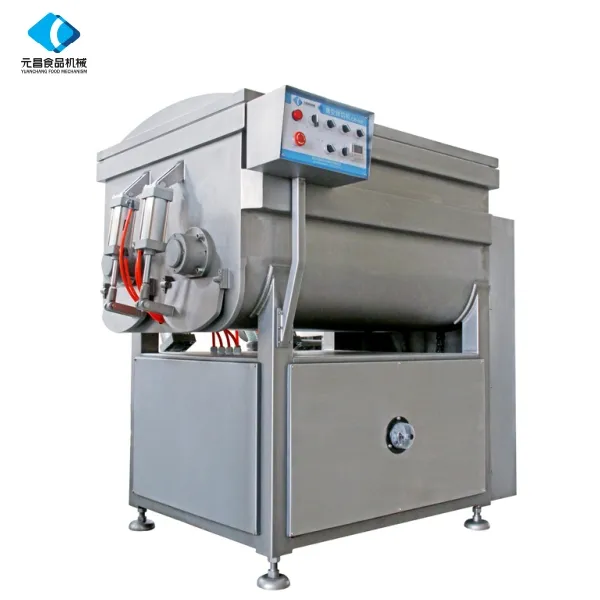
The Function and Benefits of the Meat Vacuum Mixer
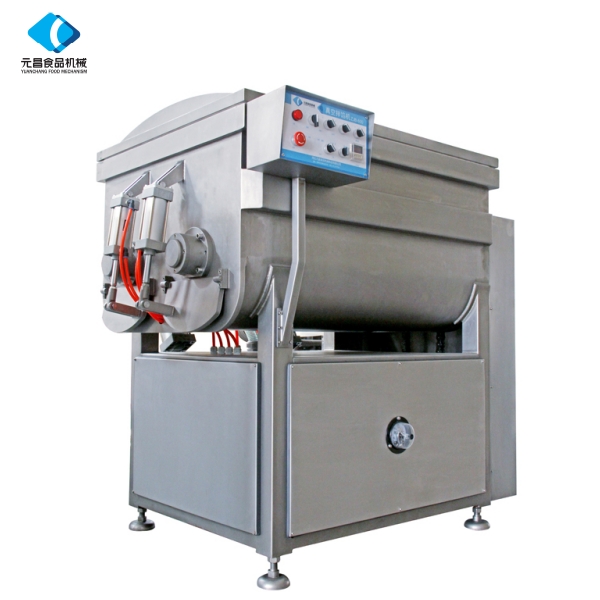
The meat vacuum mixer is a specialized piece of equipment used to blend meat with seasonings, additives, and other ingredients under vacuum conditions. Unlike conventional mixers, it removes air from the mixing chamber, creating an environment that significantly improves protein extraction and binding. This results in better texture, improved sliceability, and enhanced water retention in the final product.
One of the primary advantages of using a meat vacuum mixer is the uniform distribution of ingredients. In processed meat products such as sausages, patties, and nuggets, even mixing is crucial for maintaining consistent flavor and appearance. The vacuum environment ensures that spices, salts, and curing agents are thoroughly incorporated into the meat matrix without oxidation.
Additionally, the absence of air helps prevent the growth of aerobic bacteria and reduces the risk of product discoloration. This is particularly important for products that require extended shelf life or are distributed over long distances. By improving microbial stability, the meat vacuum mixer contributes to safer and more reliable food production.
From a structural perspective, vacuum mixing enhances the extraction of myofibrillar proteins, which act as natural binders in meat products. This leads to improved cohesion and elasticity, especially in emulsified products like hot dogs and bologna. As a result, manufacturers can achieve higher product yields and reduce the need for artificial binders.
Modern machines are often equipped with programmable controls, allowing operators to adjust mixing speed, time, and vacuum levels according to specific recipes. This level of control ensures repeatability and precision, which are essential for maintaining brand consistency in large-scale production.
Enhancing Marination and Texture with the Meat Tumbler Mixer
While mixing is essential, marination and tenderization are equally important in meat processing. The meat tumbler mixer is designed to address these needs by gently massaging meat products in a rotating drum. This process improves the absorption of marinades and enhances the overall texture of the meat.
A meat tumbler mixer works by lifting and dropping the meat pieces inside a rotating chamber, creating a mechanical action that opens up muscle fibers. This allows marinades, brines, and curing solutions to penetrate more deeply and evenly. The result is a more flavorful and tender product, whether it is fresh, cured, or ready-to-cook.
In many cases, tumblers are also operated under vacuum conditions, combining the benefits of both mixing and vacuum technology. This reduces oxidation, improves color retention, and enhances protein extraction. The tumbling action, combined with vacuum pressure, ensures that the marinade is absorbed quickly and efficiently, reducing processing time.
Another advantage of the meat tumbler mixer is its ability to improve product yield. By increasing water retention within the meat structure, it helps reduce cooking loss and enhances juiciness. This is particularly valuable in products such as ham, bacon, and marinated poultry, where moisture content directly impacts consumer satisfaction.
Furthermore, tumblers are highly versatile and can handle a wide range of products, from small meat cuts to large whole-muscle items. Adjustable rotation speeds and programmable cycles allow manufacturers to tailor the process to different product requirements. This flexibility makes the meat tumbler mixer an essential tool for both industrial producers and medium-sized processing facilities.
The Integrated Role of the Vacuum Meat Mixer in Modern Production Lines
The vacuum meat mixer represents a broader category of equipment that combines the principles of vacuum processing with advanced mixing technologies. It is widely used in various stages of meat production, from initial blending to final product preparation. By integrating vacuum conditions into the mixing process, this machine ensures optimal product quality and process efficiency.
One of the key roles of the vacuum meat mixer is to improve the functional properties of meat proteins. Under vacuum, the mixing process enhances protein solubility and binding क्षमता, leading to better emulsion stability and texture. This is particularly important for processed products that require a uniform structure and consistent mouthfeel.
In addition to improving product quality, the vacuum meat mixer also contributes to operational efficiency. Its ability to process large volumes of meat in a controlled environment reduces the need for multiple processing steps. This not only saves time but also minimizes the risk of contamination by limiting product handling.
Another important aspect is energy and cost efficiency. Modern vacuum mixers are designed with advanced sealing systems and energy-saving motors, ensuring optimal performance with reduced power consumption. Easy-to-clean designs and durable materials such as stainless steel further enhance their suitability for continuous industrial use.
The vacuum meat mixer also supports automation and digital integration. Many models can be connected to centralized control systems, enabling real-time monitoring and data analysis. This allows manufacturers to optimize production parameters, maintain quality standards, and quickly respond to any deviations in the process.
In today’s competitive food industry, adaptability is crucial. The vacuum meat mixer can handle a wide variety of formulations, including plant-based meat alternatives, which are gaining popularity among consumers. This versatility ensures that manufacturers can stay ahead of market trends while maintaining high production standards.
The adoption of advanced equipment such as the meat vacuum mixer, meat tumbler mixer, and vacuum meat mixer has revolutionized the meat processing industry. These machines not only enhance efficiency and productivity but also play a critical role in ensuring product quality, safety, and consistency.
By leveraging vacuum technology and innovative mixing techniques, manufacturers can achieve superior texture, flavor distribution, and shelf life in their products. As consumer demands continue to evolve and food safety regulations become more stringent, the importance of these machines will only grow.
Investing in high-quality mixing and tumbling equipment is no longer optional—it is a strategic necessity for any meat processing operation aiming to remain competitive in the global market.
-
The Role of Meat Filling Machine and Salami Filling Machine in Modern Food ProcessingNewsApr.22,2026
-
The Role of Vacuum Bowl Chopper and Silent Cutter Machine in Modern Food ProcessingNewsApr.22,2026
-
Meat Dicing Technology in Modern Food Processing IndustryNewsApr.22,2026
-
Industrial Smokehouse Equipment in Modern Food ProcessingNewsApr.22,2026
-
The Role of Smoke House Technology in Modern Meat Processing IndustryNewsApr.08,2026