

- Afrikaans
- Albanian
- Amharic
- Arabic
- Armenian
- Azerbaijani
- Basque
- Belarusian
- Bengali
- Bosnian
- Bulgarian
- Catalan
- Cebuano
- chinese_simplified
- chinese_traditional
- Corsican
- Croatian
- Czech
- Danish
- Dutch
- English
- Esperanto
- Estonian
- Finnish
- French
- Frisian
- Galician
- Georgian
- German
- Greek
- Gujarati
- haitian_creole
- hausa
- hawaiian
- Hebrew
- Hindi
- Miao
- Hungarian
- Icelandic
- igbo
- Indonesian
- irish
- Italian
- Japanese
- Javanese
- Kannada
- kazakh
- Khmer
- Rwandese
- Korean
- Kurdish
- Kyrgyz
- Lao
- Latin
- Latvian
- Lithuanian
- Luxembourgish
- Macedonian
- Malgashi
- Malay
- Malayalam
- Maltese
- Maori
- Marathi
- Mongolian
- Myanmar
- Nepali
- Norwegian
- Norwegian
- Occitan
- Pashto
- Persian
- Polish
- Portuguese
- Punjabi
- Romanian
- Russian
- Samoan
- scottish-gaelic
- Serbian
- Sesotho
- Shona
- Sindhi
- Sinhala
- Slovak
- Slovenian
- Somali
- Spanish
- Sundanese
- Swahili
- Swedish
- Tagalog
- Tajik
- Tamil
- Tatar
- Telugu
- Thai
- Turkish
- Turkmen
- Ukrainian
- Urdu
- Uighur
- Uzbek
- Vietnamese
- Welsh
- Bantu
- Yiddish
- Yoruba
- Zulu

The Role of Meat Filling Machine and Salami Filling Machine in Modern Food Processing
The global food industry has undergone a dramatic transformation over the past few decades, driven by automation, hygiene standards, and increasing consumer demand for consistent quality. Among the many innovations shaping this sector, the meat filling machine and salami filling machine stand out as essential equipment in the processing and production of meat-based products. These machines not only improve efficiency but also ensure product uniformity, safety, and scalability for manufacturers of all sizes.
The Importance of Automation in Meat Processing
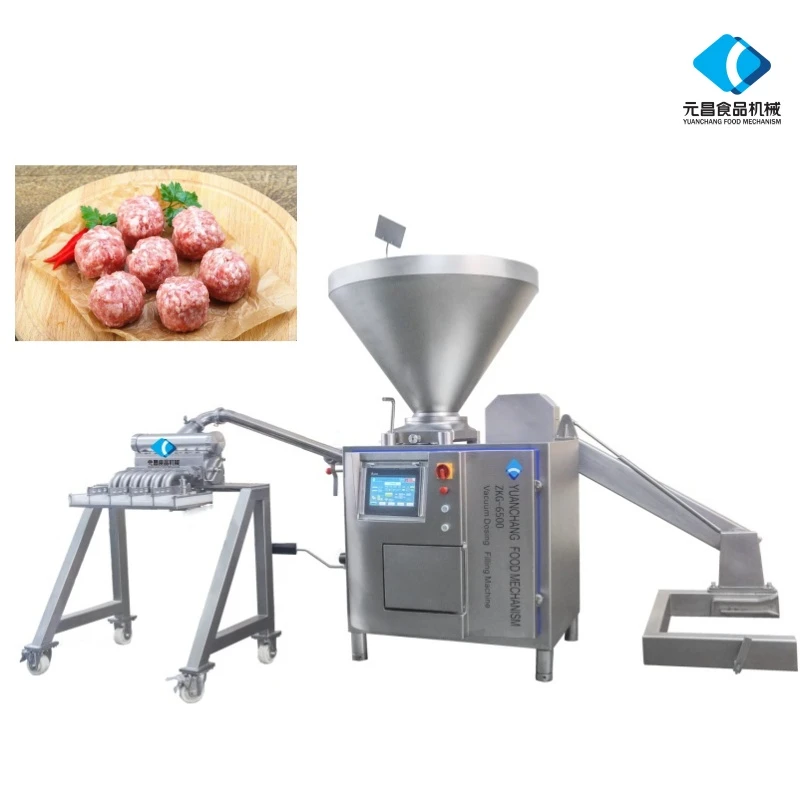
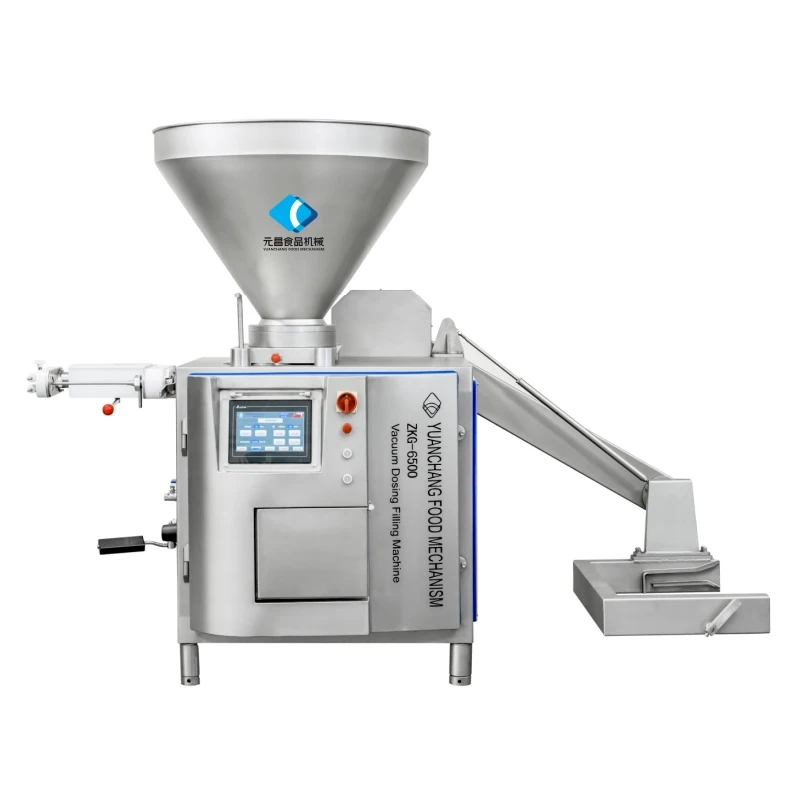
Automation has become a cornerstone of modern food processing, especially in the meat industry where precision, hygiene, and speed are critical. A meat filling machine plays a vital role in streamlining production by accurately portioning minced or emulsified meat into casings or containers. This eliminates the inconsistencies associated with manual filling and significantly reduces labor costs.
In industrial environments, consistency is not just about appearance—it directly impacts cooking performance, packaging efficiency, and customer satisfaction. By using a meat filling machine manufacturers can achieve uniform weight and density across thousands of units, ensuring that each product meets regulatory standards and consumer expectations.
Another key benefit is hygiene. Advanced machines are typically constructed from stainless steel and designed for easy cleaning, minimizing contamination risks. Many models are equipped with vacuum systems that remove air pockets during filling, improving product texture and extending shelf life. This is especially important in processed meats, where oxidation and microbial growth must be carefully controlled.
Moreover, automation enhances traceability and quality control. Modern systems often integrate with digital monitoring tools, allowing operators to track production data, detect anomalies, and maintain compliance with food safety regulations such as HACCP and ISO standards.
Specialized Applications: The Role of the Salami Filling Machine
While general-purpose equipment is useful, specialized machinery like the salami filling machine is crucial for producing traditional and fermented meat products. Salami production requires a unique combination of precision and care, as factors like filling pressure, casing integrity, and air removal directly affect fermentation and curing outcomes.
A salami filling machine is specifically engineered to handle thicker, coarser meat mixtures while maintaining the structural integrity of natural or synthetic casings. Unlike standard fillers, these machines often operate at lower speeds with higher control over pressure, preventing casing breakage and ensuring a consistent fill.
One of the defining features of a salami filling machine is its ability to work seamlessly with clipping or tying systems. This allows for continuous production of linked sausages or individually portioned salami units. The result is not only higher efficiency but also improved product presentation, which is critical in retail markets.
Additionally, vacuum filling technology is commonly integrated into these machines to eliminate trapped air. This is particularly important for salami, as air pockets can lead to spoilage or uneven fermentation. By ensuring a dense and uniform fill, the salami filling machine helps maintain product quality throughout the aging process.
Temperature control is another important consideration. Many advanced machines are designed to operate under controlled conditions to prevent fat smearing and preserve the texture of the meat mixture. This level of precision is essential for producing high-quality salami that meets both traditional standards and modern consumer expectations.
Enhancing Efficiency and Product Quality in Food Manufacturing
The integration of both the meat filling machine and salami filling machine into production lines offers significant advantages in terms of efficiency, scalability, and product quality. These machines enable manufacturers to meet growing market demand while maintaining strict quality standards.
From a productivity standpoint, automated filling systems can operate continuously with minimal downtime, significantly increasing output compared to manual methods. This is particularly beneficial for large-scale operations supplying supermarkets, restaurants, and export markets. At the same time, smaller producers can benefit from compact models that offer the same level of precision on a reduced scale.
Quality consistency is another major advantage. By standardizing the filling process, these machines ensure that each product has the same weight, shape, and texture. This not only enhances brand reliability but also reduces waste caused by overfilling or product defects.
Furthermore, modern machines are highly adaptable. They can handle a wide range of formulations, from fine emulsions used in hot dogs to coarse blends for artisanal sausages and salami. This flexibility allows manufacturers to diversify their product lines without investing in entirely new systems.
Energy efficiency and sustainability are also becoming increasingly important in food processing. Many newer models are designed to consume less power and minimize material waste, aligning with global efforts to reduce environmental impact. Easy maintenance and long service life further contribute to cost savings over time.
In conclusion, the meat filling machine and salami filling machine are indispensable tools in the modern food processing industry. They not only enhance operational efficiency but also ensure high standards of hygiene, consistency, and product quality. As consumer demand continues to evolve, these machines will remain at the forefront of innovation, enabling producers to deliver safe, delicious, and reliable meat products to markets around the world.
-
Advancing Meat Processing Efficiency with Meat Vacuum Mixer, Meat Tumbler Mixer, and Vacuum Meat MixerNewsApr.22,2026
-
The Role of Vacuum Bowl Chopper and Silent Cutter Machine in Modern Food ProcessingNewsApr.22,2026
-
Meat Dicing Technology in Modern Food Processing IndustryNewsApr.22,2026
-
Industrial Smokehouse Equipment in Modern Food ProcessingNewsApr.22,2026
-
The Role of Smoke House Technology in Modern Meat Processing IndustryNewsApr.08,2026