Wika Vacuum Pressure Gauge
Precision Vacuum Pressure Gauges: Ensuring Accuracy in Critical Industrial Processes
For demanding applications where precise vacuum measurement is non-negotiable, selecting the right gauge is paramount. Discover how advanced vacuum pressure gauges deliver reliability, durability, and actionable data for your operations.


Table of Contents
- Understanding Vacuum Pressure Gauges
- Challenges in Vacuum Measurement
- Key Advantages of Precision Gauges
- Critical Application Areas
- Technical Specifications & Selection
- Choosing a Reliable Supplier
- Our Manufacturing Strength
- Quality Assurance & Certifications
- What Our Clients Say
- Frequently Asked Questions
- Get in Touch for a Consultation
Understanding the Crucial Role of Vacuum Pressure Gauges
In the intricate world of industrial manufacturing and processing, maintaining precise atmospheric conditions is often the bedrock of product quality, operational efficiency, and safety. Vacuum pressure, specifically, plays a pivotal role across a vast spectrum of applications, from food packaging and chemical synthesis to scientific research and medical device sterilization. When we talk about measuring this critical parameter, we're not just looking at a dial; we're looking at a vital indicator that can dictate the success or failure of an entire production run. A reliable vacuum pressure gauge isn't merely a component; it's a guardian of process integrity.
The demands placed on vacuum measurement systems are significant. They often operate in environments that are corrosive, subject to vibration, or require sterile conditions. The gauge itself must be robust enough to withstand these challenges while maintaining an exceptional level of accuracy over extended periods. This is where the technology behind advanced vacuum pressure gauges truly shines. We're seeing a continuous evolution driven by the need for higher precision, better durability, and enhanced data integration capabilities. For instance, in the meat processing equipment market, precise vacuum control is essential for achieving optimal shelf life in packaging, directly impacting product freshness and reducing spoilage. Similarly, in industries utilizing vacuum for material drying or degassing, even minor fluctuations can compromise the end product's integrity.
Procurement managers and engineering teams are constantly navigating the complexities of selecting equipment that not only meets immediate technical requirements but also offers long-term value and reliability. The 'Fit For Now (2026)' imperative means looking beyond current needs to anticipate future operational demands and technological advancements. This includes considering factors like recalibration intervals, material compatibility with process media, and the availability of robust support and spare parts. An improperly specified or failing vacuum gauge can lead to costly product recalls, production downtime, and potential safety hazards. The operational knowledge gained over decades of manufacturing, as we have at Hebei Yuanchang Food Mechanism & Technology Co., Ltd., highlights how a seemingly small component can have a disproportionately large impact on overall plant performance.
The global market for related equipment, such as meat processing machinery, underscores the scale of these operational needs. Market reports indicate a substantial and growing demand, with projections suggesting the global meat processing equipment market was valued at over USD 11 billion in 2025 and is expected to climb significantly by 2034. This growth is fueled by increasing demand for processed meats, automation for hygiene and efficiency, and stricter food safety standards. Crucially, many of these processes rely on vacuum technology. For example, vacuum tumbling and massaging equipment, vital for meat ripening and tenderizing, operate within controlled atmospheric conditions. The filling and molding processes for sausages and formed products also benefit immensely from precise vacuum control to ensure product consistency and eject air effectively.
When evaluating vacuum pressure gauges, it's not just about the advertised accuracy. We need to consider the actual operating conditions. Will the gauge be exposed to extreme temperatures? Are there aggressive chemicals or vapors present? Is the mounting location prone to vibration? These environmental factors significantly influence the lifespan and performance of the instrument. A gauge that performs flawlessly in a controlled lab setting might falter quickly on a factory floor without proper consideration for its build and protection. This is where our 40 years of experience, since 1986, in integrating R&D, production, and sales of sophisticated machinery comes into play. We understand the real-world application of these components and the critical need for robust, reliable solutions.
Furthermore, the advent of Industry 4.0 and the increasing interconnectedness of industrial systems mean that vacuum gauges are no longer isolated instruments. Many modern systems require gauges with integrated digital outputs, allowing for real-time data logging, remote monitoring, and seamless integration into SCADA or PLC systems. This capability is transforming how processes are managed, enabling predictive maintenance and finer control over operations. For businesses operating across international borders, ensuring that the chosen gauges meet global standards and are supported by a global supply chain is also a key consideration. This includes understanding CE marking requirements for Europe or other regional compliance standards.
The complexity of vacuum ranges also requires careful specification. From deep vacuum applications, often measured in Pascals (Pa) or millibar (mbar), to lower vacuum levels for simpler packaging tasks, the appropriate range and measurement technology are critical. Selecting a gauge that operates at the extreme ends of its intended range can lead to reduced accuracy and premature wear. It's about finding that sweet spot where the gauge is operating comfortably within its optimal performance band. This level of detail is what sets apart a truly informed procurement decision from a generic purchase. The insights provided by Grand View Research on the meat processing equipment market, highlighting segments like filling & stuffing and massaging for ripening, directly correlate with applications where vacuum control is fundamental for product quality.
Our approach at Hebei Yuanchang is rooted in providing not just machinery, but complete solutions. This extends to the critical ancillary components like vacuum pressure gauges. We understand that while they might seem secondary to the main processing lines, their failure can bring everything to a halt. Therefore, we are committed to supplying gauges that meet the highest standards of performance and durability. The global market reports from sources like Skyquestt emphasize the growing role of advanced technologies in processing, reinforcing the need for accurate and reliable instrumentation.
This page is dedicated to exploring the nuances of vacuum pressure gauges, their applications, the challenges they overcome, and how to select the right equipment for your specific industrial needs. We aim to provide practical, operationally relevant information that empowers your decision-making process, drawing on our extensive experience in manufacturing and international trade.
Navigating the Pitfalls: Common Challenges in Vacuum Measurement
Operating with vacuum systems presents a unique set of challenges that can impact process stability, product quality, and equipment longevity. Recognizing these common pain points is the first step toward selecting a gauge that can reliably overcome them.
- Inaccurate Readings: This is the most critical failure. Drift, calibration issues, or a gauge not suited for the specific vacuum range (e.g., using a positive pressure gauge in a vacuum system) leads to flawed data. This can result in over-processing, under-processing, or even complete product spoilage. Imagine a batch of delicate pharmaceuticals being sterilized; a slight over-pressure during the vacuum phase could render the entire batch useless.
- Environmental Degradation: Many industrial processes involve corrosive chemicals, high humidity, extreme temperatures, or significant vibration. Standard gauges can corrode, fog up, or experience mechanical damage, leading to erratic readings or outright failure. This is particularly prevalent in chemical processing plants or deep-fryer applications where oil vapors are present.
- Media Compatibility Issues: The medium being evacuated (e.g., aggressive gases, fine particulates, or viscous liquids) can contaminate or damage standard gauge components. Selecting a gauge with appropriate wetted parts is essential to prevent premature wear and ensure measurement accuracy. For example, certain reactive gases can rapidly degrade standard brass or stainless steel components.
- Lack of Durability and Longevity: Frequent replacements due to mechanical shock, continuous vibration, or material fatigue are costly and disruptive. Investing in a rugged gauge designed for industrial environments means fewer maintenance interventions and a more stable process over time. This is where robust construction and shock-resistant designs become indispensable.
- Difficulties in Integration and Data Access: Legacy analog gauges can be hard to integrate into modern control systems for real-time monitoring or data logging. This lack of visibility prevents proactive adjustments and thorough process analysis, hindering efforts towards automation and optimization.
- Oversimplified Selection Processes: Many buyers opt for the cheapest available gauge without fully understanding its limitations or the specific demands of their application. This often leads to a "fit for a short while" solution rather than a long-term, reliable investment. The market reports, such as those from IMARC Group on meat processing equipment, often highlight the need for specialized, robust machinery; the same applies to critical measurement instruments.
- Calibration and Recalibration Burden: Gauges that require frequent, complex recalibration increase operational overhead and downtime. Understanding the stability and accuracy retention of a gauge is crucial for long-term cost-effectiveness. Some precision instruments boast extended recalibration intervals, significantly reducing this burden.
Addressing these challenges head-on ensures that your vacuum measurement strategy supports, rather than hinders, your operational goals. Our goal is to provide solutions that mitigate these risks, backed by years of manufacturing and export experience.
The Advantage: Why Choose High-Performance Vacuum Pressure Gauges
Investing in a superior vacuum pressure gauge isn't just about meeting a specification; it's about gaining tangible operational benefits that enhance your entire process. Our focus is on delivering precision instruments that offer:
Uncompromising Accuracy & Reliability
Achieve repeatable, precise vacuum readings essential for sensitive processes. Advanced Bourdon tubes, diaphragm seals, and sensor technologies ensure minimal deviation, even under fluctuating conditions. This translates directly into consistent product quality and reduced waste.
Exceptional Durability & Robustness
Constructed with high-grade stainless steel, shatterproof lenses, and robust sealing, these gauges are built to withstand harsh industrial environments, vibrations, and corrosive media. They are designed for longevity, minimizing downtime and replacement costs.
Broad Application Versatility
Available in a wide range of vacuum scales (from high vacuum to moderate vacuum), with various connection types and materials, our gauges can be specified for nearly any application, ensuring optimal fit and performance.
Enhanced Process Control
Digital models offer seamless integration with PLC and SCADA systems, providing real-time data for precise process management, automated adjustments, and historical trend analysis, crucial for quality assurance and efficiency gains.
Cost-Effectiveness Over Lifecycle
While initial investment may be higher, the superior durability, reduced maintenance, fewer calibration requirements, and minimized risk of process failure lead to a significantly lower total cost of ownership compared to less robust alternatives.
Compliance and Safety Assurance
Adherence to international standards ensures that your operations meet regulatory requirements, safeguarding both your personnel and your products. This is non-negotiable in critical sectors like pharmaceuticals and food processing.
These advantages translate directly into improved operational uptime, higher product yields, and a stronger competitive edge. Our commitment is to deliver instruments that embody these benefits, ensuring your processes run smoothly and efficiently.
Where Precision Matters: Key Application Areas for Vacuum Gauges
The utility of accurate vacuum measurement spans numerous industries. Understanding these applications helps in appreciating the critical role these gauges play:
Food & Beverage Processing
Essential for vacuum packaging to extend shelf life, vacuum infusion for flavor enhancement, degassing of liquids, and in equipment for ripening processes like vacuum tumbling. Reports highlight the growth in processed meats, directly impacting the demand for packaging solutions where vacuum is key.
Pharmaceutical & Medical
Critical for sterilization processes (autoclaves), freeze-drying (lyophilization), vacuum filtration, and in the manufacturing of sensitive medical devices where precise atmospheric control is vital for product efficacy and sterility.
Chemical & Petrochemical
Used in vacuum distillation, solvent recovery, degassing of liquids, inert atmosphere applications, and in handling reactive or volatile chemicals where containment and controlled pressure are paramount. Media compatibility is a major consideration here.
Electronics Manufacturing
Vital for vacuum potting, epoxy curing, outgassing of components, and in cleanroom environments to maintain precise atmospheric conditions during sensitive manufacturing steps.
Research & Development
Indispensable in laboratory settings for vacuum chambers, fume hoods, vacuum pumps, and various experimental setups requiring controlled low-pressure environments.
Aerospace & Automotive
Used in vacuum testing of components, vacuum brazing, and in the manufacturing of specialized materials and parts where vacuum conditions are critical for quality and performance.
The breadth of these applications underscores the universal need for reliable vacuum measurement. Our expertise in manufacturing allows us to cater to these diverse requirements with high-quality, dependable instrumentation.
Technical Specifications: Selecting the Right Gauge for Your Needs
Choosing the correct vacuum pressure gauge involves a careful consideration of several technical parameters. Here’s a breakdown of key specifications to evaluate:
| Specification | Considerations | Example Application/Impact |
|---|---|---|
| Vacuum Range | Ensure the gauge's scale covers your typical operating pressure. Common ranges include -1 to 0 bar, 0 to -1 bar, or deep vacuum scales in mbar/Torr/Pa. | For general vacuum packaging: -1 to 0 bar. For industrial drying or high vacuum systems: 10-3 mbar or lower might be required. An incorrectly scaled gauge can lead to poor resolution or damage. |
| Accuracy Class | Indicates the maximum permissible error. Standard industrial accuracy is often ±1.0% or ±1.6% of full scale. Higher precision models offer ±0.25% or better. | Critical for pharmaceutical sterilization or delicate chemical reactions where minor pressure deviations can ruin batches. More accurate gauges are often more expensive but reduce process risk. |
| Connection Type & Size | Common connections include G 1/4", NPT 1/2", etc. Ensure compatibility with your existing piping or equipment ports. | A mismatch can lead to leaks, requiring adapters and potentially compromising the seal integrity. |
| Wetted Parts Material | Materials that come into contact with the process medium (e.g., stainless steel 316L, brass, Hastelloy). Crucial for corrosive or aggressive media. | Using brass with highly corrosive acids will lead to rapid failure. Stainless steel 316L is common for general industrial use, while Hastelloy offers superior chemical resistance. |
| Case & Lens Material | Stainless steel cases offer better durability and corrosion resistance than painted steel. Shatterproof lenses (e.g., safety glass, polycarbonate) are vital for operator safety. | Environments with frequent washdowns or risk of impact benefit from robust stainless steel cases and safety glass. |
| Ingress Protection (IP) Rating | Indicates resistance to dust and water. Common ratings are IP54 (dust protected, splash resistant) to IP67 (dust tight, immersion resistant). | Gauges used in wash-down areas or outdoor applications require higher IP ratings to prevent internal damage. |
| Operating Temperature Range | Specifies the ambient and media temperatures the gauge can withstand without performance degradation. | Proximity to hot pipes or cryogenic applications necessitates gauges with appropriate temperature tolerance. |
| Diaphragm Seal (Optional) | Used to isolate the gauge from corrosive, viscous, or crystallizing media. Requires careful selection of seal material and fill fluid. | Essential for applications involving hot tar, sticky food products, or highly corrosive chemicals that would otherwise damage the gauge's internal mechanism. |
mechanical vacuum gauge vacuum pressure transmitter convection vacuum gauge
Proper specification is crucial. If you're unsure, consulting with our technical team can save considerable time and prevent costly errors. We have the experience to guide you through these choices.
Procurement Smart: Evaluating Potential Vacuum Gauge Suppliers
Sourcing industrial equipment demands more than just comparing prices. When selecting a supplier for vacuum pressure gauges, consider these critical factors to ensure you get a reliable partner and a quality product:
- Manufacturing Expertise & Track Record: Look for suppliers with a proven history in industrial instrumentation. Decades of experience, like our 40 years at Hebei Yuanchang (since 1986), signify deep understanding of manufacturing processes and product reliability.
- Quality Control & Certifications: Does the supplier adhere to international quality standards like ISO 9001? Do their products meet relevant industry certifications (e.g., CE for European markets)? Certifications are tangible proof of their commitment to quality. We proudly display our
 ISO certifications.
 - Technical Support & Engineering Assistance: Can they offer pre-sales technical advice and post-sales support? A supplier that understands your application and can help troubleshoot issues is invaluable. We offer direct consultation with our engineers.
- OEM/ODM Capabilities: If you have specific customization needs, can the supplier adapt their designs or manufacture to your specifications? Our advanced CNC machining centers allow us to produce high-standard, non-standard components.
- Lead Times & Logistics: Understand their production capacity and typical delivery timelines. Reliable logistics are crucial for international trade, ensuring timely delivery without unexpected delays. We manage our production schedule and export logistics meticulously.
- After-Sales Service & Warranty: What warranty do they offer? How accessible are spare parts and repair services? A traceable after-sales management system, like ours, ensures peace of mind.
- Reputation & Transparency: Seek testimonials, client reviews, and inquire about their export experience. A transparent supplier is more likely to be a trustworthy partner.
Choosing a partner like Hebei Yuanchang means opting for a supplier deeply invested in the success of your operations, not just the sale of a product.
Behind the Gauge: Our Manufacturing Prowess
At Hebei Yuanchang Food Mechanism & Technology Co., Ltd., our commitment to quality and precision in every component, including vacuum pressure gauges, stems from our robust manufacturing infrastructure and 40 years of industry experience.
Extensive Facility & Workforce
Our 14,000 square meter facility houses a dedicated team of 80-100 skilled professionals, integrating R&D, production, and sales for comprehensive quality control.
State-of-the-Art Machining Workshop
Equipped with over 20 advanced processing machines, including lathes, milling machines, grinders, and wire cutting equipment, we have the capability to produce highly precise components.
Japanese CNC Machining Centers
Since 2012, our investment in 8 Japanese Mazak CNC machining centers enables us to tackle complex, high-volume, and non-standard component production with exceptional accuracy.
Independent High-Precision Part Production
This in-house capability ensures that critical components for our vacuum gauges meet stringent standards and are readily available, supported by our traceable after-sales system.

Our manufacturing depth means we control quality from raw material to finished product, offering you unparalleled reliability and customization options. This is essential when supplying critical components for international trade.
Commitment to Quality: Our Certifications
We understand that trust in industrial equipment is built on verifiable quality. Our commitment to international standards is reflected in our certifications:
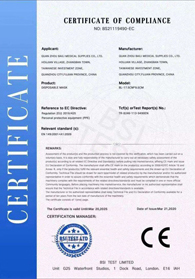

These certifications, including our adherence to ISO 9001 for quality management and CE marking for compliance with European Union standards, are not just badges; they represent rigorous processes and quality assurance protocols embedded in our manufacturing operations. For export markets, compliance is paramount. We ensure our vacuum pressure gauges meet or exceed the necessary regulatory requirements for international trade.
Trusted by Industry Professionals: Client Testimonials
"We recently integrated their vacuum gauges into our packaging line for processed meats. The consistency in readings has been exceptional, leading to fewer seal failures and extended product shelf life. Delivery was prompt, which is crucial for our production schedules."

"Our research lab requires highly accurate vacuum levels for experimental setups. The gauges sourced from Hebei Yuanchang have proven very reliable and robust, even with occasional exposure to laboratory solvents. Their technical team provided excellent guidance on selecting the right model."

"We needed a durable gauge for a vacuum degassing application in our chemical plant. We received a custom-spec gauge within a reasonable lead time that has performed flawlessly for over a year in a corrosive environment. The quality of materials and construction is evident."

"The precision and reliability of these gauges have significantly improved our batch consistency in product ripening processes. We've reduced rework rates and are confident in our process control thanks to accurate vacuum monitoring."

Your Questions Answered: FAQs on Vacuum Pressure Gauges
A: The range should comfortably encompass your typical operating vacuum levels, with a bit of buffer. For example, if your process usually operates at -0.8 bar, a gauge with a range of -1 to 0 bar is suitable. Avoid gauges operating at the extreme ends of their scale for prolonged periods, as this can affect accuracy and longevity.
A: Gauge vacuum measures pressure relative to atmospheric pressure (so 0 gauge vacuum means atmospheric pressure, and a full vacuum is -1 bar). Absolute vacuum measures pressure relative to a perfect vacuum (absolute zero pressure). Most industrial vacuum gauges are "gauge" vacuum.
A: Yes, many of our gauges feature stainless steel wetted parts and can be specified with FDA-compliant seals or diaphragm materials, making them suitable for food and beverage processing. Always specify your application requirements.
A: Routine checks for damage, ensuring the lens is clear, and periodic calibration are standard. High-quality gauges designed for specific environments require less frequent maintenance. Our manufacturing expertise focuses on minimizing maintenance needs.
A: Absolutely. Our advanced CNC capabilities allow us to customize gauges with specific dial markings, connection types, or other specifications to meet your OEM or ODM requirements. We have extensive experience in custom solutions for international clients.
A: Lead times vary based on order volume and customization. Standard models usually ship within 7-14 business days. For custom orders, we provide an estimated lead time during the quotation process. Our robust production planning aims for efficiency.
Ready to Optimize Your Vacuum Measurement?
Partner with Hebei Yuanchang for reliable, high-performance vacuum pressure gauges that drive efficiency and quality in your operations. We offer expert consultation, competitive factory pricing, and global export solutions.
Hebei Yuanchang Food Mechanism & Technology Co., Ltd.
Phone: +86 15830991513 | E-mail: ycmeatmech@gmail.com
Address: Shijiazhuang, Hebei Province, China
Direct Client Communication Examples