Portable Vacuum Gauge
Precision Vacuum Measurement, Anywhere: Your Guide to Portable Vacuum Gauges
Engineered for Reliability in Demanding Industrial Environments

Introduction: The Critical Role of Vacuum Measurement in Modern Industry
In countless industrial processes, from manufacturing sensitive electronics to maintaining critical infrastructure and ensuring food safety, the precise control and monitoring of vacuum levels are not just beneficial – they are absolutely essential. A slight deviation can lead to production failures, compromised product integrity, safety hazards, and significant financial losses. This is where the humble yet vital portable vacuum gauge steps in. Unlike fixed, in-line instrumentation, these devices offer unparalleled flexibility, allowing technicians, engineers, and inspectors to take accurate vacuum readings directly at the point of need, whether that’s on a remote piece of equipment, a newly installed system, or during routine maintenance checks.
The need for accurate vacuum data spans a vast array of sectors. Consider the aerospace industry, where vacuum chambers are used for testing components under extreme conditions. Or the medical device sector, where the sterilization processes rely on precise vacuum cycles. Even in something as seemingly straightforward as packaging perishable goods, achieving and maintaining a specific vacuum level is key to extending shelf life and preventing spoilage. The challenges are compounded when dealing with international trade and diverse operational environments. Equipment might be shipped across continents, installed in facilities with varying atmospheric pressures, or subjected to conditions that could compromise the integrity of less robust measurement tools. This is why a durable, reliable, and portable vacuum gauge is an indispensable asset for any operation that depends on vacuum technology.
As industries evolve, so do the demands placed on measurement instruments. The market for vacuum gauging solutions is dynamic, driven by advancements in sensor technology, the increasing complexity of manufacturing processes, and stringent quality control requirements. For instance, the global meat processing equipment market, which often incorporates vacuum packaging and processing steps, was valued at USD 11.29 billion in 2025 and is projected to reach USD 17.39 billion by 2034, exhibiting a compound annual growth rate of 5.0%. [Source: Fortune Business Insights] This growth underscores the expanding need for reliable measurement tools across various processing stages. Similarly, the broader food processing machinery market, which includes meat processing, is expected to reach USD 129.47 billion by 2036, indicating a substantial ecosystem where precision measurement is paramount. [Source: Meticulous Research] These figures highlight that the demand for accurate, portable solutions is not just a niche requirement but a fundamental enabler of growth and efficiency in major industrial sectors.
Choosing the right portable vacuum gauge involves understanding more than just basic specifications. It requires an appreciation for the operational context, the types of vacuum being measured (e.g., rough, medium, high vacuum), the environmental conditions, and the downstream implications of inaccurate readings. Factors such as the gauge's responsiveness, its calibration stability, its resistance to contaminants, and its user interface all play a significant role in its effectiveness in real-world scenarios. Furthermore, when sourcing these instruments internationally, considerations around supplier reliability, quality assurance, certification compliance, and logistics become just as critical as the technical merits of the gauge itself. A reputable supplier not only provides a superior product but also ensures that the instrument meets international standards and can be seamlessly integrated into global supply chains.
Our commitment at Hebei Yuanchang Food Mechanism & Technology Co., Ltd. extends beyond just manufacturing equipment. We understand the intricate dependencies within industrial processes, and that’s why we focus on providing robust, reliable measurement tools that support the core functionalities of our clients' operations. For years, we’ve seen firsthand how critical a simple vacuum reading can be. A faulty seal on a vacuum chamber, a slow leak in a packaging machine, or an incorrect pressure setting in a sterilization unit can unravel an entire production batch. This is why we’ve dedicated ourselves to offering portable vacuum gauges that deliver accuracy, durability, and ease of use, empowering your teams to maintain peak operational performance and product quality, regardless of where your operations take you.
This guide aims to equip you with the knowledge to select, deploy, and benefit from the most suitable portable vacuum gauge for your specific needs. We’ll delve into the technical nuances, practical applications, and the crucial aspect of partnering with a trusted supplier capable of meeting international demands. Let's explore how precision vacuum measurement, made accessible through portable technology, can safeguard your processes and enhance your bottom line.
Understanding Your Needs: Key Considerations for Portable Vacuum Gauges
Selecting the right portable vacuum gauge isn't a one-size-fits-all decision. The effectiveness of the device hinges on matching its capabilities to the specific demands of your application. Before you even look at product specs, consider these fundamental questions:
- What is the intended vacuum range? Gauges are designed for specific pressure ranges. Are you measuring deep vacuum (millitorr or lower) for scientific applications, or more modest vacuum levels (e.g., inches of mercury or mbar) for HVAC or packaging systems? The most common ranges for industrial portability span from atmospheric pressure down to a few mbar, often expressed in torr, inHg, kPa, or psi(a) (absolute pressure).
- What is the operating environment like? Will the gauge be exposed to dust, moisture, corrosive chemicals, extreme temperatures, or vibration? Industrial-grade portable gauges are built to withstand these challenges, often featuring ruggedized casings (like ABS or reinforced polycarbonate), IP ratings for water and dust resistance, and extended operating temperature ranges. A gauge designed for a clean laboratory will likely fail quickly in a busy manufacturing plant.
- What level of accuracy is required? While portability is key, accuracy cannot be sacrificed. For critical processes, a gauge with a higher accuracy specification (e.g., ±1% or ±0.5% of full scale) will be necessary. For less sensitive applications, a slightly lower accuracy might be acceptable if it leads to a more cost-effective or user-friendly solution.
- What type of vacuum technology is involved? Different sensor technologies (e.g., diaphragm, Pirani, thermocouple) have varying strengths and weaknesses. Diaphragm gauges are robust for rough vacuum, while Pirani and thermocouple sensors are common in medium vacuum ranges. Ensuring compatibility with your system's vacuum type is crucial.
- What are the power requirements? Most portable gauges are battery-operated, but battery life, type (alkaline, rechargeable), and ease of replacement are important operational factors. Some higher-end models might offer AC adapters for continuous use.
- What are the data logging and connectivity needs? For troubleshooting or trend analysis, the ability to log readings, store data, or transfer it via USB or Bluetooth can be invaluable. This is particularly relevant in complex systems or for compliance documentation.
Addressing these points upfront will significantly narrow down your options and ensure you invest in a portable vacuum gauge that not only fits your budget but genuinely enhances your operational capabilities. We understand that navigating these choices can be complex, especially when sourcing internationally. That’s why our technical sales team is prepared to discuss your specific application details to recommend the most suitable models from our range.
Portable Vacuum Gauges in Action: Diverse Applications
The versatility of a portable vacuum gauge means it finds critical use across a spectrum of industries. Its ability to provide on-the-spot measurements simplifies diagnostics, calibration, and quality control. Here are some common scenarios:
- HVAC and Refrigeration: Technicians use portable gauges to evacuate air and moisture from refrigeration systems and heat pumps. Achieving a deep vacuum is critical to prevent system contamination and ensure efficient operation. A common target is to pull the system down to a specific micron level before backfilling with refrigerant.
- Industrial Manufacturing: In production lines involving vacuum forming, vacuum impregnation, or vacuum drying, portable gauges are used to verify that vacuum levels meet process specifications. This ensures product consistency and prevents manufacturing defects. For example, in the production of certain composites, precise vacuum is needed to ensure proper curing.
- Food Packaging: Ensuring the correct vacuum seal in vacuum-sealed food packages is vital for extending shelf life and maintaining product quality. Portable gauges can be used to test the effectiveness of packaging machinery and verify that individual packages achieve the required vacuum. This directly impacts spoilage rates and consumer satisfaction. [Market analysis suggests the global processed meat market is expected to reach USD 1,253.77 billion by 2034, underscoring the scale of industries reliant on effective packaging. - Fortune Business Insights]
- Laboratory and Research: Researchers use portable gauges for setup and verification of vacuum systems in experiments, small-scale vacuum ovens, and filtration setups. Portability allows for quick checks without disturbing sensitive experimental apparatus.
- Automotive: Diagnosing engine performance issues, testing brake systems for leaks, and servicing air conditioning units often involve measuring vacuum. A portable gauge provides direct access to these measurements without complex plumbing.
- Aerospace and Defense: Critical components used in aerospace often undergo vacuum testing. Portable gauges are valuable for field servicing and verification of vacuum integrity in various systems, from vacuum pumps to environmental control units.
- Medical Devices: Sterilization processes for medical equipment frequently rely on vacuum to remove air before steam penetration. Portable gauges can be used to verify that the vacuum chambers are functioning correctly.
The ability to move a reliable measurement tool from one point to another significantly reduces downtime and troubleshooting time compared to relying solely on permanently installed instrumentation, which can be expensive to access or replace.
Hebei Yuanchang's Commitment: Quality, Reliability, and Global Reach
At Hebei Yuanchang Food Mechanism & Technology Co., Ltd., we bring over 40 years of manufacturing experience to the table. Since 1986, our focus has been on precision engineering, starting with meat processing equipment and expanding to ancillary components that ensure operational excellence for our clients worldwide. Our understanding of demanding industrial processes, where consistency and reliability are non-negotiable, directly informs the design and production of our portable vacuum gauges.
We operate a robust, in-house machining workshop equipped with over 20 sets of advanced processing machinery. This includes high-precision grinding machines, boring machines, and wire cutting equipment. Crucially, since 2012, we’ve integrated 8 sets of Japanese Mazak CNC machining centers. This allows us to independently produce high-standard, high-precision components, even for non-standard specifications and large volumes. This internal capability means we control every aspect of quality, from raw material to finished product, ensuring that each portable vacuum gauge leaving our facility meets stringent performance requirements.

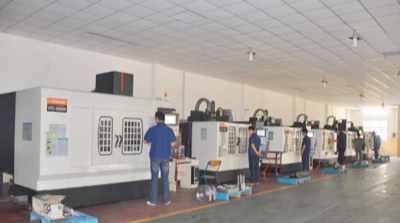
State-of-the-art manufacturing ensures the precision and durability of our portable vacuum gauges.
miniature vacuum gauge high vacuum gauge digital digital vacuum gauge torr
Our comprehensive after-sales management system, coupled with our in-house precision part production, guarantees a worry-free experience for our international clients. We understand that sourcing industrial equipment globally requires trust and transparency. That’s why we emphasize:
- Rigorous Quality Control: Every gauge undergoes thorough testing before shipment.
- Material Integrity: We use high-quality components selected for durability and accuracy in industrial settings.
- Export Expertise: With decades of experience, we are adept at handling international logistics, documentation, and compliance.
- Customization Options: We offer OEM/ODM services, allowing for custom specifications or branding on our portable vacuum gauges to meet unique project requirements.
We are not just suppliers; we are partners invested in your operational success. Our facility in Shijiazhuang, Hebei Province, China, serves as the hub for our innovation and production, enabling us to offer competitive pricing without compromising on the quality demanded by global markets. We are proud to serve clients across the USA and other English-speaking regions, providing them with the precision tools they need to excel.
Technical Specifications: Portable Vacuum Gauge Series PVG-2000
Our PVG-2000 series represents a robust and user-friendly solution for on-site vacuum measurement. Designed for industrial environments, these gauges balance accuracy with durability.
| Feature | Specification | Notes |
|---|---|---|
| Measurement Range | 0-30 inHg (0-1016 mbar) Absolute | Covers vacuum and atmospheric pressure readings |
| Accuracy | ±1.0% of Full Scale | Ensures reliable, actionable data |
| Sensor Type | Micro-Pirani with Thermocouple Compensator | Robust for industrial environments |
| Display | Large Backlit LCD | Easy readability in varying light conditions |
| Units of Measure | inHg, mbar, torr, psi(a), kPa | User selectable for global compatibility |
| Power Source | 2 x AA Batteries | Approximately 50 hours continuous operation |
| Operating Temperature | 0°C to 50°C (32°F to 122°F) | Suitable for most ambient industrial conditions |
| Enclosure | Rugged ABS Plastic with Rubber Boot | Enhanced drop and impact protection |
| Dimensions | 150mm x 80mm x 35mm | Compact and easy to handle |
| Weight | Approx. 300g (including batteries) | Lightweight for portability |
| Ports | Standard 1/4" NPT Male / 3/8" Flare (Optional Adapter) | Versatile connection options |
Note: Specifications are subject to change without notice. Please confirm details at the time of order.
Procurement & Logistics: Sourcing Your Portable Vacuum Gauge
When procuring industrial equipment, especially for international supply chains, the process extends beyond just selecting the right product. For portable vacuum gauges, consider these crucial aspects:
Supplier Evaluation: Beyond the Price Tag
Choosing a manufacturer with a proven track record is paramount. Look for suppliers who:
- Demonstrate Manufacturing Depth: As detailed earlier, our 40 years of experience and in-house CNC capabilities allow us to control quality and offer competitive pricing. This is a significant advantage over resellers or factories with limited production control.
- Provide Clear Technical Documentation: Comprehensive datasheets, operational manuals, and calibration procedures are essential.
- Offer Export Experience: We have a dedicated export team familiar with international shipping regulations, customs, and documentation requirements for markets like the USA.
- Support OEM/ODM Inquiries: If you require custom branding, specific connector types, or unique measurement ranges, a supplier capable of OEM/ODM services is vital. Our Mazak CNC centers make such custom part production feasible.
Logistics & Lead Times
Understanding lead times is critical for project planning. For our portable vacuum gauges, production typically takes 2-4 weeks after order confirmation, depending on the quantity and any customization. Shipping times vary by destination and chosen method (air freight vs. sea freight), often ranging from 3-7 business days for air cargo to the USA from our facility in China.
Container loading and optimization are areas where our experience shines. While portable vacuum gauges are relatively compact, bulk orders require efficient packing to minimize shipping costs. We ensure products are securely packaged to withstand transit and customs handling, often utilizing reinforced export cartons.

Careful packaging ensures safe transit for your portable vacuum gauges.
Compliance and Certification
While portable vacuum gauges may not always require specific certifications like CE or UL for all applications, we ensure our products meet general industrial safety and performance standards. We can provide documentation supporting material compliance (e.g., RoHS) and manufacturing quality (e.g., ISO 9001, if applicable to the specific production line). Clear communication regarding your market's specific compliance needs is always encouraged.
Customer Testimonials: Real-World Impact
Hear directly from our clients about how our portable vacuum gauges have enhanced their operations:

"We were struggling with inconsistent vacuum levels in our packaging line for specialty meats. The portable gauge from Hebei Yuanchang allowed us to quickly pinpoint the issue and calibrate the machines on-site. The build quality is solid, and the readings are consistent. Definitely a game-changer for our QC."
- Purchased: 15 units of PVG-2000

"I need reliable tools for system evacuations. This gauge is accurate, easy to read even in direct sunlight, and its rugged design means I don't have to baby it in the field. The battery life is impressive too. We’ve standardized on this model for all our technicians."
- Purchased: 5 units of PVG-2000

"We use these gauges for troubleshooting various vacuum systems across our plant. Their portability is key, letting us check pressure points without extensive setup. The price point is very competitive for the quality and accuracy offered. We've been happy with the support from Yuanchang as well."
- Purchased: 10 units of PVG-2000
Ready to Enhance Your Vacuum Measurement?
Don't let inaccurate vacuum readings compromise your production quality or operational efficiency. Partner with a trusted manufacturer with decades of industrial experience.
Request Factory Pricing NowOr Call Us: +86 15830991513
Frequently Asked Questions (FAQ)
A: With proper care and regular calibration, our PVG-2000 series portable vacuum gauges can provide reliable service for 3-5 years or more. The robust construction and quality sensor components are designed for longevity in industrial settings.
A: Calibration frequency depends on usage and accuracy requirements. For critical applications, annual calibration is recommended. For general use, a check every 12-18 months might suffice. We offer calibration services and guidelines to help maintain optimal performance.
A: The PVG-2000 is designed for rough to medium vacuum applications, typically down to a few millibars. For high vacuum (sub-millibar) measurements, specialized gauges like ion gauges or cold cathode gauges are required, which are outside the scope of this portable unit.
A: We offer a 1-year limited warranty against manufacturing defects. Our commitment to quality ensures that your investment is protected. We also offer extended support and repair services.
A: Absolutely. With our advanced manufacturing capabilities, including Japanese Mazak CNC machines, we are well-equipped to handle OEM/ODM requests. This can include custom branding, unique connectors, specific display requirements, or integrated functionalities for your specific product lines.
Connect with Industry Experts



Get Your Customized Solution
Have unique requirements? Let's discuss how our OEM/ODM capabilities can be tailored to your project.
Request OEM/ODM ConsultationTrustworthy Partnerships
We believe in transparency and building long-term relationships. Here are a few snippets of our client interactions: