Vacuum Thermocouple
Precision Vacuum Thermocouples: Reliable Temperature Measurement for Demanding Industrial Processes
Ensuring Accuracy and Stability in High-Vacuum Environments
Introduction: The Critical Role of Temperature Monitoring in Vacuum Technology
In the intricate world of industrial manufacturing and advanced research, maintaining precise control over process variables is paramount. Among these, temperature stands out as a fundamental parameter, especially in applications operating under vacuum conditions. Whether it's semiconductor fabrication, high-temperature material processing, vacuum furnace operation, or sophisticated scientific experiments, the ability to accurately measure and monitor temperature within a vacuum chamber directly impacts product quality, process efficiency, and the overall reliability of equipment. This is where the humble yet indispensable vacuum thermocouple comes into play.
Unlike ambient or atmospheric pressure environments, vacuum settings present unique challenges for instrumentation. Standard sensors can be rendered ineffective or even damaged by the low-pressure conditions, requiring specialized designs that can withstand these environments while delivering unwavering accuracy. A vacuum thermocouple, specifically engineered for these demanding conditions, acts as the eyes and ears for your critical processes, providing real-time temperature data that informs operational adjustments and safeguards against costly deviations. The choice of an appropriate thermocouple type, its construction materials, and its integration method are not trivial decisions; they are foundational to achieving the desired outcomes in vacuum-based operations.
The global market for industrial processing equipment, a sector where vacuum technology plays a significant role, is projected to continue its robust growth. Reports indicate the meat processing equipment market alone was valued at over USD 11 billion in 2025 and is expected to surpass USD 17 billion by 2034, with a CAGR around 5%. While this specific market may seem distant, it underscores the broader trend of increasing automation, precision control, and demand for reliable instrumentation across all industrial sectors that utilize advanced processing techniques, including those involving vacuum. This growth is driven by the need for higher product quality, increased efficiency, and compliance with stringent safety and operational standards. The demand for accurate temperature measurement solutions, such as specialized vacuum thermocouples, is intrinsically linked to these market dynamics, as precision is non-negotiable for modern manufacturing and R&D.
Understanding the nuances of vacuum thermocouples is crucial for procurement managers, engineers, and operations specialists tasked with specifying, installing, or maintaining vacuum systems. Factors like thermocouple type (e.g., Type K, J, T), sheath material (e.g., stainless steel, Inconel), junction type (grounded, ungrounded, exposed), and connection head configurations all contribute to the sensor's performance and suitability for a given application. For instance, a Type K thermocouple, known for its wide temperature range and general-purpose applicability, might be a good starting point, but its specific suitability for a high-purity vacuum environment would depend heavily on the sheathing and sealing employed. Similarly, the need for rapid response time might dictate an exposed junction, while a need for maximum protection against the vacuum environment and potential contamination would lean towards a well-sealed, grounded junction.
At Hebei Yuanchang Food Mechanism & Technology Co., Ltd., we recognize the critical importance of reliable instrumentation in demanding industrial settings. While our core expertise lies in advanced meat processing machinery – a field requiring robust and precise equipment for everything from tenderizing and molding to ripening processes – we also understand the universal principles of quality manufacturing and the need for specialized components that ensure operational integrity. Our 40 years of experience since 1986, coupled with our in-house advanced machining capabilities, including Japanese Mazak CNC centers, equip us to appreciate and, where applicable, provide components that meet exacting standards. This includes understanding the complexities of producing high-precision parts that are essential for applications where even minor deviations can have significant consequences. Our commitment to quality extends to understanding the needs of various industrial sectors, including those that rely on precise vacuum and temperature control.
This article delves into the world of vacuum thermocouples, exploring their fundamental principles, design considerations, application scenarios, and the critical factors to consider when selecting a supplier. We aim to provide procurement professionals and technical engineers with the insights needed to make informed decisions, ensuring that your vacuum processes operate with the utmost precision and reliability. Whether you're looking to upgrade existing equipment, specify a new vacuum system, or simply understand the best practices in temperature monitoring for low-pressure environments, this guide will equip you with the knowledge to navigate the complexities and ensure optimal performance.



Understanding the Vacuum Thermocouple: Principles and Design
At its core, a thermocouple operates on the Seebeck effect, a thermoelectric phenomenon discovered by Thomas Johann Seebeck in 1821. When two dissimilar conductors are joined at two points, and these junctions are at different temperatures, a voltage is generated that is proportional to the temperature difference. This voltage, though small, is a reliable indicator of temperature. A vacuum thermocouple leverages this principle but is specifically designed to function within a vacuum chamber without compromising the vacuum integrity or becoming a source of contamination.
The critical design elements for a vacuum thermocouple revolve around its construction and sealing. Unlike standard thermocouples that might have open braids or porous insulation, vacuum-grade sensors feature robust, hermetically sealed constructions. The thermocouple wires are typically encased in a metal sheath (often stainless steel 316L for corrosion resistance and vacuum compatibility, or Inconel for higher temperatures) with a sealed feedthrough. This feedthrough is crucial – it prevents gas leakage into or out of the vacuum chamber and ensures the sensor can withstand the pressure differential. Common feedthrough methods include welded seals, brazed ceramic-to-metal seals, or specialized compression fittings designed for vacuum integrity.
**Key Construction Features:**
- Sheath Material: Typically high-grade stainless steel (e.g., SS316L) or Inconel 600/625 for high-temperature applications. Material selection depends on the process temperature, chemical compatibility, and vacuum requirements.
-
Thermocouple Type: Common types for vacuum applications include:
- Type K (Chromel-Alumel): Wide temperature range (-200°C to +1250°C), general-purpose, good for oxidizing atmospheres.
- Type J (Iron-Constantan): Lower cost, narrower range (-40°C to +750°C), suitable for reducing or inert atmospheres.
- Type T (Copper-Constantan): Excellent for cryogenic temperatures and moderate ranges (-200°C to +350°C), stable in mildly oxidizing, reducing, or inert atmospheres.
- Type S/R/B (Platinum-Rhodium): For very high temperatures (up to 1700°C), often used in vacuum furnaces, but more expensive.
-
Junction Type:
- Grounded Junction: The thermocouple wires are electrically connected to the sheath. Offers faster response time and better protection against electrical noise but can introduce capacitive coupling and may not be suitable for all high-purity applications due to potential material interaction.
- Ungrounded Junction: The thermocouple wires are insulated from the sheath, usually by a ceramic powder (like Magnesium Oxide, MgO) within the sheath. This provides electrical isolation, reducing noise and preventing contamination issues, but results in a slower response time. This is often preferred for high-purity vacuum applications.
- Exposed Junction: The thermocouple tip is directly exposed to the vacuum environment. Offers the fastest response time but is only suitable for clean, non-corrosive vacuum environments and requires careful handling.
- Sealing/Feedthrough: Robust, vacuum-rated connections are essential. This might involve a vacuum flange (e.g., ConFlat, KF/NW), a compression fitting, or a permanently welded/sealed assembly. The choice depends on the vacuum level, required maintenance, and system design.
The decision between grounded and ungrounded junctions is particularly critical. For applications where even trace outgassing or material migration is a concern, an ungrounded junction with high-purity ceramic insulation is the standard. The insulation material itself must be selected for its low outgassing properties under vacuum and at elevated temperatures. The response time trade-off is usually acceptable given the benefits of maintaining vacuum integrity and purity.
When specifying a vacuum thermocouple, it's not just about the sensor itself but also about its integration into the vacuum system. Proper installation ensures the sensor accurately reflects the temperature of the process or chamber wall, and crucially, that it doesn't become a leak source. This often involves specialized vacuum fittings and careful tightening procedures to achieve a reliable seal.
Industry Pain Points: Why Generic Sensors Fail in Vacuum
Procurement teams and engineers often face challenges when sourcing instrumentation for vacuum applications. The temptation to use off-the-shelf, general-purpose thermocouples can lead to significant operational headaches and failures. Here's why generic sensors are a poor choice for vacuum environments:
- Vacuum Leaks: Standard sensor constructions are not designed for hermetic sealing. Their insulation materials might be porous, or their overall assembly may not withstand the pressure differential, leading to leaks that compromise vacuum levels. This is perhaps the most critical failure point.
- Outgassing and Contamination: Many common insulation materials (like PVC or certain types of fiber insulation) release gases when exposed to vacuum and heat. This outgassing can contaminate the vacuum environment, affecting sensitive processes like semiconductor manufacturing or thin-film deposition, and increasing pump-down times.
- Inaccurate Readings: The electrical noise and interference common in industrial settings can be exacerbated in vacuum systems. A non-specifically shielded or grounded thermocouple might pick up stray signals, leading to unreliable temperature data.
- Limited Temperature Range and Durability: Standard thermocouples might not be rated for the extreme temperatures often encountered in vacuum furnaces or high-temperature processing. Their sheath materials might also degrade or react unfavorably with process gases or residues.
- Installation Complexity: Adapting a standard sensor to a vacuum port often requires custom adapters, increasing installation time, cost, and the potential for leaks. Specialized vacuum fittings are designed for ease of integration.
Consider the impact on pump-down time. A system that normally reaches its target vacuum in a few hours might take days or even fail to reach the required vacuum level if it has a small leak introduced by an improperly sealed sensor. This downtime translates directly into lost production capacity and increased operational costs. For processes sensitive to trace impurities, contamination from outgassing can ruin entire batches, leading to scrapped product and significant financial loss.
Procurement managers often face pressure to reduce costs. However, the initial savings from a cheaper, non-specialized sensor are quickly negated by the long-term costs associated with system failures, process errors, reduced yield, and increased maintenance. Investing in a properly designed vacuum thermocouple is not an expense; it's a critical investment in process stability and reliability.
Advantages of Our Vacuum Thermocouples
At Hebei Yuanchang, we understand that reliability and precision are non-negotiable. While our primary focus is on advanced food processing machinery, the principles of high-quality engineering and material selection are universal. Our approach to any component, including specialized sensors, emphasizes robust construction, material integrity, and performance under demanding conditions. For vacuum thermocouples, this translates to several key advantages:
- Guaranteed Vacuum Integrity: Our vacuum thermocouples are designed and manufactured with hermetic sealing as a top priority. Utilizing high-grade vacuum feedthroughs and materials with low outgassing properties ensures your vacuum system's integrity is maintained, reducing pump-down times and preventing leaks.
- High Purity and Low Outgassing: We select materials and construction methods that minimize contamination. Ceramic insulation (MgO) for ungrounded junctions and specific sheath materials ensure that minimal gas is released into your vacuum environment, critical for sensitive applications like thin-film deposition or semiconductor processing.
- Wide Temperature Range and Accuracy: Available in various thermocouple types (K, J, T, S, R, B) and constructed with high-quality alloys, our sensors provide accurate readings across a broad spectrum of temperatures, from cryogenic levels to extreme heat in vacuum furnaces.
- Robust Construction: Engineered to withstand the rigors of industrial vacuum environments, our thermocouples feature durable sheath materials and secure, vacuum-rated connections. This ensures longevity and consistent performance, even in challenging operational conditions.
- Customization Options: We understand that off-the-shelf solutions don't always fit. Based on your specific application needs – be it a particular thermocouple type, sheath length, fitting size, or junction configuration – we can often provide customized vacuum thermocouple solutions.
- Expert Engineering Support: Leverage our 40 years of experience in complex machinery manufacturing. Our technical team can assist in selecting the optimal vacuum thermocouple for your application, considering factors like vacuum level, process temperature, chemical environment, and required response time.
The meticulous manufacturing processes at our facility, including the use of advanced CNC machining centers, allow us to produce components with the precision and quality demanded by high-stakes industrial applications. This applies to the sensors we offer just as it does to the intricate parts of our processing machinery.
Imagine a scenario in a vacuum heat treatment process where inconsistent temperature readings lead to suboptimal material properties. Our reliable vacuum thermocouples ensure that the heating profile is precisely followed, yielding materials with the desired hardness, grain structure, and performance characteristics every time. This consistency is the bedrock of high-quality manufacturing.
Technical Specifications and Options
Selecting the right vacuum thermocouple involves understanding its specific technical attributes. We offer a range of configurations to meet diverse application requirements. Below is a typical breakdown of available specifications.
| Parameter | Option 1 (Standard) | Option 2 (High Temp/Purity) | Notes |
|---|---|---|---|
| Thermocouple Type | Type K | Type S / Type R / Type B | Selection based on Max Temp & Atmosphere |
| Sheath Material | SS 316L Stainless Steel | Inconel 600/625 | Corrosion resistance, temperature limit |
| Junction Type | Ungrounded (Ceramic Insulated) | Ungrounded (High Purity Ceramic) | Response time vs. purity/noise isolation |
| Max Temperature | Up to 1000°C | Up to 1700°C | Dependent on Type & Sheath |
| Vacuum Rating | 10-6 Torr | 10-8 Torr or better | Critical for vacuum integrity |
| Sheath Diameter | 3mm, 6mm | 6mm, 8mm | Influences response time & installation |
| Connection Type | KF/NW Flange Fitting | ConFlat (CF) Flange / Weldable | Vacuum sealing standard & pressure rating |
| Lead Length | Customizable (e.g., 1m, 2m) | Customizable | Consider proximity to instrumentation |
vacuum thermoforming machine thermocouple vacuum gauge thermocouple vacuum gauge tube
The choice of connection type is often dictated by the vacuum system's existing ports. KF (Klein Flansch) or NW (Norm White) flanges are common in many laboratory and industrial vacuum setups due to their ease of use and resealing. For ultra-high vacuum (UHV) applications, ConFlat (CF) flanges, which use a copper gasket compressed between two knife-edge surfaces, are the industry standard for achieving the lowest achievable leak rates. Weldable fittings are also an option for permanent installations.
When specifying a custom solution, providing detailed information about your vacuum system's operating pressure, maximum and minimum process temperatures, the types of gases or materials present in the chamber, and the required response time will help us engineer the most suitable vacuum thermocouple.
Applications Across Industries
Vacuum thermocouples are integral to a wide array of high-technology and industrial processes where precise temperature control under low-pressure conditions is essential. Their reliability and accuracy make them a preferred choice for critical operations.
Semiconductor Manufacturing
Used in vacuum deposition (PVD/CVD), etching, and annealing processes to monitor substrate temperatures, furnace interiors, and plasma chambers. Accuracy here directly impacts chip yield and performance.

Vacuum Furnaces
Essential for heat treatment, brazing, sintering, and metal degassing in vacuum furnaces. Monitoring furnace chamber temperature ensures material integrity, prevents oxidation, and achieves desired metallurgical properties.

Scientific Research & Development
Crucial for experiments in physics, chemistry, and materials science requiring controlled vacuum and temperature environments, such as vacuum chambers for spectroscopy, vacuum ovens, and thin-film growth systems.

Aerospace & Defense
Used in vacuum testing of components, thermal vacuum chambers simulating space conditions, and in the manufacturing of specialized aerospace materials where precision is critical.

Industrial Coating Systems
In vacuum sputtering or evaporation coating processes, precise temperature control is vital for the deposition rate and film quality. Thermocouples monitor substrate holders and process chambers.

The demand for precision in these sectors is immense. For example, in semiconductor manufacturing, slight temperature variations during wafer processing can lead to defects that render microchips unusable, impacting product yield significantly. The global market for meat processing equipment, as noted earlier, is projected to reach over USD 17 billion by 2034. This growth is fueled by increasing consumer demand for processed and convenience foods, which in turn requires more automated and precisely controlled production lines. While meat processing doesn't typically involve vacuum, the underlying principle of needing highly reliable, specialized equipment that meets exact specifications is the same. Vacuum thermocouples fulfill this need in their respective high-tech domains.
Installation and Maintenance Considerations
Proper installation and routine maintenance are crucial for ensuring the longevity and accuracy of any vacuum thermocouple. Even the highest quality sensor can underperform if not installed correctly or if its maintenance is neglected.
**Installation Best Practices:**
- Vacuum Sealing: Ensure the thermocouple's vacuum fitting is clean and properly seated. If using a flange, check gasket condition. For compression fittings, follow the recommended torque settings to achieve a seal without damaging the fitting or sensor. Avoid over-tightening, which can deform the sealing surface or the fitting itself.
- Sensor Placement: Position the thermocouple probe to accurately measure the desired temperature zone. For instance, in a vacuum furnace, it should be placed to represent the average temperature of the load or chamber, avoiding direct radiant heat from elements if ambient temperature is what's being measured.
- Cable Management: Route the thermocouple cable away from high-temperature zones, moving parts, or sources of electromagnetic interference. Secure the cable to prevent strain on the feedthrough or connector.
- Electrical Connections: Ensure the thermocouple's connector mates properly with your temperature controller or data acquisition system. Check polarity to prevent reversed readings.
**Maintenance Routine:**
- Periodic Inspection: Visually inspect the sensor sheath, cable, and connector for any signs of damage, corrosion, or wear. Pay close attention to the feedthrough area for any signs of leaks or degradation.
- Leak Checking: Regularly perform leak checks on the vacuum system, paying particular attention to sensor mounting points. A helium leak detector is the most sensitive tool for this.
- Calibration Verification: Depending on the criticality of the application, periodic calibration checks might be necessary. This involves comparing the thermocouple's readings to a known reference standard or a calibrated secondary standard. For most vacuum applications, the stability of the sensor and the integrity of the vacuum seal are paramount, and calibration checks are done less frequently than for atmospheric sensors.
- Cleaning: If the sensor tip becomes contaminated with process residues, gentle cleaning with appropriate solvents may be required. Ensure the sensor is cool and the vacuum chamber is vented safely before attempting to clean. Avoid abrasive materials that could damage the sheath.
Neglecting these steps can lead to inaccurate temperature readings, which in turn can result in processing errors, material defects, and equipment damage. For example, a faulty seal on a vacuum thermocouple can slowly degrade the vacuum level, impacting heat transfer rates and leading to longer processing times or incomplete treatments. The cost of proactive maintenance is always far less than the cost of rectifying a process failure or equipment malfunction.
Procurement Guidance: What to Look For
Sourcing vacuum thermocouples requires careful consideration beyond just price. As a procurement specialist, your goal is to secure a reliable component that meets technical requirements and offers long-term value.
- Supplier Expertise: Look for manufacturers or suppliers who specialize in vacuum instrumentation or have a proven track record in providing components for high-vacuum applications. Their understanding of vacuum sealing, outgassing, and material compatibility is critical.
- Certifications and Traceability: For critical applications, inquire about material certifications (e.g., SS316L or Inconel specifications) and traceability of components. ISO 9001 certification for the manufacturer is a good indicator of quality management systems.
- Technical Support: A reputable supplier will offer strong technical support. Can they help you select the right thermocouple type, junction, sheath material, and fitting for your specific vacuum conditions and process?
- Lead Times and Reliability: Understand the typical lead times for standard and custom orders. For critical equipment, having a reliable supply chain is essential to minimize downtime.
- OEM/ODM Capabilities: If you require specialized designs or integration into larger systems, assess the supplier's OEM/ODM (Original Equipment Manufacturer/Original Design Manufacturer) capabilities. Can they work with your engineers to develop bespoke solutions? Our facility, with its advanced CNC machining, is well-equipped to handle such projects.
When evaluating potential suppliers, don't hesitate to ask detailed questions about their manufacturing processes, quality control measures, and their experience with similar applications. Requesting sample components for testing, if feasible, can provide invaluable insight into product quality and performance.
Regarding the broader industrial landscape, market analysis shows a steady increase in demand for sophisticated processing equipment. For instance, reports on the meat processing equipment market consistently highlight growth driven by automation and the demand for higher quality, safer products. The global market size is projected to reach upwards of USD 15 billion by 2030. This indicates a strong trend across industries towards investing in more precise, reliable, and technologically advanced equipment. Vacuum thermocouples are a vital part of this technological ecosystem, ensuring the precision required for many advanced manufacturing processes.
Factory Capabilities and Quality Assurance
Our commitment to quality at Hebei Yuanchang Food Mechanism & Technology Co., Ltd. stems from decades of experience in manufacturing precision industrial equipment. With over 14,000 square meters of facility space and a dedicated team of 80-100 skilled professionals, we integrate R&D, production, and sales. Our 40-year history since 1986 has instilled in us a deep understanding of what it takes to produce components that perform reliably under demanding conditions.
Advanced Machining Workshop
Our in-house workshop is equipped with over 20 advanced processing machines, including lathes, milling machines, high-precision grinding machines, boring machines, plate shears, bending machines, and wire cutting equipment. This allows us to handle complex geometries and tight tolerances.

Japanese CNC Machining Centers
Since 2012, we have invested in 8 sets of Japanese Mazak CNC machining centers. This capability enables us to produce high-standard components requiring large volumes, exceptional precision, and non-standard specifications, essential for critical applications like vacuum instrumentation.

Rigorous Quality Control
Our quality assurance protocols are integrated at every stage of production, from raw material inspection to final product testing. Our traceable after-sales management system ensures that every component meets our stringent standards.

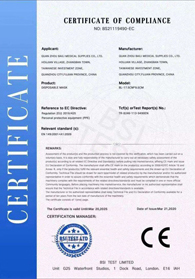
This extensive manufacturing infrastructure and dedication to quality control mean that when you source vacuum thermocouples from us, you are benefiting from the same precision engineering that underpins our renowned food processing machinery. We understand that for critical industrial components, reliability and performance are paramount, and our factory capabilities are designed to deliver exactly that.
Customer Reviews
See what our clients say about our commitment to quality and service:

Lead Researcher, Advanced Materials Lab
"We needed highly accurate temperature probes for our new UHV deposition system. The vacuum thermocouples from Yuanchang exceeded our expectations. The sealing is perfect, and we've seen significantly improved stability in our process temperatures. Their technical team was instrumental in helping us choose the right specs."

Operations Manager, Precision Heat Treating
"Our vacuum furnace is critical to our operations. Replacing an old, unreliable temperature probe with one from Yuanchang was a game-changer. The readings are consistent, and the robust construction means it's holding up well to the high temperatures. The lead time was also very reasonable."

Procurement Specialist, Electronics Manufacturer
"We had issues with outgassing from previous suppliers' sensors affecting our vacuum process. Yuanchang's vacuum-grade thermocouples solved this problem. The material specs are clear, and the product has performed flawlessly. We're considering them for other instrumentation needs."
Ready to Enhance Your Vacuum Process Precision?
Don't let inadequate temperature measurement compromise your vacuum processes. Partner with Hebei Yuanchang for reliable, high-performance vacuum thermocouples backed by 40 years of manufacturing expertise. We offer tailored solutions, expert support, and a commitment to quality that ensures your operational success.
Phone: +86 15830991513
E-mail: ycmeatmech@gmail.com
Address: Shijiazhuang, Hebei Province, China