Vacuum Sack Lifter
Vacuum Sack Lifters: Enhancing Efficiency and Safety in Industrial Handling
Streamline your operations with advanced vacuum lifting technology designed for robust industrial environments.

By: Dr. Evelyn Reed
Lead Industrial Engineer & Procurement Strategist
Hebei Yuanchang Food Mechanism & Technology Co., Ltd.
Navigating the Complexities of Material Handling: The Case for Vacuum Sack Lifters
In today's demanding industrial landscape, the efficient and safe movement of bulk materials is not just a logistical challenge—it's a critical determinant of productivity, operational cost, and workplace safety. For businesses involved in wholesale export, manufacturing, and distribution, particularly those handling bagged goods like feed, grain, chemicals, or raw materials, the manual lifting of sacks presents significant risks and inefficiencies. These include high rates of musculoskeletal injuries among workers, slow turnaround times, potential product damage from rough handling, and inconsistent stacking. It's a problem that touches every stage from procurement to final delivery, impacting everything from labor costs to client satisfaction.
The global meat processing equipment market, for instance, which is projected to reach USD 17.39 billion by 2034 according to Fortune Business Insights, highlights a broader trend: increasing demand for processed goods necessitates more sophisticated handling of raw and intermediary materials. This demand spills over into auxiliary equipment that supports these core processes. Similarly, the broader food processing equipment market is set to reach USD 129.47 billion by 2036, with meat segments alone showing substantial growth. This upward trajectory underscores the importance of efficient material handling solutions across diversified industrial sectors. Manual lifting, a legacy method, simply cannot keep pace with the scale and speed required in modern, high-volume operations.
This is where advanced vacuum sack lifters step in. These systems are engineered to revolutionize how bagged materials are managed. By leveraging vacuum technology, they provide a powerful yet gentle grip, allowing operators to lift, move, and stack sacks with unprecedented ease and control. Unlike traditional methods that rely on brute force and potentially hazardous manual labor, vacuum lifters distribute the load effectively, significantly reducing the physical strain on personnel. This not only mitigates the risk of workplace injuries—a constant concern and cost driver for businesses—but also enables fewer individuals to handle larger volumes more quickly. Consider the impact on your logistics: reduced strain means fewer workers can efficiently unload a container or restock a warehouse, directly translating into cost savings and faster inventory cycles.
Furthermore, the adoption of specialized handling equipment aligns with increasingly stringent industry standards and regulatory requirements. From ensuring food safety compliance in processing plants to maintaining product integrity in chemical warehousing, the risk of contamination or damage from improper handling is a serious business liability. Vacuum lifters, by their design, offer a more controlled and hygienic approach. They minimize the need for direct contact with the sacks, reducing the potential for contamination, and their gentle lifting action prevents tears and spills that can occur with manual or less sophisticated mechanical methods. This level of control is paramount when dealing with high-value goods or materials that require specific handling protocols, contributing to overall operational compliance and risk reduction.
Our experience, spanning four decades in the food processing and related industrial equipment sectors, has shown us firsthand the transformative power of investing in the right handling technology. We've seen firsthand how companies struggle with outdated practices, only to experience significant operational improvements once they adopt solutions like vacuum sack lifters. The initial investment, often a point of consideration for procurement managers, quickly pays for itself through reduced labor costs, lower insurance premiums due to fewer workplace incidents, decreased product loss, and enhanced overall throughput. It’s not just about lifting sacks; it’s about elevating your entire operational efficiency and safety profile.
This document aims to provide a comprehensive overview of vacuum sack lifters, detailing their advantages, technical considerations, and how they can be integrated into your specific operational workflow. We will delve into the nuances of selecting the right unit, understanding specifications, and the crucial aspects of working with a reliable supplier. For purchasing managers and operations directors, this information is designed to equip you with the knowledge needed to make an informed decision that yields tangible returns, ensuring your material handling practices are not just compliant, but are actively contributing to your competitive advantage in the international trade arena.
On This Page:
- Industry Challenges in Bagged Material Handling
- What is a Vacuum Sack Lifter?
- Key Advantages: Beyond Simple Lifting
- Technical Deep Dive: Understanding Specifications
- Versatile Applications Across Industries
- Installation, Operation, and Logistics
- Procurement: Choosing the Right Supplier
- Our Manufacturing Prowess: Hebei Yuanchang
- Commitment to Quality: Certifications
- Frequently Asked Questions
- What Our Clients Say
- Ready to Enhance Your Operations?
Industry Challenges in Bagged Material Handling
Manual handling of sacks, a practice still prevalent in many warehouses and production facilities, is fraught with operational and human costs. The sheer weight and awkwardness of sacks—often weighing 25kg, 50kg, or more—create a high risk of back injuries, sprains, and other debilitating musculoskeletal disorders. The "Meat Processing Equipment Market Size, Share & Industry Analysis" by Fortune Business Insights notes the importance of automation for labor efficiency and hygiene. This directly relates to how materials are handled before or after processing. If raw materials arrive in sacks and require manual unloading, bottlenecks and safety issues are inevitable.
Beyond worker safety, repetitive manual lifting leads to slower cycle times. Unloading a shipment or moving inventory can take significantly longer when reliant on human strength alone. This directly impacts turnaround times, warehouse throughput, and the ability to meet tight delivery schedules—a critical factor in international wholesale trade. The "Meat Processing Equipment Market Size, Share Report, 2030" by Grand View Research highlights automation as a driver for labor shortages and efficiency. This applies not just to core processing but to the entire supply chain, including material reception.
Product damage is another significant concern. Dropped sacks, torn bags from rough handling, or poorly stacked loads can result in material loss, contamination, and increased waste. This is particularly critical for food-grade ingredients, pharmaceuticals, or fine chemicals where integrity is paramount. The risk of spills can also lead to costly clean-ups and potential environmental or safety hazards.
Finally, the human element of fatigue cannot be overlooked. As workers tire, their efficiency drops, and the risk of accidents increases. This inconsistency in performance makes long-term planning and reliable throughput challenging to maintain.
What is a Vacuum Sack Lifter?
A vacuum sack lifter is a piece of industrial material handling equipment designed to lift and maneuver heavy sacks or bags using suction. The core principle is simple yet highly effective: a powerful vacuum generator creates a strong suction force that adheres to the surface of the sack. This suction is maintained by a seal, typically created by the sack's material itself or an attached suction pad. Once secured, the operator controls the lifting and movement of the sack via an ergonomic handling unit, often suspended from an overhead crane or a jib arm. This allows for precise positioning without straining the operator's back or arms.
The "Meat Processing Equipment Market Size & Forecast 2033" by Skyquestt projects growth in equipment for pretreatment and molding. Vacuum lifters fall under auxiliary items that directly support efficient handling of raw ingredients and packaged goods, ensuring that the flow of materials is as seamless as the processing itself. The technology allows for a "plug-and-play" approach to many lifting tasks, reducing the need for complex custom rigging or specialized training beyond basic operation.

Efficiently moving bagged materials with a vacuum sack lifter.
The system typically comprises a vacuum generator (blower or pump), a set of suction cups or a vacuum pad designed for sack handling, control mechanisms, and a lifting apparatus. The lifting apparatus can range from simple pneumatic manipulators to more complex automated systems integrated with existing conveyor or stacking machinery. Our focus at Hebei Yuanchang is on providing robust, reliable solutions that integrate seamlessly into your existing or planned production and logistics lines.
Key Advantages: Beyond Simple Lifting
The adoption of vacuum sack lifters offers a multitude of benefits that extend far beyond just moving bags. These advantages directly impact a company's bottom line and operational health:
- Enhanced Worker Safety: This is paramount. By eliminating the need for manual lifting, the risk of back injuries and other musculoskeletal disorders plummets. This translates to fewer lost workdays, lower insurance premiums, and a healthier, more productive workforce. As noted in industry reports, automation for labor efficiency and hygiene is a key driver in markets like meat processing. Reducing physical strain is a non-negotiable for sustainable operations.
- Increased Productivity and Speed: A single operator can lift and place sacks significantly faster and more consistently than manual methods allow. This speeds up loading, unloading, and warehousing processes, improving overall throughput. Businesses often report faster inventory turnover and quicker response times to customer orders.
- Reduced Product Damage: The vacuum grip is firm yet gentle. This minimizes the chances of tearing sacks or damaging contents, reducing waste and ensuring product integrity. This is crucial for high-value or sensitive materials.
- Ergonomic Operation: The design of vacuum lifters places the load on the lifting device, not the operator. This significantly reduces physical fatigue, allowing employees to work comfortably for longer periods without compromising safety or efficiency.
- Flexibility and Adaptability: Vacuum sack lifters can handle a wide variety of sack materials and sizes, provided they have sufficient rigidity to maintain a vacuum seal. Units can often be customized with different lifting heads or configurations to suit specific sack types and operational needs.
- Improved Warehouse Organization: The precise placement capabilities of vacuum lifters allow for more consistent and stable stacking, maximizing vertical storage space and improving warehouse layout efficiency. This makes inventory management simpler and more accurate.
- Cost Savings: While there's an initial investment, the long-term savings from reduced injury claims, lower insurance costs, decreased product loss, and increased operational efficiency make vacuum lifters a highly cost-effective solution. The ROI is often realized within months.
From a procurement perspective, considering these advantages helps justify the capital expenditure. It's about investing in operational resilience and a safer work environment. The "Processed Meat Market Size, Share & Growth Report" by Mordor Intelligence indicates growing demand for auxiliary systems supporting efficiency and safety. Vacuum lifters directly address this need.
Technical Deep Dive: Understanding Specifications
Selecting the right vacuum sack lifter involves understanding key technical specifications to ensure it meets your specific operational demands. It's not a one-size-fits-all solution, and careful consideration of these factors is crucial:
1. Lifting Capacity
This is the maximum weight the lifter can safely handle. It's crucial to match this to the heaviest sacks you typically process. Overloading can lead to equipment failure and safety hazards. Standard capacities often range from 25kg up to 100kg or more, depending on the model and vacuum generation.
2. Vacuum System
The heart of the lifter. This includes the vacuum generator (often an electric blower or a pneumatic venturi system) and the suction pad/head. The generator's power determines how quickly vacuum is achieved and how reliably it's maintained, especially with porous sack materials. For continuous industrial use, robust, industrial-grade blowers are preferred over venturi systems which consume compressed air. Ensure the system is designed for your local power supply (voltage, phase).
3. Suction Pad / Lifting Head
This is the component that makes contact with the sack. They come in various designs:
- Flat Suction Pads: Best for smooth, non-porous surfaces.
- Deep Drawn Cups: Designed to conform to slightly irregular surfaces.
- Porous Material Pads: Engineered with special sealing features for sacks made from materials like woven polypropylene or paper.
- Multi-Pad Systems: For larger or awkwardly shaped sacks, multiple pads can distribute the lifting force.
Material selection for the pad (e.g., rubber, silicone) is also important for durability and grip. We often recommend specific pad types based on the sack material you're handling.
4. Articulation and Maneuverability
The lifting arm and head design dictate how easily the lifter can reach, grip, and place sacks. Look for:
- Rotation: Ability to rotate sacks 180 or 360 degrees for precise placement.
- Articulation: Joints in the lifting arm allow for maneuvering around obstacles and reaching into tight spaces.
- Vertical Lift: How high the sack can be raised.
The "Meat Processing Equipment Market Size & Trends 2034" report mentions automation and hygiene, suggesting that equipment offering precise control and minimal manual intervention is highly valued. Vacuum lifters excel in this regard.
5. Control System
Most units feature intuitive controls, often integrated into the handle or grip. This includes buttons for vacuum on/off, lift/lower, and sometimes tilt or rotation. Some advanced systems can be automated for repetitive tasks. Operator comfort and ease of use are key.
6. Power Source and Air Requirements
Vacuum generators are typically electric. If using a pneumatic venturi system, ensure you have a reliable source of clean, dry compressed air. Power requirements (voltage, phase, frequency) must match your facility's electrical infrastructure. This is a critical check for international shipments.
| Specification | Typical Range/Consideration | Impact on Operation |
|---|---|---|
| Lifting Capacity | 25kg - 100kg+ | Determines suitability for your product weight. |
| Vacuum Generator Type | Electric Blower / Pneumatic Venturi | Efficiency, energy consumption, air needs. |
| Suction Pad Design | Flat, Deep Draw, Porous Material, Multi-Pad | Crucial for effective grip on different sack types. |
| Articulation/Reach | 360° rotation, multi-joint arm | Maneuverability in confined spaces, precise placement. |
| Power Requirements | Voltage, Phase, Frequency (e.g., 380V/50Hz/3P) | Ensures compatibility with your facility's power grid. |
sheet vacuum lifter vacuum plate lifter vacuum box lifter
Understanding these technical details is key to specifying an effective system. It allows us to tailor a solution that integrates seamlessly into your production or logistics flow.
Versatile Applications Across Industries
The utility of vacuum sack lifters extends far beyond a single sector. Their ability to safely and efficiently handle bagged materials makes them invaluable in numerous industrial environments. The growth in processed meats, driving demand for efficient pretreatment and molding equipment, is a good indicator of how broader material handling needs are evolving across the food industry. This principle applies universally:

Warehousing and distribution centers benefit greatly from efficient sack handling.
Common applications include:
- Food Processing: Handling sacks of flour, sugar, grains, animal feed, pet food ingredients, coffee beans, cocoa, and powdered dairy products. The gentle handling preserves product quality. "Reconstituted Meat Market" reports show reliance on molding and pretreatment equipment, underscoring the need for efficient raw material flow.
- Agriculture: Moving bagged fertilizers, seeds, soil amendments, and animal feed.
- Chemical Industry: Safely handling sacks of powders, pigments, additives, and raw chemical compounds. Material compatibility of the suction pads is key here.
- Construction: Lifting bags of cement, plaster, sand, and other building materials.
- Logistics and Warehousing: Facilitating efficient loading and unloading of trucks and containers, and high-density stacking in distribution centers. Reports on the "Meat Processing Equipment Market" often highlight the Asia-Pacific region's growth driven by industrialization of processing facilities, indicating a global trend towards mechanization.
- Manufacturing: Handling bagged raw materials for various production processes, from plastics to textiles.
The versatility means that an investment in vacuum lifting technology can often serve multiple departments or product lines within a single organization, amplifying the return on investment. It's a practical solution for a widespread operational challenge.
Installation, Operation, and Logistics
Implementing a vacuum sack lifter system involves more than just placing the equipment. Proper planning for installation, operation, and integration into your logistics chain is essential for maximizing its benefits.
Installation Considerations
Most vacuum sack lifters are designed for relatively straightforward installation. Key aspects include:
- Mounting: The lifter is typically suspended from an overhead crane, jib arm, or a mobile mast. The structural integrity of the mounting point must be assessed to support the lifter's weight plus the maximum load.
- Power Supply: Electrical connections for the vacuum generator and any articulated arm components need to be made by qualified electricians. For pneumatic systems, the air line must be routed correctly.
- Piping: If a separate vacuum generator is mounted remotely, appropriate vacuum piping needs to be installed.
- Safety Guards: Depending on the setup, safety guards may be required around moving parts.
Our team provides detailed installation manuals and can offer consultation to ensure a smooth setup process. It's crucial to follow all safety guidelines during installation and commissioning.
Operational Training
While intuitive, proper training for operators is vital for maximizing efficiency and safety. This typically covers:
- Correctly applying the suction pad to the sack for a secure grip.
- Smoothly controlling the lifting, maneuvering, and placing operations.
- Understanding load limits and safe operating procedures.
- Basic maintenance checks (e.g., filter cleaning, seal inspection).
Operator feedback is invaluable. Gathering input on ease of use and any operational challenges helps fine-tune procedures.
Logistics and Shipping
When importing equipment, particularly from China, logistics are a key consideration:
- Packaging: Equipment must be robustly packaged to withstand international transit.
- Documentation: Accurate customs documentation, including HS codes and origin certificates, is essential for smooth import clearance. We provide comprehensive documentation for all our export shipments.
- Shipping Methods: Depending on size and urgency, options include sea freight (FCL/LCL) or air freight. We optimize container loading to maximize space utilization.
- Lead Times: Production and shipping lead times vary. For custom configurations or large orders, planning ahead is critical. A typical lead time for standard units might be 4-8 weeks from order confirmation to delivery at port.
Our export department is experienced in managing these complexities, ensuring your equipment arrives on time and ready for installation.
Procurement: Choosing the Right Supplier
Selecting a vacuum sack lifter is an investment in operational efficiency and safety. Choosing the right supplier is just as critical as selecting the right equipment. Procurement managers need to look beyond just price and consider several key factors:
The "Meat Processing Equipment Market" reports consistently highlight trends toward automation, reliability, and supplier support. This is a universal truth in industrial procurement.
1. Manufacturing Experience and Reputation
Look for suppliers with a long history in industrial equipment manufacturing. A company with decades of experience, like Hebei Yuanchang (since 1986), brings deep technical knowledge and a proven track record. Check for client testimonials, case studies, and online reviews to gauge their market standing and customer satisfaction.
2. Technical Expertise and Customization
Does the supplier understand your specific needs? Can they offer tailored solutions or modifications if standard models aren't a perfect fit? Our in-house CNC machining capabilities allow us to produce high-precision, non-standard components, enabling us to customize solutions for unique sack types or operational layouts.
3. Quality Control and Certifications
Reputable manufacturers adhere to strict quality control standards. Look for ISO certifications (e.g., ISO 9001) and CE marking, which indicate compliance with international quality and safety standards. These certifications are not just badges; they represent a commitment to producing reliable, safe equipment.
4. After-Sales Support and Service
This is often overlooked but is crucial for long-term operational continuity. Inquire about:
- Availability of spare parts (filters, seals, suction pads).
- Warranty terms.
- Technical support channels (phone, email, online).
- Ease of obtaining replacement components for maintenance.
Our traceable after-sales management system ensures that we can independently produce high-precision parts, offering worry-free service for our clients.
5. Export Experience and Logistics Capability
For international buyers, a supplier experienced in export is invaluable. They should be adept at handling export documentation, packaging for international transit, and coordinating with freight forwarders. Verify their experience with shipments to your region.
6. Transparency and Communication
A good supplier will be transparent about pricing, lead times, and product capabilities. They should communicate clearly and promptly, answering all your questions. This level of open communication builds trust and ensures a smoother procurement process.
Choosing Hebei Yuanchang means partnering with a company that embodies these principles. Our 40 years of experience, commitment to quality, and robust after-sales support make us a reliable choice for your industrial handling needs.
Our Manufacturing Prowess: Hebei Yuanchang
At Hebei Yuanchang Food Mechanism & Technology Co., Ltd., our 40-year legacy (since 1986) in manufacturing industrial equipment, including specialized handling systems, is built on a foundation of rigorous engineering, precision machining, and a deep understanding of our clients' operational realities.

Our advanced machining workshop.
Our facility spans approximately 14,000 square meters and is staffed by a dedicated team of 80-100 skilled professionals. We are not just assemblers; we are manufacturers with extensive in-house capabilities:
- Comprehensive Machining Workshop: Equipped with over 20 sets of precision processing machinery, including lathes, milling machines, high-precision grinding machines, boring machines, plate shears, bending machines, and wire cutting equipment. This allows us to control the quality of every critical component.
- Advanced CNC Technology: Since 2012, we've integrated 8 sets of Japanese Mazak CNC machining centers. This investment enables us to produce high-standard components requiring large volumes, exceptional precision, and non-standard specifications, ensuring the performance and longevity of our vacuum sack lifters.
- R&D and Innovation: Our dedicated R&D team continuously works on improving existing designs and developing new solutions to meet evolving industry demands.
- Integrated Production: We manage the entire process from R&D and design through to production, quality control, sales, and after-sales service. This integration means we are accountable for the entire product lifecycle.
- Traceable After-Sales Management: Our system allows for independent production of high-precision parts, ensuring prompt and reliable after-sales support for our clients worldwide.
Our expertise, honed over four decades in demanding sectors like meat processing, translates directly into the reliability and performance of our vacuum sack lifters. We understand the pressures of international trade and the critical need for dependable machinery.
Commitment to Quality: Certifications
Quality and safety are not just buzzwords at Hebei Yuanchang; they are embedded in our manufacturing processes and product design. Our commitment to meeting international standards is reflected in our certifications.

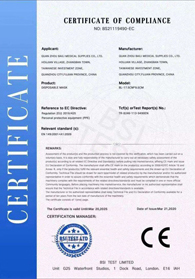
While specific certifications may vary by product line and export market, our adherence to recognized standards ensures that our vacuum sack lifters are designed and manufactured with the highest levels of quality, safety, and environmental responsibility in mind. For instance:
- ISO 9001: Demonstrates our commitment to a robust quality management system, ensuring consistent product quality and customer satisfaction through standardized processes.
- CE Marking: Indicates that our products meet the essential health, safety, and environmental protection requirements of the European Economic Area. This is often a prerequisite for many international markets.
- RoHS Compliance: For relevant components, ensuring that hazardous substances are restricted, aligning with environmental regulations.
These certifications provide our international clients with confidence in the reliability and safety of our equipment. They are a testament to our engineering rigor and our dedication to supplying world-class industrial solutions.
Frequently Asked Questions
Q1: What types of sacks can a vacuum sack lifter handle?
Our vacuum sack lifters are designed to handle most types of sacks, including woven polypropylene, paper, plastic, and some forms of textile bags. The key requirement is that the sack material must be strong enough to support the load and maintain a vacuum seal. We offer different suction pad designs to accommodate various materials and surface textures. For specific materials, consulting with our technical team is recommended.
Q2: What is the typical maintenance required for a vacuum sack lifter?
Maintenance is generally minimal. Key tasks include regular cleaning of the suction pads and filters, inspecting seals for wear and tear, and ensuring the vacuum generator is operating correctly. We provide detailed maintenance schedules in our operation manuals. Most routine maintenance can be performed by trained on-site personnel. Prompt replacement of worn seals is critical for maintaining vacuum efficiency.
Q3: How much space is needed to operate a vacuum sack lifter?
The space requirements depend on the specific model and its mounting configuration (e.g., overhead crane vs. mobile mast). Generally, they require vertical clearance for lifting and sufficient aisle space for maneuvering. The articulating arms can help reach into tight spots, but adequate turning radius is necessary for mobile units. We can provide layout assistance based on your site dimensions.
Q4: Can these lifters be used in refrigerated or frozen environments?
Standard models may not be suitable for extreme cold. For refrigerated or frozen environments, specialized components and materials (e.g., low-temperature lubricants, seals) are required. Please specify your operating temperature range when inquiring, so we can propose a suitable solution. Temperature extremes can affect vacuum seal integrity and material flexibility.
Q5: What is the typical lead time for a vacuum sack lifter from your company?
Lead times can vary depending on the model's complexity and current production schedules. For standard configurations, lead times typically range from 4 to 8 weeks from order confirmation to shipment. Custom solutions may require additional time for design and fabrication. We provide precise lead time estimates upon request.
Q6: Do you offer OEM/ODM services?
Yes, we do offer OEM/ODM services. Leveraging our extensive manufacturing capabilities and engineering expertise, we can develop and produce custom-designed vacuum sack lifters or integrate our technology into your larger systems under your brand. We welcome inquiries for collaborative projects.
What Our Clients Say
Real-world feedback from businesses that have implemented our vacuum sack lifters:

Mark Jenkins
Operations Manager, AgriFeed Solutions (USA)
"The vacuum lifter has dramatically reduced our back injuries in the warehouse. Loading pallets of feed sacks used to be a daily concern. Now, one operator can manage the task efficiently and safely. The ROI was evident within six months from reduced incident rates alone."
Benefit: Improved Safety, Reduced Claims

Sarah Chen
Procurement Director, Global Chemical Traders (Canada)
"We were skeptical about handling fine chemical powders due to contamination risks. The precision of the vacuum lifter is excellent. It minimizes dust disturbance and ensures sacks are placed perfectly without rips, which was a constant issue with manual handling. Their export process was also very smooth."
Benefit: Product Integrity, Reduced Spills

David Rodriguez
Warehouse Supervisor, Food Ingredients Inc. (UK)
"The efficiency gains are undeniable. We've cut down unloading times by nearly 30%. The lifter is robust and has handled thousands of flour sacks without a hitch. Support for spare parts has been quick and efficient."
Benefit: Increased Throughput, Reliable Operation

Aisha Khan
Logistics Coordinator, Jute Exports Ltd. (India)
"We needed a solution that could handle large jute sacks with consistent reliability. The custom suction pad developed by Hebei Yuanchang's team works perfectly. It's significantly reduced manual labor and sped up our container loading process. Communication was excellent throughout the process."
Benefit: Customization, Efficient Loading
"Your operational success is our priority. We build relationships based on trust and performance."
Ready to Revolutionize Your Material Handling?
Invest in efficiency, safety, and reliability with our advanced vacuum sack lifters. Designed for demanding industrial environments and backed by 40 years of manufacturing excellence.
Or contact us directly:
Phone: +86 15830991513 | Email: ycmeatmech@gmail.com