Tc Vacuum Gauge
TC Vacuum Gauges: Precision Measurement for Industrial Demands
Reliable Pressure Monitoring Solutions for Critical Manufacturing Processes



Table of Contents
- Introduction to TC Vacuum Gauges
- Navigating the Challenges in Vacuum Measurement
- Understanding TC Vacuum Gauges
- Why Choose TC Vacuum Gauges? Key Advantages
- Technical Specifications & Models
- Versatile Applications Across Industries
- Installation and Maintenance Best Practices
- Procurement Guide for TC Vacuum Gauges
- Our Manufacturing Prowess
- Commitment to Quality: Certifications
- Frequently Asked Questions
- What Our Clients Say
- Get a Quote Today
The Critical Role of Vacuum Measurement in Modern Industry
In the intricate world of industrial manufacturing, especially where processes demand precise control over atmospheric conditions, the measurement of vacuum pressure isn't just a technical detail – it's a fundamental requirement for product quality, operational efficiency, and safety. Whether you're involved in food processing, pharmaceutical production, semiconductor manufacturing, or advanced materials science, maintaining a specific vacuum level can be the difference between a successful batch and costly failure. The market for meat processing equipment alone is projected to reach significant figures, with projections suggesting it could hit USD 17.39 billion by 2034, growing at a CAGR of 5.0%. This robust market growth underscores the increasing sophistication and scale of industrial operations, where reliable instrumentation like vacuum gauges plays an indispensable part. These devices are the silent guardians of your processes, providing real-time data that allows for immediate adjustments, preventing deviations that could lead to spoilage, reduced efficacy, or even hazardous conditions. For instance, in meat processing, vacuum packaging is crucial for extending shelf life and maintaining product integrity, a process directly reliant on accurate vacuum readings. Similarly, in pharmaceutical manufacturing, vacuum drying is essential for stability and purity, making gauge precision paramount. The complexity of these applications demands instruments that are not only accurate but also robust, dependable, and suited to the specific environmental and operational demands. This is where specialized solutions like TC vacuum gauges come into play, offering a level of precision and reliability that meets the stringent requirements of modern industrial applications.
The global processed meat market, a significant consumer of sophisticated processing equipment, is expected to grow substantially, with estimates reaching USD 1,253.77 billion by 2034. This expansion necessitates high-performance equipment, including reliable vacuum systems. Within this vast ecosystem, the precise measurement of vacuum pressure is vital for a myriad of operations, from vacuum packaging to specialized drying and sterilization techniques. It’s about ensuring product quality, extending shelf life, and meeting rigorous food safety standards. Operations involving molded or formed meat products also rely on controlled environments where vacuum plays a role in texture and consistency. The broader food processing machinery market, of which meat processing is a significant component, is also expanding, projected to reach USD 112.94 billion by 2030. The demand for automation and efficiency in these sectors places a premium on instrumentation that delivers consistent, accurate data without failure. A faulty vacuum gauge can lead to incorrect process parameters, compromising the entire production run, impacting flavor, texture, safety, and ultimately, profitability. Therefore, selecting the right vacuum measurement technology is a strategic decision for any forward-thinking manufacturing operation. It’s an investment in process control, product integrity, and operational resilience, ensuring that your production lines run smoothly and efficiently, even under demanding conditions.
Understanding the nuances of vacuum measurement is crucial. It’s not a one-size-fits-all scenario. Different applications require different technologies, each with its own strengths and limitations. For applications demanding high accuracy and reliability across a broad pressure range, particularly in the medium vacuum to high vacuum spectrum, thermal conductivity (TC) vacuum gauges have emerged as a preferred solution. These gauges are engineered to provide stable and precise readings, even in challenging industrial environments where dust, vibration, or wide temperature fluctuations might affect less robust instruments. Their design principles allow them to effectively monitor processes that are sensitive to even minor pressure variations. The sophistication of modern manufacturing, from automated food lines to advanced material synthesis, hinges on this granular level of control. As the industry evolves, so too does the need for measurement tools that can keep pace. The market's drive towards higher automation and stricter quality controls means that precision instrumentation is no longer a luxury but a necessity for competitive advantage and operational excellence. We aim to equip our clients with the tools they need to achieve these critical objectives, ensuring their processes are monitored with the utmost accuracy and reliability.
Navigating the Complexities of Vacuum Measurement in Industrial Settings
Industrial environments present unique challenges for measurement instrumentation. The sustained accuracy of any vacuum gauge is often tested by factors beyond just the pressure itself. Take the food industry, for instance. High-pressure washdowns, the presence of steam, and potential exposure to corrosive cleaning agents demand equipment built with robust materials and sealing. In pharmaceutical manufacturing, sterility and resistance to aggressive sterilization protocols are non-negotiable. For applications involving volatile organic compounds (VOCs) or corrosive gases, material compatibility is a primary concern to prevent premature gauge degradation and ensure operator safety. Accidental over-pressurization or vacuum shock can also lead to sensor damage, requiring built-in protective mechanisms or careful operational procedures. The economic impact of a faulty measurement system can be substantial, leading to production downtime, product spoilage, and even reputational damage. Consider the market for meat processing equipment, a sector where hygiene and consistent quality are paramount. The global meat processing equipment market's projected growth, with various reports placing it between USD 11.28 billion and USD 19.66 billion by 2030, indicates a high volume of operations where reliability is key. A failure in a vacuum packaging machine, for example, could lead to spoilage across an entire batch, resulting in significant financial losses. This necessitates instrumentation that can withstand these harsh realities while delivering unwavering performance.
Beyond environmental factors, the operational context adds further complexity. Many industrial vacuum systems operate continuously, requiring gauges that can sustain accuracy over long periods without recalibration or maintenance headaches. The need for integration into broader control systems, like PLCs or SCADA, means that instrumentation must offer compatible outputs and reliable data transmission. For procurement managers, balancing initial cost with long-term reliability, accuracy, and the total cost of ownership is a constant challenge. A cheaper gauge might seem attractive upfront, but if it requires frequent replacement, recalibration, or leads to process deviations, its true cost can quickly outweigh that of a more robust, albeit initially more expensive, solution. Furthermore, the diverse range of vacuum levels encountered—from rough vacuum to ultra-high vacuum—means that a single gauge technology might not suffice for all applications. Selecting the appropriate gauge for the specific pressure range and process conditions is therefore critical for achieving optimal results and avoiding costly errors. This selection process often requires a deep understanding of both the application and the available measurement technologies.
One significant operational hurdle is the potential for sensor contamination. In many food or chemical processing environments, particulate matter or sticky residues can foul sensing elements, leading to inaccurate readings or complete failure. This necessitates careful design considerations, such as flush-mount diaphragms or easy-to-clean sensor interfaces. The lifecycle cost of a vacuum gauge is another crucial factor often overlooked. Beyond the purchase price, consider the cost of installation, power consumption, recalibration frequency, potential downtime during maintenance, and eventual replacement. A gauge with a longer operational lifespan and lower maintenance requirements can offer substantial savings over time. This holistic view is essential for making informed procurement decisions that support sustained operational efficiency and minimize unexpected expenses.
Introducing TC Vacuum Gauges: Precision Engineered for Demanding Environments
Thermal conductivity (TC) vacuum gauges, often referred to by their common design like the Pirani gauge, operate on a fundamental principle: the relationship between the thermal conductivity of a gas and its pressure. These gauges work by heating a filament (typically a resistance wire) within the vacuum environment. As gas molecules collide with this heated filament, they conduct heat away. The rate at which heat is lost is directly proportional to the number of gas molecules present, and therefore, to the pressure of the gas. By measuring the electrical resistance of the filament, which changes with temperature, the gauge can infer the gas pressure. This method is particularly effective in the medium vacuum range, generally from atmospheric pressure down to around 10-3 mbar (or Torr). Their robust design, relying on physical principles rather than delicate membranes (like some absolute pressure gauges), makes them well-suited for industrial applications where durability is key. We engineer our TC vacuum gauges with high-quality materials and precision manufacturing techniques to ensure consistent performance and longevity. This ensures that even in demanding conditions, you receive reliable data crucial for process control. For operations requiring precise control in this common vacuum range, TC gauges offer an excellent balance of accuracy, responsiveness, and ruggedness.
The operational advantage of TC gauges lies in their relative simplicity and the fact that they are less susceptible to particulate contamination compared to some other vacuum technologies. While they are sensitive to thermal conductivity variations, they can be calibrated for specific gases, or used with a general calibration factor for common industrial atmospheres like air or nitrogen. This versatility allows them to be deployed across a wide array of processes. For example, in vacuum ovens used for drying sensitive materials, or in vacuum chambers for material deposition, accurate monitoring of the medium vacuum range is critical for process success. Our TC vacuum gauges are designed to integrate seamlessly into existing systems, offering various output signals and connection types to meet diverse engineering requirements. The inherent robustness also means they can often withstand higher temperatures and mechanical stresses encountered in manufacturing environments. This makes them a practical choice for continuous operation where downtime is minimized.
Furthermore, TC gauges can often be paired with other vacuum measurement technologies to create a wider measurement range. For instance, a TC gauge can handle the medium vacuum, while a different type of sensor covers the high vacuum spectrum, providing a complete vacuum profile for complex systems. This synergistic approach allows for comprehensive process monitoring. Our expertise lies in not just manufacturing these gauges but in understanding their application within your specific industrial context. We provide guidance on selecting the right model, installation best practices, and potential integration strategies to optimize your vacuum process control. The goal is to provide a solution that is not only technically sound but also operationally practical and cost-effective for your business. The reliability they offer is crucial for operations, ensuring consistent quality and preventing costly errors in product manufacturing.
Why Choose Our TC Vacuum Gauges? Key Advantages for Your Operations
- Exceptional Accuracy in Medium Vacuum: Engineered for precision, our TC gauges deliver reliable readings typically from atmospheric down to 10-3 mbar, crucial for processes demanding stable vacuum levels. This range is vital for many applications like vacuum drying, degassing, and packaging.
- Robust Construction for Industrial Use: Built with high-grade stainless steel and durable components, our gauges are designed to withstand harsh industrial environments, including vibrations, temperature fluctuations, and potential chemical exposure. They are not delicate laboratory instruments.
- Fast Response Time: Get real-time pressure data. Our TC gauges respond quickly to changes in vacuum pressure, allowing for immediate process adjustments and tighter control, which is critical in fast-paced production lines.
- Versatility and Gas Compatibility: While optimized for air and nitrogen, our gauges can be used for a range of other gases. We provide guidance on calibration factors for different gas types, ensuring applicability across various processes.
- Lower Cost of Ownership: Compared to some high-vacuum technologies, TC gauges offer a more economical entry point. Their durability and minimal maintenance requirements contribute to a lower total cost of ownership over the equipment's lifespan.
- Seamless Integration: Available with standard electrical connections and outputs (e.g., analog voltage/current, digital), our gauges are designed for easy integration into existing control systems, PLCs, and automation platforms.
- Reliable Supplier Backing: As an experienced manufacturer with 40 years in the industry, we stand behind our products with comprehensive after-sales support, spare parts availability, and expert technical assistance. You’re not just buying a gauge; you’re gaining a reliable partner.
- Customization Options: For specific OEM or ODM requirements, we can offer tailored solutions, including specialized fittings, cable lengths, or performance characteristics to meet unique application needs.
These advantages translate directly into operational benefits: improved product consistency, reduced waste, enhanced safety, and greater overall process efficiency. We understand that in procurement, the decision hinges on tangible value. Our TC vacuum gauges are engineered to deliver precisely that value, day in and day out.
Technical Specifications & Available Models
We offer a range of TC vacuum gauge models designed to meet diverse industrial needs. Below are typical specifications. For detailed datasheets and specific model configurations, please contact our sales team.
| Feature | Standard Model (e.g., YC-TC-100) | High-Temp / Corrosive Model (e.g., YC-TC-200-HT) |
|---|---|---|
| Measurement Range | 1 mbar to 10-3 mbar (or 760 Torr to 0.75 Torr) | 1 mbar to 10-3 mbar (or 760 Torr to 0.75 Torr) |
| Accuracy | ±5% of reading (typical) | ±5% of reading (typical) |
| Filament Material | Tungsten | Tungsten or Platinum (for enhanced durability) |
| Process Connection | Standard KF40, NW25, or NPT 1/4" | Various options including specialized flange sizes and materials |
| Operating Temperature Range | 0°C to 60°C (Ambient) / Sensor body up to 100°C | 0°C to 100°C (Ambient) / Sensor body up to 150°C |
| Power Requirement | 24V DC | 24V DC |
| Output Signal | 0-5V DC or 4-20mA | 0-5V DC, 4-20mA, or digital RS485 |
| Materials | Stainless Steel (304) | Stainless Steel (316L), Hastelloy options available |
| Ingress Protection | IP54 (Electronics), IP65 (Sensor) | IP65 (Sensor and Electronics) |
usg vacuum gauge high vacuum gauge digital mechanical vacuum gauge
Note: Specifications are subject to change without notice. Please consult our engineering team for specific application requirements and custom configurations.
Versatile Applications Across Key Industrial Sectors
Our TC vacuum gauges are designed for robust performance in a wide variety of industrial applications where precise medium vacuum measurement is essential. Their reliability and accuracy make them suitable for everything from large-scale food processing to highly specialized manufacturing.
Food Processing & Packaging
Essential for vacuum packaging machines to ensure extended shelf life, maintaining product freshness and preventing spoilage. Also used in vacuum tumbling and massaging equipment for meat processing, and in vacuum frying or drying applications. Accurate vacuum control is key to consistency and safety in these operations.
Pharmaceuticals & Biotechnology
Crucial for vacuum drying of sensitive compounds, powders, and active pharmaceutical ingredients (APIs) where precise temperature and pressure control are needed to maintain efficacy and stability. Used in freeze-drying (lyophilization) pre-processing stages.
Chemical & Petrochemical
Applications involving vacuum distillation, solvent recovery, and degassing of liquids or resins. Material compatibility is key here, and our specialized models offer enhanced resistance to corrosive environments.
Electronics & Semiconductor
Used in vacuum ovens for component drying, vacuum potting, and in certain aspects of semiconductor manufacturing where controlled atmospheres are required for precision assembly and testing.
Industrial Manufacturing
General vacuum applications such as vacuum forming, vacuum lifting, degasification of materials, and as part of leak detection systems. Their robust nature makes them suitable for general factory floor use.
Aerospace & Automotive
In vacuum chambers for testing components, vacuum impregnation of parts for sealing, and in the manufacturing of composite materials where vacuum consolidation is employed.
The diversity of these applications highlights the fundamental importance of reliable vacuum measurement. Our commitment is to provide solutions that empower your operations, ensuring quality and efficiency across the board. The continuous demand in the meat processing sector for higher quality and extended shelf life, as evidenced by market reports, further drives the need for dependable equipment in vacuum packaging and related processes.
Installation and Maintenance: Ensuring Long-Term Performance
Proper installation and routine maintenance are critical for maximizing the lifespan and accuracy of your TC vacuum gauges. We've compiled some practical advice based on decades of manufacturing experience.
Installation Considerations:
- Mounting Orientation: While TC gauges are generally less sensitive to orientation than some other types, it's good practice to mount them in a way that minimizes the risk of particulate settling on the filament. Vertical mounting with the sensor port facing downwards is often preferred in dusty environments.
- Location: Install the gauge away from direct heat sources, excessive vibration, or high-frequency electromagnetic fields that could interfere with readings or damage the electronics.
- Connection: Ensure vacuum connections are clean, leak-tight, and properly torqued. Use appropriate sealing materials (e.g., O-rings for KF flanges, PTFE tape for NPT threads). Leaks are the #1 enemy of accurate vacuum readings.
- Electrical Connections: Double-check wiring against the provided diagram. Ensure the power supply is stable and within the specified voltage range (typically 24V DC). Incorrect wiring can damage the electronics.
- Purging/Baking: For new installations or after maintenance, it’s often recommended to thoroughly purge the system with an inert gas and, if applicable, "bake out" the vacuum chamber to remove adsorbed gases that can affect initial readings.
Maintenance Best Practices:
- Regular Visual Inspection: Periodically check the gauge for physical damage, contamination around the sensor port, or loose connections.
- Cleaning the Sensor (Carefully!): If contamination is suspected, the sensor can often be carefully cleaned. Use a soft brush or lint-free cloth. For stubborn residues, a solvent like isopropyl alcohol might be used, but ensure it evaporates completely before re-pressurizing. Never use abrasive materials or high-pressure air.
- Calibration: While TC gauges are relatively stable, recalibration is recommended periodically, especially if process accuracy requirements are stringent or if the gauge has been subjected to unusual conditions. We offer calibration services and guidance for in-house checks. A simple check involves ensuring it reads atmospheric pressure correctly when exposed to the air.
- Filament Replacement: Filaments have a finite lifespan, especially in environments with reactive gases or frequent cycling. If you notice a significant drop in accuracy or response, filament replacement might be necessary. This is a service we can provide or guide you through.
- System Checks: Regularly verify the vacuum pump's performance and the integrity of other system components. Sometimes, perceived gauge issues are actually related to broader system problems.
Following these guidelines will help ensure your TC vacuum gauge operates reliably for its intended service life. Remember, proactive maintenance is always more cost-effective than reactive repairs.
Procurement Guide: Selecting the Right TC Vacuum Gauge
Choosing the correct vacuum measurement instrument is a critical step in ensuring your manufacturing processes run efficiently and reliably. As an experienced supplier with 40 years in the machinery industry, we understand the procurement challenges procurement managers face. Here’s a practical guide to help you select the optimal TC vacuum gauge for your needs.
1. Define Your Application Requirements:
The first step is always understanding the specific use case. Ask yourself:
- What is the target vacuum pressure range? (TC gauges excel in medium vacuum: ~1 mbar to 10-3 mbar).
- What gas(es) will be present? (For non-standard gases, calibration needs to be considered).
- What are the environmental conditions? (Temperature, humidity, presence of dust, corrosive elements, vibration).
2. Gauge Technology Fit:
As discussed, TC gauges are ideal for medium vacuum. If your needs extend significantly below 10-3 mbar, you might need to consider complementary technologies like Pirani gauges or capacitance manometers for overlapping ranges, or different sensors entirely for higher vacuum levels.
3. Material and Durability:
For corrosive environments, standard stainless steel might not suffice. Look for models constructed from higher-grade alloys (like 316L or Hastelloy) or with protective coatings. Consider the process connection type (flange size and type, threaded fitting) and ensure it matches your existing system.
4. Output and Integration:
What kind of signal do you need for your control system? Common options include analog (0-5V DC, 4-20mA) for basic monitoring and automation, or digital interfaces (RS485, Modbus) for more complex data integration. Ensure compatibility with your PLC or SCADA system.
5. Supplier Reliability and Support:
This is where experience counts. Partner with a manufacturer that:
- Has a proven track record (like our 40 years since 1986).
- Offers clear technical support and application advice.
- Provides readily available spare parts and calibration services.
- Demonstrates manufacturing capability (e.g., in-house machining, quality control).
- Understands international logistics and export procedures.
When evaluating suppliers, don't hesitate to ask for references or case studies. A supplier who understands your industry, like the meat processing sector's needs for reliable vacuum packaging, can be an invaluable partner. We pride ourselves on this deep industry insight.
Our Manufacturing Strength: Quality You Can Trust
At Hebei Yuanchang Food Mechanism & Technology Co., Ltd., our 40 years of experience since 1986 is rooted in a robust manufacturing infrastructure and a deep commitment to quality. We don't just assemble components; we engineer and produce them with precision. Our 14,000 square meter facility houses a dedicated team of 80-100 skilled professionals, integrating R&D, production, and sales.
 Our advanced machining workshop.
In-House Precision Machining
Our in-house machining workshop is equipped with over 20 sets of advanced processing machinery. This includes lathes, milling machines, high-precision grinding machines, boring machines, plate shears, bending machines, and wire cutting equipment. This capability allows us to produce high-tolerance components for our vacuum gauges and other machinery with exceptional accuracy.
Japanese CNC Machining Centers
Since 2012, we've invested in 8 sets of Japanese Mazak CNC machining centers. This cutting-edge technology enables us to undertake the production of high-standard components that require large volumes, high precision, and non-standard specifications. This level of in-house capability ensures quality control from raw material to finished product.
Our vertically integrated approach means we have direct control over the quality and precision of every part that goes into our TC vacuum gauges. This is fundamental to our ability to offer reliable, high-performance instruments. Coupled with our traceable after-sales management system, this ensures that we can independently produce high-precision parts, delivering worry-free after-sales service to our global clientele. This manufacturing depth is why we can confidently support complex OEM/ODM projects.
Commitment to Quality: Our Certifications
Quality and compliance are cornerstones of our manufacturing philosophy. We adhere to international standards to ensure our products meet the rigorous demands of global markets. While our core machinery products are typically certified according to specific industry needs (e.g., CE for European markets), our instrumentation, including TC vacuum gauges, is built to stringent internal quality controls that align with common industry expectations for reliability and performance.

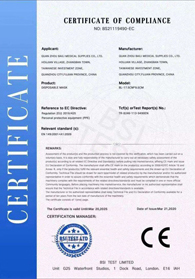

Our internal quality management systems are designed to ensure consistency, traceability, and performance. For specific project requirements or export markets, we can work with clients to ensure compliance with relevant regional certifications. Our experience in exporting to numerous countries means we are adept at navigating the documentation and compliance needs of international trade.
Frequently Asked Questions About TC Vacuum Gauges
Q1: What is the primary advantage of a TC vacuum gauge over a Bourdon gauge?
A Bourdon gauge measures positive pressure, while TC gauges measure vacuum pressure, typically in the medium vacuum range. TC gauges are fundamentally different in their operating principle (thermal conductivity vs. mechanical deformation) and are designed for a much lower pressure spectrum where Bourdon gauges are not applicable.
Q2: Can TC vacuum gauges measure all types of gases accurately?
TC gauges are calibrated for a specific gas, usually air or nitrogen. While they can be used for other gases, the readings will deviate from true pressure due to differences in thermal conductivity. We can provide gas correction factors for common gases, or custom calibration can be arranged for specialized applications. For most industrial users working with standard atmospheres, the built-in calibration is sufficient.
Q3: How often should a TC vacuum gauge be recalibrated?
For general industrial use, recalibration might be needed annually, or if you suspect inaccurate readings. In highly critical applications, more frequent checks might be warranted. A simple check is to expose the gauge to atmospheric pressure and verify it reads correctly (around 1000 mbar or 760 Torr). For precise applications, a professional calibration service is recommended.
Q4: Are TC vacuum gauges suitable for high vacuum applications (below 10-3 mbar)?
TC gauges are primarily effective in the medium vacuum range (approx. 1 mbar down to 10-3 mbar). For applications requiring higher vacuum levels (e.g., below 10-4 mbar), other technologies like ionization gauges (hot or cold cathode) or capacitance manometers are typically employed, often used in conjunction with a TC gauge to cover the full operating range.
Q5: What is the typical lifespan of a TC gauge filament?
Filament lifespan varies significantly based on operating conditions, the types of gases present, and cycling frequency. In clean, stable environments, filaments can last for many years. In more demanding applications with potential contaminants or reactive gases, lifespan may be shorter. We design our filaments for durability, but they are consumable parts.
Trusted by Industry Professionals: Client Testimonials

"We use Hebei Yuanchang's TC vacuum gauges on our automated sausage stuffing lines. They've been incredibly reliable, even with daily washdowns and steam. The consistent readings have improved our vacuum packaging efficiency significantly. Glad we found a supplier who understands food processing needs."
— Mark Jenkins, Production Manager, Premium Meats Co. (USA)
"The technical support from Hebei Yuanchang was excellent when we integrated their gauges into our new vacuum drying ovens. They helped us select the right model and provided clear wiring diagrams. Accuracy is spot on, crucial for our API production. Their 40 years of experience really shows."
— Dr. Anya Sharma, R&D Engineer, PharmaTech Solutions (Canada)
"We've been sourcing OEM components for our vacuum equipment from Hebei Yuanchang for years. Their precision machining and consistent quality for vacuum gauge parts are top-notch. It’s rare to find a supplier with this level of manufacturing capability and reliability in international trade."
— David Chen, Procurement Director, Global Vacuum Systems Inc. (Australia)
"The robustness of these TC gauges is impressive. We use them in a challenging chemical processing environment, and they've held up far better than previous gauges we've tried. The support for our custom flange requirements was also very helpful. Definitely recommend their products."
— Sarah Lee, Operations Lead, ChemSolutions Ltd. (UK)Ready to Enhance Your Vacuum Process Control?
Partner with Hebei Yuanchang for reliable, high-precision TC vacuum gauges engineered for industrial performance. Our 40 years of manufacturing expertise ensures you receive solutions built for accuracy and durability.