Vacuum Pressure Sensor
Vacuum Pressure Sensors: Precision Control for Industrial Processes
Ensuring Accuracy, Reliability, and Efficiency in Your Operations
 By Alex Chen, Senior Industrial Engineer
Understanding Vacuum Pressure Sensors
In the intricate world of industrial manufacturing and processing, maintaining precise control over atmospheric conditions is often the bedrock of success. Nowhere is this more critical than in applications involving negative pressure, or vacuum. Whether you're involved in food packaging, semiconductor manufacturing, medical device production, or advanced materials processing, the ability to accurately measure and control vacuum levels is paramount. This is where the humble yet vital vacuum pressure sensor comes into play. These sophisticated devices are the eyes and ears of your process, translating subtle changes in pressure into actionable data.
The demand for reliable vacuum sensing technology is intrinsically linked to the growth of industries that rely on controlled atmospheric environments. Take the food processing sector, for example. As consumers increasingly seek convenience and extended shelf life, the demand for vacuum-packed products continues to surge. This trend directly fuels the need for robust vacuum packaging equipment, which in turn requires accurate vacuum pressure sensors for optimal performance. Analysts project the global processed meat market to reach substantial figures, with growth driven by demand for cured, smoked, and filled products. Reports indicate a projected growth from USD 750.58 billion in 2026 to USD 1,253.77 billion by 2034, highlighting the scale of operations depending on precise processing. Similarly, the meat processing equipment market itself is expanding significantly, with various reports citing market values in the tens of billions and compound annual growth rates around 5-7%. For instance, the global meat processing equipment market was estimated at USD 11.28 billion in 2024 and is projected to reach USD 15.04 billion by 2030. These figures underscore the widespread adoption of technologies that necessitate precise vacuum control.
In sectors like semiconductor fabrication, even minute fluctuations in vacuum can lead to compromised wafer quality, rendering entire batches useless. The complexity of modern electronics demands process repeatability at an astonishing level, and vacuum integrity is a core component. Likewise, in advanced research and development, particularly in fields like material science and aerospace simulation, achieving and maintaining specific vacuum conditions is non-negotiable for accurate experimentation. The development of new materials, the testing of components in simulated space environments, and the precise application of coatings all depend on unflinching vacuum measurement.
Beyond mere measurement, these sensors are often integral to automated control loops. They provide the feedback necessary for systems to adjust pumps, valves, and other components in real-time, ensuring that the desired vacuum level is achieved and maintained consistently. This automation is key to increasing production efficiency, reducing manual intervention, and ultimately lowering operational costs. It's not just about knowing the pressure; it's about using that knowledge to drive process optimization. The reliance on precise manufacturing extends to a wide array of industries, from automotive component production to pharmaceutical manufacturing, where aseptic environments are critical.
From a procurement perspective, selecting the right vacuum pressure sensor involves more than just looking at a datasheet. It requires understanding the specific environment, the required accuracy, the media being measured, the lifespan expectations, and the integration challenges within your existing system. A poorly chosen sensor can lead to inaccurate readings, process interruptions, product defects, and costly downtime. The long-term operational implications far outweigh the initial purchase price. Think about the cost of a failed batch of high-value semiconductors or a batch of food products that spoil prematurely due to inadequate vacuum sealing – the sensor's contribution to preventing such issues is immense.
At Hebei Yuanchang, we understand these complexities intimately. With over 40 years of experience in precision manufacturing, we've seen firsthand how critical accurate measurement is. Our background, primarily in food processing equipment, has instilled in us a deep appreciation for reliability, hygiene, and operational efficiency – principles that translate directly to the design and production of high-quality vacuum pressure sensors. We are not just selling a component; we are offering a solution backed by decades of industrial know-how. Our state-of-the-art facilities, including Japanese Mazak CNC machining centers, allow us to produce components with the precision required for demanding vacuum applications. This in-house capability ensures consistent quality and allows us to offer customized solutions when standard off-the-shelf products don't quite fit the bill.
This article aims to demystify vacuum pressure sensors, covering their fundamental principles, diverse applications, and the critical factors involved in their selection and implementation. We’ll delve into the technical nuances, offer practical advice for procurement professionals and engineers, and provide insights into why partnering with an experienced manufacturer like Hebei Yuanchang offers a distinct advantage in achieving and maintaining the precise vacuum conditions your operations demand.
Common Challenges in Vacuum Measurement
Operating under vacuum presents a unique set of challenges. Inaccurate readings or sensor failures can cascade into significant operational problems:
- Process Inconsistency: Fluctuations in vacuum pressure can lead to variations in product quality, processing times, and final output. For instance, in freeze-drying, insufficient vacuum can prevent proper sublimation, affecting product texture and efficacy.
- Product Spoilage/Defects: In vacuum packaging, leaks or inadequate vacuum levels allow air ingress, drastically reducing shelf life and leading to product spoilage or visual defects. This translates directly to increased waste and lost revenue.
- Equipment Damage: Extreme vacuum conditions or sudden pressure changes can potentially damage sensitive equipment if not properly monitored and controlled.
- Safety Hazards: In certain industrial processes, uncontrolled vacuum can contribute to implosion risks or affect the safe operation of associated machinery.
- Inefficient Energy Use: If vacuum systems operate inefficiently due to poor measurement, pumps may run longer than necessary, leading to higher energy consumption and operational costs.
- Difficulties in Calibration and Maintenance: Some vacuum sensor technologies can be challenging to calibrate or maintain, leading to increased downtime and specialized labor requirements.
Addressing these points often starts with reliable, accurate data from your vacuum pressure sensors. It’s a foundational element for robust process control.
How Vacuum Pressure Sensors Operate
At their core, vacuum pressure sensors convert a physical vacuum level into an electrical signal. The specific mechanism varies depending on the sensor type, but most involve a diaphragm or sensing element that responds to pressure changes. This deformation is then translated into an output signal, typically a voltage, current, or digital data stream.
A common principle involves a strain gauge. As pressure changes, a diaphragm deflects, stretching or compressing attached strain gauges. The electrical resistance of these gauges changes proportionally to the applied stress. This change in resistance is measured, amplified, and conditioned into a standard output signal that can be read by control systems, PLCs, or displays.
Other technologies include:
- Capacitive Sensors: A diaphragm acts as one plate of a capacitor. As pressure changes, the diaphragm moves, altering the distance between the plates and thus the capacitance. This change is measured and converted to a pressure reading. These are often favored for their stability and accuracy over a wide range.
- Piezoelectric Sensors: These utilize materials that generate an electrical charge when subjected to mechanical stress. The diaphragm's deflection under vacuum stress causes the piezoelectric element to produce a charge proportional to the pressure.
- Piezoresistive Sensors: Similar to strain gauges, these use semiconductor materials whose resistance changes significantly with applied stress.
The key is that the sensor must be able to withstand the specific vacuum range and be compatible with the process media. For example, sensors used in food processing must often meet stringent hygiene standards and be constructed from materials like stainless steel that are resistant to cleaning agents.
Key Types of Vacuum Pressure Sensors
The landscape of vacuum sensors is diverse, with different technologies suited for specific applications and pressure ranges:
Pirani Sensors
Based on the principle of heat transfer through gas molecules. At lower vacuum levels, fewer molecules are present to transfer heat away from a heated filament. The sensor measures the filament's resistance (which changes with temperature) to infer the gas density and thus pressure. Ideal for rough vacuum ranges (e.g., 10⁻³ to 1000 mbar). They are robust and cost-effective.
Capacitive Manometers
These employ a ceramic or fused silica diaphragm as one plate of a capacitor. Changes in vacuum pressure cause diaphragm deflection, altering capacitance. They offer excellent accuracy and stability across a broad range, from medium vacuum up to atmospheric pressure. Their inert materials make them suitable for corrosive gases.
Diaphragm Gauges (Bourdon Tube, etc.)
Mechanical gauges where vacuum causes a curved tube or diaphragm to straighten. This movement is linked to a pointer on a dial. While simple and low-cost, they are generally less accurate and prone to vibration issues compared to electronic sensors. Often used for indication rather than precise process control.
Ionization Gauges (Hot and Cold Cathode)
Used for ultra-high vacuum (UHV) ranges (e.g., 10⁻³ to 10⁻¹⁰ mbar). They work by ionizing gas molecules within the vacuum chamber and measuring the resulting ion current, which is proportional to the pressure. Hot cathode (Bayard-Alpert) gauges are common, while cold cathode gauges avoid filament burnout in certain conditions.
Digital Vacuum Sensors
These often integrate a sensing element (like piezoresistive or capacitive) with digital processing and output electronics. They provide direct digital readouts, easy integration with automation systems (e.g., Modbus, IO-Link), and often include features like configurable alarm setpoints and self-diagnostic capabilities.
The choice depends heavily on the required pressure range, accuracy needs, media compatibility, and budget. For many industrial automation tasks, digital sensors offering precise electronic outputs are the go-to choice.
Where Precision Vacuum Measurement is Crucial
Vacuum pressure sensors are indispensable across a wide spectrum of industrial applications. Their ability to accurately monitor negative pressure ensures process integrity, product quality, and operational efficiency. Here are a few key areas:
Food & Beverage Packaging
Essential for vacuum sealing to extend shelf life, prevent oxidation, and maintain product freshness. Accurate vacuum levels are critical for the integrity of the seal and the perceived quality of packaged goods like meats, cheeses, and coffee.
Semiconductor Manufacturing
Used in processes like etching, deposition (CVD/PVD), and wafer handling. Even minor pressure deviations can impact layer uniformity, defect rates, and overall chip yield. High-purity, stable vacuum is paramount.
Pharmaceutical & Medical Devices
Critical for sterile packaging, lyophilization (freeze-drying), and the manufacturing of sensitive medical equipment where contamination control and precise atmospheric conditions are vital. FDA compliance can necessitate rigorous monitoring.
Aerospace & Automotive
In testing environments (vacuum chambers), materials processing, and vacuum coating applications for components requiring specific surface properties or performance under simulated extreme conditions.
Industrial Automation
Part of robotic end-effectors (vacuum grippers) for pick-and-place operations, ensuring a secure hold. Also used in pneumatic systems and process control loops for various manufacturing tasks.
Laboratory & Research
For distillation, filtration, vacuum drying, and maintaining controlled environments for sensitive experiments. Accuracy is key to reproducible results.
Considering the sheer breadth of applications, selecting a sensor that not only meets technical specifications but also aligns with the specific operational demands and regulatory environments is critical.
Choosing the Right Sensor for Your Application
Selecting the appropriate vacuum pressure sensor is a decision that impacts process reliability and cost-effectiveness. Here’s a structured approach:
- Define the Pressure Range: This is paramount. Are you measuring rough vacuum (e.g., from 760 mbar down to 1 mbar), medium vacuum (1 mbar to 10⁻³ mbar), or high/ultra-high vacuum? Ensure the sensor's specified range significantly exceeds your operational requirements to avoid inaccuracy or damage.
- Identify the Process Media: What gas or vapor will the sensor be exposed to? Corrosive, inert, or clean gases? This dictates the material compatibility required for wetted parts (e.g., stainless steel, ceramic, Viton seals). Aggressive media may require specialized sensor designs or protective coatings.
- Determine Required Accuracy and Resolution: What level of precision is truly necessary for your process? Higher accuracy often correlates with higher cost. Consider resolution – the smallest change in pressure the sensor can detect and report.
- Output Signal Requirements: Do you need an analog output (e.g., 0-10V, 4-20mA) for a basic control system, or a digital output (e.g., RS-485, Modbus, IO-Link) for integration with PLCs and SCADA systems?
- Environmental Conditions: Consider operating temperature, humidity, vibration, and potential for dust or liquid ingress (IP rating). Some sensors are designed for harsh industrial environments.
- Response Time: How quickly does the sensor need to react to pressure changes? Faster response times are critical in dynamic processes.
- Connection Type: Standard vacuum fittings (e.g., KF, CF, NPT) are available. Ensure compatibility with your existing vacuum lines.
- Budget and Lifecycle Cost: While initial cost is a factor, consider the total cost of ownership, including calibration frequency, maintenance, potential downtime, and lifespan. A slightly more expensive, reliable sensor can often be more economical in the long run.
It's often beneficial to consult with experienced suppliers like Hebei Yuanchang. We can help navigate these considerations to ensure you specify the optimal sensor for your unique operational context.
Technical Specifications to Consider
When evaluating vacuum pressure sensor datasheets, pay close attention to these critical specifications:
| Specification | Description & Importance |
|---|---|
| Pressure Range | The minimum and maximum pressure the sensor is designed to measure (e.g., 10⁻⁴ to 1000 mbar). Crucial for matching the sensor to your process vacuum levels. |
| Accuracy | The maximum deviation from the true pressure reading (e.g., ±1% of full scale). Higher accuracy often means higher cost but is vital for sensitive processes. |
| Resolution | The smallest pressure increment the sensor can detect or report. Important for identifying subtle changes. |
| Output Signal | Type of electrical signal produced (e.g., 4-20mA, 0-5V, digital protocol like Modbus). Must be compatible with your control system. |
| Media Compatibility | Materials of wetted parts (diaphragm, housing) must resist corrosion or contamination from the gas being measured. |
| Operating Temperature Range | The ambient and process temperature limits within which the sensor will function accurately. Temperature compensation is often a key feature. |
| Overpressure Protection | Capability to withstand brief exposure to pressures above its rated maximum without damage. Essential for systems with potential pressure spikes. |
| Electrical Connection | Type of connector (e.g., M12, DIN, flying leads) and voltage supply requirements. |
| IP Rating | Ingress Protection rating, indicating resistance to dust and water. Important for washdown environments or dusty conditions. |
vacuum pressure transmitter Analog vacuum sensor pressure vacuum switches
Understanding these parameters ensures you select a sensor that not only measures accurately but also survives and performs reliably in your specific operational context.
Evaluating a Vacuum Sensor Supplier
Beyond the product itself, the supplier plays a crucial role in ensuring successful implementation and ongoing support. When evaluating potential partners, consider these points:
- Experience & Expertise: Do they have a proven track record in vacuum technology and industrial applications? Can they offer technical advice beyond just sales?
- Product Range & Customization: Do they offer a broad portfolio to meet diverse needs? Crucially, can they provide custom solutions or modifications if your application requires it? Many industrial processes are unique.
- Quality Control & Certifications: Do they adhere to international quality standards (e.g., ISO)? Are their products certified for relevant industries (e.g., CE, RoHS)?
- Lead Times & Reliability: Can they meet your delivery schedules? What are their typical production lead times, and how reliable are they in fulfilling orders? In international trade, this is a major consideration.
- After-Sales Support: What kind of support is available post-purchase? This includes technical assistance, warranty claims, spare parts, and calibration services. A traceable after-sales management system is a strong indicator of commitment.
- Transparency & Communication: How responsive and clear are they in their communication? Do they provide comprehensive documentation?
As a manufacturer with decades of experience and robust in-house machining capabilities, Hebei Yuanchang embodies these qualities. We pride ourselves on transparency, reliable delivery, and comprehensive support, ensuring your procurement process is smooth and your operations remain uninterrupted.
Our Manufacturing Strength: Precision You Can Rely On
At Hebei Yuanchang Food Mechanism & Technology Co., Ltd., our 40-year legacy in precision engineering forms the bedrock of our vacuum pressure sensor production. We don't just assemble; we manufacture with meticulous attention to detail.
Our 14,000 square meter facility is equipped with over 20 sets of advanced processing machinery. This includes conventional machinery like lathes and milling machines, alongside high-precision grinding machines and state-of-the-art wire cutting equipment. This comprehensive in-house capability allows us to control every step of production, from raw material to finished component.
A significant enhancement to our production capacity came in 2012 with the integration of 8 Japanese Mazak CNC machining centers. These cutting-edge machines enable us to produce high-standard components requiring large volumes, exceptional precision, and non-standard specifications. This means we can confidently tackle complex sensor designs and deliver consistent quality, batch after batch. This investment reflects our commitment to staying at the forefront of manufacturing technology.
Our core product focus has historically been in meat processing equipment, a field where hygiene, reliability, and precision are non-negotiable. This deep-seated understanding of demanding industrial requirements is directly transferable to the production of high-performance vacuum pressure sensors. We apply the same rigor and quality standards to every component we produce.
Furthermore, our traceable after-sales management system ensures that we maintain complete oversight throughout the product lifecycle. This commitment to quality and control means you receive not just a sensor, but a meticulously manufactured component backed by robust manufacturing processes and decades of industrial experience.
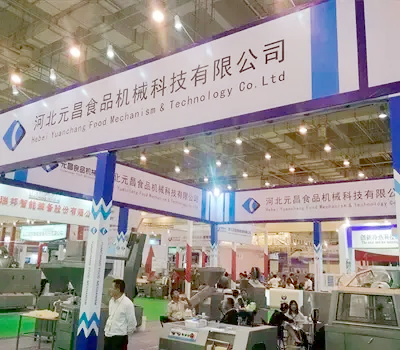
Inside our advanced machining workshop, ensuring precision for every component.
Quality Assurance and Certifications
We understand that in international B2B trade, quality assurance and adherence to global standards are non-negotiable. Hebei Yuanchang is committed to delivering products that meet stringent requirements.
Our manufacturing processes are guided by international quality management systems. While specific certifications for our vacuum pressure sensors are evolving, our foundational operations are aligned with the principles expected by global partners. For our core food processing equipment business, we adhere to relevant industry standards ensuring hygiene and safety.
We are proud to operate under the umbrella of recognized quality benchmarks. Depending on the specific product line and target market, our sensors and manufacturing processes can meet or be adapted to comply with:
- ISO 9001: While not explicitly listed for sensors, our overall company operations are managed with quality systems akin to ISO 9001 standards, focusing on continuous improvement and customer satisfaction. We are actively pursuing relevant certifications for our sensor products.
- CE Marking: For products destined for the European Economic Area, our sensors can be supplied with CE compliance, demonstrating adherence to health, safety, and environmental protection standards.
- RoHS Compliance: We ensure our electronic components comply with the Restriction of Hazardous Substances directive, critical for electronics exported to many global markets, including the EU.
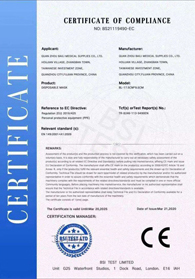


We are committed to providing full documentation and supporting your import requirements. Please specify your market and compliance needs when requesting a quote.
What Our Clients Say
We value the feedback from our international partners. Here’s what some of them have shared about their experience with our industrial components, including our precision sensors:

"We needed reliable vacuum sensors for our automated packaging lines. The precision and consistency from Hebei Yuanchang have significantly reduced our product rejection rates. Their export team was very responsive, especially regarding shipping logistics to the US West Coast."
Mark JenkinsOperations Manager, Food Packaging Co., USA

"Integrating their digital vacuum sensors into our R&D setup was straightforward. The accuracy is spot-on for our sensitive material science experiments. We appreciate their willingness to discuss custom output requirements to match our specific data acquisition systems."
Dr. Anya SharmaResearch Engineer, Tech Innovations Ltd., UK

"As a distributor, sourcing reliable components from overseas can be a challenge. Hebei Yuanchang has proven to be a trustworthy partner. Their vacuum sensors are robust, competitively priced, and their communication regarding lead times and container loading for our Australian market has been excellent."
David LeeProcurement Specialist, Industrial Supplies AU
Frequently Asked Questions
Q1: What is the typical lifespan of a vacuum pressure sensor?
Lifespan varies greatly depending on the technology, operating conditions, and maintenance. High-quality electronic sensors designed for industrial use, under normal operating conditions and with proper installation, can last from 5 to 15 years or more. Factors like exposure to corrosive media, extreme temperatures, or frequent overpressure events can shorten this.
Q2: How do I calibrate a vacuum pressure sensor?
Calibration typically involves comparing the sensor's output against a known, accurate reference standard (e.g., a NIST-traceable vacuum gauge) at various points across its range. For digital sensors, software tools might be provided for calibration. It's often recommended to use specialized calibration services or follow manufacturer guidelines. For many industrial applications, calibration might be required annually or bi-annually, depending on criticality.
Q3: Can your vacuum sensors measure corrosive gases?
Yes, we offer sensors with wetted parts made from materials like stainless steel (e.g., 316L) and ceramic, which offer excellent resistance to many corrosive gases. Please specify the exact media and concentration when inquiring so we can recommend the most suitable model.
Q4: What are the advantages of digital vacuum sensors over analog ones?
Digital sensors offer higher accuracy, better noise immunity, easier integration with modern control systems (PLCs, SCADA) via digital protocols, and often include advanced features like configurable alarm setpoints, diagnostics, and remote monitoring capabilities. They simplify wiring and reduce signal degradation over long distances.
Q5: Do you offer OEM/ODM services for vacuum pressure sensors?
Absolutely. With our advanced manufacturing capabilities, including Japanese Mazak CNC centers, we are well-equipped to provide OEM and ODM solutions. We can work with your specifications to develop custom sensors, integrate specific features, or brand products to your requirements. This is a core part of our service for industrial partners.
Ready to Enhance Your Process Control?
Discover how Hebei Yuanchang's precision vacuum pressure sensors can optimize your operations. Leverage our 40 years of manufacturing expertise for reliability and accuracy you can trust.
Or visit our contact page: ycmeatmech.com/contacts.html