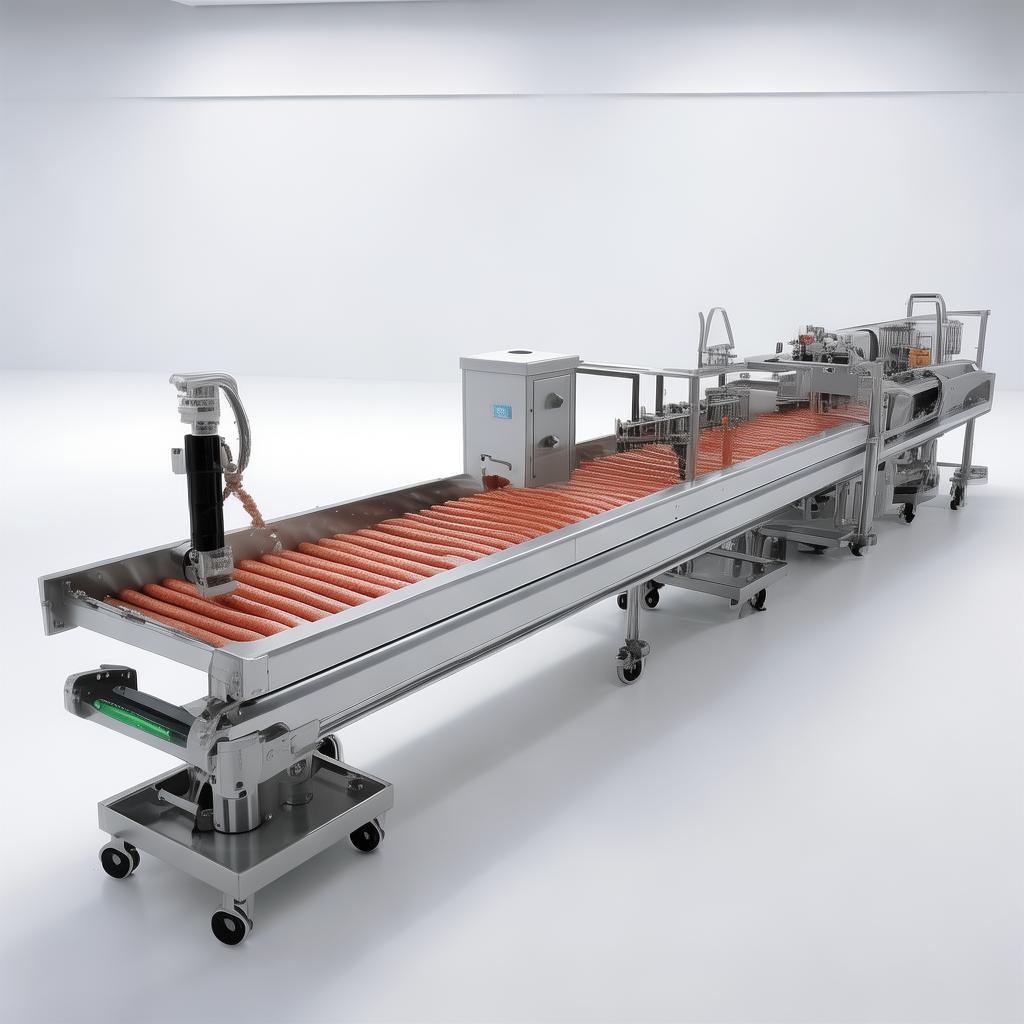
High Vacuum Gauge Digital
High Vacuum Gauge Digital: Precision Measurement for Critical Processes
By Hebei Yuanchang Food Mechanism & Technology Co., Ltd.
Published: October 26, 2023
Navigating the Nuances of Ultra-Low Pressure: Why Digital High Vacuum Gauges Matter
In the intricate world of industrial manufacturing and scientific research, particularly where processes demand controlled environments at extremely low pressures – think semiconductor fabrication, advanced material processing, or specialized food production – precision and reliability are non-negotiable. The ability to accurately measure and monitor these high vacuum conditions is paramount. This is where the high vacuum gauge digital truly shines. Gone are the days when solely relying on analog gauges, with their inherent mechanical limitations and susceptibility to environmental interference, was the standard. Today's demanding applications call for the clarity, responsiveness, and digital precision that only advanced vacuum measurement technology can provide.
The term "high vacuum" itself refers to a range of pressures typically from 10-3 Torr down to 10-6 Torr, and sometimes even lower. Achieving and maintaining these levels is crucial for processes where even minute atmospheric particles can disrupt outcomes. For instance, in the electronics industry, even trace amounts of contaminants can lead to device failure. In research, maintaining a high vacuum environment is fundamental for experiments involving particle accelerators, mass spectrometers, or ultra-high vacuum chambers. For food manufacturers specializing in dehydrated products or freeze-drying, precise vacuum control ensures product integrity, extends shelf life, and maintains desired textures and nutritional values. This is where our expertise at Hebei Yuanchang, built over 40 years in specialized machinery, intersects with the critical need for accurate vacuum measurement. We understand that the machinery we build relies on precise environmental controls, and the gauges are often the eyes and ears of these complex systems.
Selecting the right digital high vacuum gauge involves more than just reading a number. It requires understanding the underlying measurement principles – capacitance manometers, Pirani sensors, or cold cathode gauges, each suited to different pressure ranges and application complexities. The 'digital' aspect not only offers a clear, easily readable display but also unlocks possibilities for data logging, integration with control systems (PLCs, SCADA), and remote monitoring. This shift from analog dials to digital readouts is driven by the increasing automation and data-centric nature of modern industrial operations. Procurement managers and technical engineers alike are looking for solutions that enhance process control, minimize human error, and provide actionable data for optimization and quality assurance.
Consider the challenges in calibrating and maintaining equipment in remote or hazardous environments. A digital gauge, especially one with integrated diagnostics and communication capabilities, can significantly reduce the need for on-site intervention. For international trade, especially with markets like the USA where stringent quality and safety standards are the norm, the reliability and traceable accuracy of digital vacuum instrumentation are key selling points. The high vacuum gauge digital is not merely an instrument; it's a critical component that impacts yield, product quality, operational safety, and ultimately, profitability. Our experience in exporting complex machinery has taught us that the finest details, like the precision of a vacuum gauge, are often what set successful operations apart from those struggling with inconsistencies.
This page aims to demystify the selection and application of digital high vacuum gauges. We’ll delve into the technology, explore common applications, discuss key features to look for, and highlight why choosing a reputable manufacturer with a proven track record, like Hebei Yuanchang, is essential for ensuring the integrity of your high-value processes. Whether you're involved in advanced manufacturing, R&D, or specialized processing, understanding the capabilities of modern vacuum measurement technology is vital for staying ahead. The digital revolution in measurement is here, and for high vacuum applications, it offers unprecedented levels of control and insight.
Our commitment extends beyond just supplying equipment. With 40 years in the manufacturing sector, we understand the entire workflow, from raw material intake to finished product. We know that a faulty vacuum gauge can render an entire production run useless, costing not only materials but valuable time and reputation. This is why we emphasize the importance of robust, accurate, and reliable measurement tools. The global processed meat market, for example, is projected to grow significantly, with demand for consistency and quality driving the need for advanced processing technologies. Accurate vacuum control is indispensable for techniques like freeze-drying and vacuum stuffing, directly impacting texture, shelf-life, and consumer appeal. The high vacuum gauge digital is a silent, yet powerful, guardian of these quality attributes.
Let's explore how these indispensable instruments can enhance your operations. We'll cover everything from the fundamental principles to practical considerations for procurement and integration, ensuring you have the knowledge to make an informed decision.
Industry Insight: The global meat processing equipment market is experiencing robust growth, with projections indicating a rise to over USD 17 billion by 2034, driven by increasing demand for processed foods and automation. (Fortune Business Insights). This growth necessitates precise control over various stages, including vacuum applications for specific product types, underscoring the importance of reliable vacuum measurement.
Understanding the Spectrum: Types of High Vacuum Gauges
When we talk about "high vacuum," we're entering a realm where air pressure is significantly reduced. To measure this effectively, various gauge technologies have been developed, each with its strengths and optimal operating ranges. For procurement teams and engineers, understanding these differences is key to selecting the right high vacuum gauge digital solution.
1. Pirani Gauges (Thermal Conductivity)
Pirani gauges operate on the principle that the thermal conductivity of a gas decreases as its pressure decreases. A heated filament in the gauge loses heat to the surrounding gas. At higher pressures, more heat is lost; at lower pressures, less heat is lost. By measuring the filament's temperature (or the power required to maintain its temperature), the gauge can infer the gas pressure.
- Operational Range: Typically from atmospheric pressure down to about 10-4 Torr. They are excellent for covering a broad mid-to-high vacuum range.
- Pros: Relatively simple, robust, and cost-effective. Good for monitoring roughing lines and general vacuum indication.
- Cons: Accuracy can be affected by gas composition and filament contamination. Not suitable for ultra-high vacuum (UHV) levels.
2. Capacitance Manometers (Absolute Pressure)
These gauges use a sealed reference cavity at a known absolute pressure (often a hard vacuum) and a diaphragm exposed to the process vacuum. The pressure difference causes the diaphragm to deflect, changing the capacitance between the diaphragm and fixed electrodes. This capacitance change is directly proportional to the pressure difference.
- Operational Range: Excellent for medium to high vacuum, typically from 10 Torr down to 10-5 Torr, and some specialized models go lower. They are considered absolute gauges because they don't rely on atmospheric pressure reference.
- Pros: Highly accurate, stable, non-drifting, and unaffected by gas composition. Ideal for precise process control and calibration standards.
- Cons: More expensive than Pirani gauges, can be sensitive to vibrations, and require careful handling.
3. Cold Cathode Gauges (Ionization)
These gauges ionize gas molecules within the vacuum chamber by applying a high voltage. The resulting ions are collected by a charged electrode, and the ion current generated is proportional to the pressure. They are effective at very low pressures.
- Operational Range: Typically from 10-2 Torr down to 10-9 Torr and below. Crucial for high and ultra-high vacuum applications.
- Pros: Sensitive to very low pressures, providing a wide measurement range.
- Cons: Can be fragile, require a high voltage power supply, and can be affected by magnetic fields. May require separate gauges for higher pressure ranges.
4. Hot Cathode Gauges (Ionization)
Similar to cold cathode gauges, but they use a heated filament (thermionic emission) to generate electrons, which then ionize gas molecules. The ion current is measured.
- Operational Range: Generally from 10-3 Torr down to 10-8 Torr.
- Pros: Offer good sensitivity and a wide measurement range.
- Cons: Filament can burn out over time, requiring replacement. Can be sensitive to gas contamination and may require careful calibration.
For many industrial applications, a combination of these technologies is often employed. For example, a Pirani gauge might monitor the roughing process, while a capacitance manometer or a digital ionization gauge takes over as the vacuum level drops further. This layered approach ensures reliable measurement across the entire process, from initial pump-down to achieving the target high vacuum.
Why Go Digital? Advantages of Digital High Vacuum Gauges
The transition from analog to digital for high vacuum measurement isn't just a technological upgrade; it's a strategic move that enhances operational efficiency, data integrity, and process control. Here’s why selecting a high vacuum gauge digital is a smart investment for any discerning industrial buyer.
Digital displays offer unambiguous numerical readings, eliminating parallax errors and misinterpretations common with analog needle gauges. This clarity is vital in fast-paced environments or for operators with varying levels of experience.
Digital electronics allow for more precise signal processing, often leading to higher accuracy readings and better resolution compared to mechanical analog systems. This is critical for processes where even minor deviations can have significant consequences.
Most digital gauges offer outputs for data logging (e.g., serial interfaces like RS-232, RS-485, or Ethernet). This enables real-time monitoring, historical trend analysis, and integration with SCADA or MES systems for automated process control and quality assurance.
Digital units often allow users to configure units of measurement (Torr, mbar, Pa), set alarm thresholds, and adjust other parameters directly through an interface or software, offering greater flexibility than fixed analog scales.
Fewer moving mechanical parts mean less wear and tear. Digital gauges are generally more robust against shock and vibration, leading to longer operational life and lower maintenance costs. Calibration can often be performed electronically or with simplified procedures.
The digital output facilitates remote monitoring, which is invaluable for large facilities, hazardous environments, or when engineers need to oversee processes from a central control room or even off-site.
For businesses operating in markets with stringent regulatory requirements, like the USA, the data logging capabilities are particularly beneficial for demonstrating compliance and providing auditable records of process conditions. This level of transparency is a significant advantage in sectors ranging from pharmaceuticals to food production, where traceability is paramount.
Procurement Tip: When evaluating digital high vacuum gauges, inquire about the communication protocols supported. Compatibility with your existing automation systems (e.g., Modbus, Profibus, Ethernet/IP) will streamline integration and minimize additional development costs.
Key Applications for Digital High Vacuum Gauges
The precision offered by digital high vacuum gauges makes them indispensable across a wide array of sophisticated industrial and scientific disciplines. Their ability to reliably measure and report pressures in the high vacuum range (typically 10-3 to 10-6 Torr and below) is critical for process integrity and product quality.
Semiconductor Manufacturing
Critical for processes like vacuum deposition (PVD, CVD), sputtering, etching, and ion implantation. Even minute contamination in a high vacuum environment can render sensitive microchips unusable. Precise pressure control is essential for achieving uniform thin film deposition and etch profiles.
Research & Development Laboratories
Used in mass spectrometers, electron microscopes, particle accelerators, vacuum chambers for material science research, and various experimental setups requiring controlled low-pressure environments. Accuracy and repeatability are paramount for valid scientific outcomes.
Food Processing & Preservation
Essential for freeze-drying (lyophilization) of food products, pharmaceuticals, and biological samples. Also vital for vacuum packaging, where removing air extends shelf life by inhibiting oxidation and microbial growth. Precise vacuum levels ensure product quality, texture, and nutrient retention. For instance, achieving the correct vacuum in freeze-drying is crucial for sublimation efficiency.
As mentioned in market reports, the demand for processed and convenience meats is a significant driver for specialized equipment. Vacuum techniques, including those for filling and molding, rely on accurate pressure control. Furthermore, our experience with meat processing machinery highlights how controlled atmospheres, often achieved through vacuum, are vital for producing high-quality sausages, cured meats, and jerky, ensuring both safety and desired product characteristics.
Industrial Coating
Applications such as vacuum metallization, optical coating, and protective PVD coatings require precise vacuum levels to ensure the adhesion, uniformity, and optical properties of deposited layers.
Aerospace & Automotive Testing
Vacuum chambers are used to simulate space or high-altitude conditions for testing components and materials. Reliable vacuum measurement is crucial for the integrity of these simulations.
General Industrial Vacuum Systems
Including vacuum furnaces, vacuum distillation, and degassing processes where removing atmospheric gases is necessary for efficient operation or product purity.
Operational Note: When selecting a gauge for a specific application, consider the process gas composition. Some gauges perform differently with different gases. For food processing, especially involving moisture or specific food-grade lubricants, gauge material compatibility and ease of cleaning are paramount. Consult specifications carefully.
Choosing Your High Vacuum Gauge Digital: Key Features to Consider
With numerous options available, selecting the right high vacuum gauge digital requires a thorough assessment of your specific operational needs. Don't just look at the price tag; consider the long-term value and performance. Here are critical factors to evaluate:
| Feature | Considerations for Your Application |
|---|---|
| Measurement Range & Accuracy | Ensure the gauge's specified range precisely covers your required operating pressures (e.g., 10-1 to 10-6 Torr). Verify the accuracy specifications – higher accuracy is vital for sensitive processes. Consider if absolute or gauge pressure measurement is needed. |
| Sensor Technology | Match the technology (Pirani, Capacitance Manometer, Ionization) to your pressure range and application. For very high vacuum, ionization gauges are necessary. For stability and accuracy in medium-high vacuum, capacitance manometers are often preferred. |
| Gas Type Compatibility | Some gauges are sensitive to gas composition. If you are working with specific gases (e.g., reactive gases, mixtures), confirm the gauge is calibrated for or unaffected by them. |
| Display & User Interface | Look for clear, readable digital displays. Ease of navigation for setting parameters and viewing readings is important. Consider backlight options for low-light environments. |
| Connectivity & Outputs | What communication protocols (RS-232, RS-485, Ethernet, Analog Output 0-10V) are available? Ensure compatibility with your PLC, DCS, or data acquisition system for seamless integration. |
| Environmental Tolerance | Consider operating temperature, humidity, and potential for vibration or shock in your environment. Choose a gauge built to withstand these conditions. |
| Certifications & Compliance | For regulated industries (e.g., food, pharma), look for relevant certifications (e.g., CE, RoHS, NSF for food contact surfaces). |
| Power Requirements | Verify voltage and power consumption to ensure compatibility with your facility's power infrastructure. |
| Durability & Materials | The materials of construction should be robust and resistant to potential process contaminants. For food applications, ensure materials are food-grade and easy to clean. |
| Manufacturer Support & Warranty | A strong warranty and readily available technical support are crucial. Consider the manufacturer's reputation and experience in vacuum technology. |
digital vacuum gauge torr portable vacuum gauge usg vacuum gauge
At Hebei Yuanchang, we understand that the machinery we supply relies on precise auxiliary components. Our 40 years of experience have taught us that investing in high-quality measurement tools like digital vacuum gauges translates directly into reliable production cycles and superior end-products, whether that's advanced food items or precision industrial components.
Installation and Maintenance: Practical Considerations
Even the most sophisticated high vacuum gauge digital will underperform if not installed correctly or maintained diligently. These aren't just plug-and-play devices; they require thoughtful integration into your vacuum system.
Installation Best Practices:
- Port Location: Mount the gauge as close as possible to the region of interest in the vacuum chamber. Avoid locations where stagnant gas pockets might form or where contaminants could directly impinge on the sensor.
- Sealing: Use appropriate vacuum-rated seals (e.g., O-rings, metal gaskets) and ensure connections are clean and properly torqued to prevent leaks. A single leak can compromise your entire high vacuum system.
- Wiring: Follow manufacturer guidelines for electrical connections precisely. Shielded cables may be necessary to prevent electromagnetic interference, especially with ionization gauges.
- Protection: For sensitive sensors like capacitance manometers, consider installing a bakeable shut-off valve between the gauge and the vacuum system. This protects the gauge during system venting and allows for safe removal for calibration or replacement without breaking the main vacuum.
- Pump-Down Effects: Be aware that rapid pump-down can sometimes cause transient pressure readings or sensor stress. Consult the manual for recommended pump-down procedures.
Maintenance Essentials:
- Calibration: Digital vacuum gauges require periodic calibration to maintain accuracy. The frequency depends on the gauge type, operating conditions, and required precision. Capacitance manometers typically drift less than ionization gauges and may require less frequent calibration. Keep calibration records for traceability.
- Cleaning: Sensors, especially those exposed to process gases or potential contamination, may need cleaning. Follow manufacturer-specific cleaning procedures carefully to avoid damaging the sensor element. For food-grade applications, cleaning protocols are extremely strict and must adhere to hygiene standards.
- Filament Replacement (for Hot Cathode Gauges): The filament in hot cathode gauges has a finite lifespan and will eventually need replacement. This is a standard maintenance task.
- System Checks: Regularly check for leaks in the vacuum system, as leaks can mimic low vacuum readings or cause sensor fouling.
Our 40 years in manufacturing have shown us that meticulous attention to detail, even in seemingly small components like gauges and their installation, is what separates robust, long-lasting industrial operations from those plagued by downtime and inconsistent results. When you procure equipment from us, you're benefiting from this depth of practical experience.
Why Partner with Hebei Yuanchang for Your Vacuum Measurement Needs?
As a seasoned manufacturer with over four decades of experience in specialized machinery, Hebei Yuanchang Food Mechanism & Technology Co., Ltd. understands the critical role precise instrumentation plays in successful industrial processes. While our core expertise lies in meat processing equipment, our understanding of vacuum technology, process control, and the need for reliable components is deeply ingrained. We leverage this extensive knowledge to ensure the machines we build operate with the utmost precision, and we can extend this insight to the selection of vital ancillary components like digital high vacuum gauges.
Our Commitment: We pride ourselves on delivering machinery that meets rigorous international standards. This same commitment to quality and performance extends to our understanding and recommendation of essential components like high vacuum gauge digital systems, ensuring your entire operation is built on a foundation of accuracy and reliability.
What We Offer:
- Extensive Industry Experience (40+ Years): Our longevity in manufacturing, since 1986, means we’ve seen and solved complex operational challenges. We bring this practical wisdom to every recommendation.
- In-House Precision Machining: With over 20 sets of advanced processing machinery, including Japanese Mazak CNC centers, we possess the capability to produce high-precision components. This translates to a deep appreciation for the quality and accuracy required in instrumentation.
- Global Export Expertise: We regularly export to diverse international markets, understanding the varying demands, standards, and logistical considerations. We can guide you through the complexities of international procurement.
- Focus on Reliability: Our reputation is built on the durability and consistent performance of our machinery. We advocate for components that uphold this same standard.
- Technical Insight: Our engineering team possesses a strong understanding of process control, including vacuum technology, essential for specialized food processing applications.
While we specialize in complete production lines for meat and pet food processing, our understanding of the underlying technologies, including vacuum measurement, is comprehensive. We know that the success of a vacuum process hinges on precise monitoring. The high vacuum gauge digital is a prime example of such a critical component.
Hear from Our Clients:
"The digital vacuum sensors on their new processing line have been a game-changer for our consistency. No more guesswork."
 David Chen, Production Manager, USA
"We were impressed with the technical consultation provided regarding vacuum integration. Their understanding goes beyond just the primary machinery."
 Maria Rodriguez, Operations Director, Mexico
"The accuracy of the integrated digital gauges ensures our freeze-dried products maintain peak quality. We trust Yuanchang's expertise."
 Kenji Tanaka, R&D Specialist, Japan
We understand that procurement decisions are based on trust, expertise, and proven capability. Let us leverage our 40 years of manufacturing excellence to help you secure the best vacuum measurement solutions for your critical applications.
Ready to Enhance Your Process Control?
Discover how our expertise and commitment to quality can benefit your operations.