In the rapidly evolving landscape of food processing, the transition from manual labor to automated precision is no longer a luxury but a necessity for survival. An automatic sauce filling machine represents the pinnacle of this evolution, allowing producers to maintain rigorous consistency while scaling their output to meet global demand. Whether dealing with high-viscosity condiments or delicate emulsions, the ability to dose accurately and hygienically is what separates market leaders from struggling enterprises.
Globally, the demand for ready-to-eat meals and processed meat products has surged, placing immense pressure on packaging lines to be both fast and flawless. Implementing an automatic sauce filling machine mitigates the risks of human error, reduces product wastage, and ensures that every single unit leaving the factory adheres to strict weight and quality specifications. This shift not only boosts the bottom line but also enhances the brand's reputation for reliability.
Understanding the technical nuances of these systems—from piston-driven mechanisms to servo-controlled nozzles—is essential for any facility manager looking to optimize their production flow. By integrating a modern automatic sauce filling machine, companies can achieve a seamless synergy between their pretreatment processes and final packaging, ensuring a streamlined journey from the raw ingredient to the consumer's table.
Global Industrial Context of Automatic Sauce Filling
The global food machinery market has seen a paradigm shift toward automation, driven by ISO standards and the need for stringent food safety compliance. In the meat and condiment sectors, the adoption of an automatic sauce filling machine is often the tipping point for companies moving from artisan production to industrial scale. Statistics indicate that automation can reduce filling errors by up to 99%, drastically lowering the cost of rejected batches.
However, the industry faces a persistent challenge: the diversity of sauce viscosities. From thin vinegars to thick, chunky BBQ sauces, a "one size fits all" approach rarely works. This complexity has forced the development of smarter, more adaptable filling systems that can handle various densities without sacrificing speed or accuracy, ensuring that global supply chains remain uninterrupted.
Defining the Modern Automatic Sauce Filling Machine
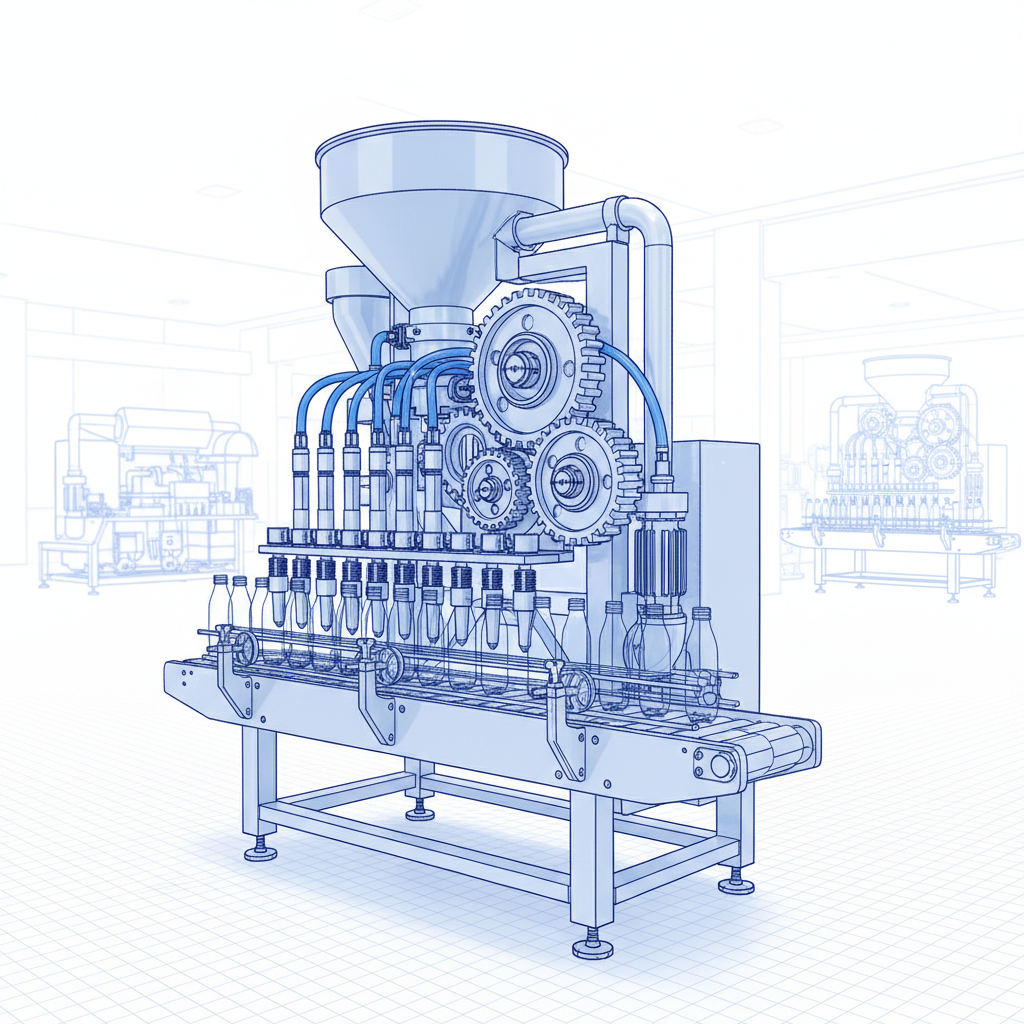
At its core, an automatic sauce filling machine is a precision-engineered system designed to dispense a predetermined volume of liquid or semi-solid product into containers with minimal human intervention. Unlike manual pouring, these machines utilize volumetric or gravimetric dosing to ensure that every bottle or pouch contains the exact amount of product promised on the label.
Beyond the simple act of filling, these machines are integral to the modern "smart factory." They are often synchronized with conveyor systems and capping units, creating a continuous flow that eliminates bottlenecks. In the context of meat processing, these machines are essential for adding marinades or sauces to pre-packaged meat products, ensuring a consistent flavor profile across thousands of units.
Furthermore, the definition of these machines has expanded to include "intelligent" capabilities. Modern units now feature PLC (Programmable Logic Controller) interfaces that allow operators to switch between different product recipes with a few taps on a screen, making the automatic sauce filling machine a versatile tool capable of handling a diverse product portfolio.
Core Components for Precision and Durability
The reliability of an automatic sauce filling machine depends heavily on the quality of its contact parts. High-grade stainless steel (usually SUS304 or SUS316L) is non-negotiable to prevent corrosion and ensure that the machine meets FDA and EHEDG hygienic design standards, preventing bacterial growth between batches.
Precision dosing is typically achieved through servo-motor driven pistons or peristaltic pumps. In an automatic sauce filling machine, the servo-system allows for micron-level control over the filling volume, which is critical when dealing with expensive ingredients or strict regulatory weight requirements.
Finally, the "anti-drip" nozzle technology is what ensures professional packaging. A high-quality automatic sauce filling machine utilizes vacuum-back suction or mechanical shut-off valves to prevent messy spills on the container rim, which would otherwise lead to contamination or failures during the sealing process.
Global Applications Across Food Sectors
The versatility of the automatic sauce filling machine allows it to be deployed across a vast array of industries. In North America and Europe, these machines are heavily used in the production of gourmet condiments and organic sauces, where precision is key to maintaining high-margin branding. In Asia, they are often integrated into massive meat-processing hubs to automate the filling of marinated meat pouches for export.
Beyond standard commercial use, these systems are invaluable in specialized contexts. For instance, in large-scale institutional catering or emergency food relief operations, a rugged automatic sauce filling machine can rapidly package nutrient-dense sauces or condiments into portable sachets, ensuring food stability and ease of distribution in remote industrial zones.
Efficiency Comparison of Filling Technologies
Long-Term Value and Economic Advantages
Investing in an automatic sauce filling machine provides a tangible return on investment (ROI) through the drastic reduction of product giveaway. When a machine overfills by even 2 grams per bottle across a million units, the financial loss is staggering. Automation eliminates this waste, effectively paying for itself within the first year of operation.
Beyond the numbers, there is the emotional and social value of safety and dignity. By removing workers from repetitive, straining manual filling tasks, companies reduce workplace injuries and allow their staff to move into higher-value roles such as quality control and machine management. This fosters a culture of innovation and trust within the workforce, transforming the factory floor into a modern technical environment.
Future Trends in Filling Automation
The future of the automatic sauce filling machine lies in the integration of AI and the Industrial Internet of Things (IIoT). We are seeing a move toward "predictive maintenance," where sensors can alert technicians that a seal is about to fail before it actually leaks, preventing costly unplanned downtime.
Sustainability is another driving force. New generations of filling machines are being designed for lower energy consumption and "waterless" cleaning cycles, reducing the environmental footprint of the food industry. Digital twins are also being used to simulate the filling process, allowing companies to optimize their line speed virtually before a single drop of sauce is poured.
Furthermore, the rise of personalized nutrition is leading to the development of flexible, small-batch automatic sauce filling machine systems. These "agile" lines can switch between five different flavors in minutes, enabling brands to offer limited-edition products without sacrificing the efficiency of mass production.
Overcoming Operational Challenges in Filling
One of the most persistent challenges in the industry is "air entrapment" in thick sauces, which can lead to inaccurate fills and unsightly bubbles in the final product. To solve this, advanced automatic sauce filling machine models now incorporate bottom-up filling techniques and vacuum-degassing stages, ensuring a dense, professional fill every time.
Another common hurdle is the difficulty of cleaning (CIP - Clean In Place). Sauce residues can harden and become breeding grounds for bacteria. The solution lies in modular design; modern machines allow for the rapid disassembly of the filling head and valves without the need for specialized tools, ensuring that hygiene standards are met with minimal effort.
Finally, dealing with particulate-heavy sauces (like chunky salsa) often clogs standard nozzles. The industry has responded with "large-bore" valve systems and agitation tanks that keep solids in suspension, ensuring that the automatic sauce filling machine delivers a consistent ratio of solids to liquids in every container.
Technical Performance Analysis of Sauce Filling Systems
| System Type |
Viscosity Handling |
Cleaning Ease (1-10) |
ROI Period |
| Piston-Driven |
High (Thick Sauces) |
8 |
8-12 Months |
| Peristaltic Pump |
Medium (Smooth) |
10 |
12-18 Months |
| Servo-Volumetric |
Universal |
9 |
6-10 Months |
| Vacuum Filler |
Very High (Pastes) |
7 |
10-14 Months |
| Gravity-Fed |
Low (Watery) |
9 |
18-24 Months |
| Hybrid-Automatic |
High/Adaptive |
8 |
7-11 Months |
FAQS
Yes, but it requires a specific configuration. For chunky products, we recommend a piston-driven automatic sauce filling machine with a wide-bore nozzle and a hopper equipped with an agitator. This prevents the chunks from clogging the intake and ensures they are distributed evenly across all containers.
Ensure the machine is constructed from SUS304 or SUS316L stainless steel and features a "Clean-In-Place" (CIP) design. A professional automatic sauce filling machine should have smooth welds and no "dead zones" where food residue can accumulate and harbor bacteria.
Depending on the technology, accuracy varies. Gravity fillers are less precise, while servo-driven automatic sauce filling machine systems can achieve an accuracy of ±0.5% to ±1%, which is critical for high-cost ingredients and regulatory compliance.
Not with a modern PLC-controlled system. You can save "recipes" in the machine's memory. When switching from a thin sauce to a thick one, the automatic sauce filling machine automatically adjusts the piston speed and timing to maintain accuracy without manual recalibration.
Daily cleaning is mandatory. Mechanical seals and O-rings should be inspected weekly and replaced every 3-6 months depending on the abrasiveness of the sauce. Regular lubrication of the moving parts of your automatic sauce filling machine ensures long-term operational stability.
Absolutely. Most automatic sauce filling machine units are designed with standard conveyor interfaces and signal inputs (like sensors) that allow them to communicate with capping and labeling machines for a fully automated workflow.
Conclusion
The implementation of an automatic sauce filling machine is a strategic investment that transforms the efficiency, hygiene, and scalability of food production. From the precision of servo-driven dosing to the durability of medical-grade stainless steel, these systems eliminate the inconsistencies of manual labor and the waste of overfilling, providing a clear path to increased profitability and brand trust.
As the industry moves toward AI-driven predictive maintenance and greener manufacturing, those who embrace automation today will be best positioned for the challenges of tomorrow. We encourage producers to evaluate their current bottlenecks and upgrade to an intelligent filling solution to ensure their products remain competitive in a demanding global market. Visit our website for more information: www.ycmeatmech.com