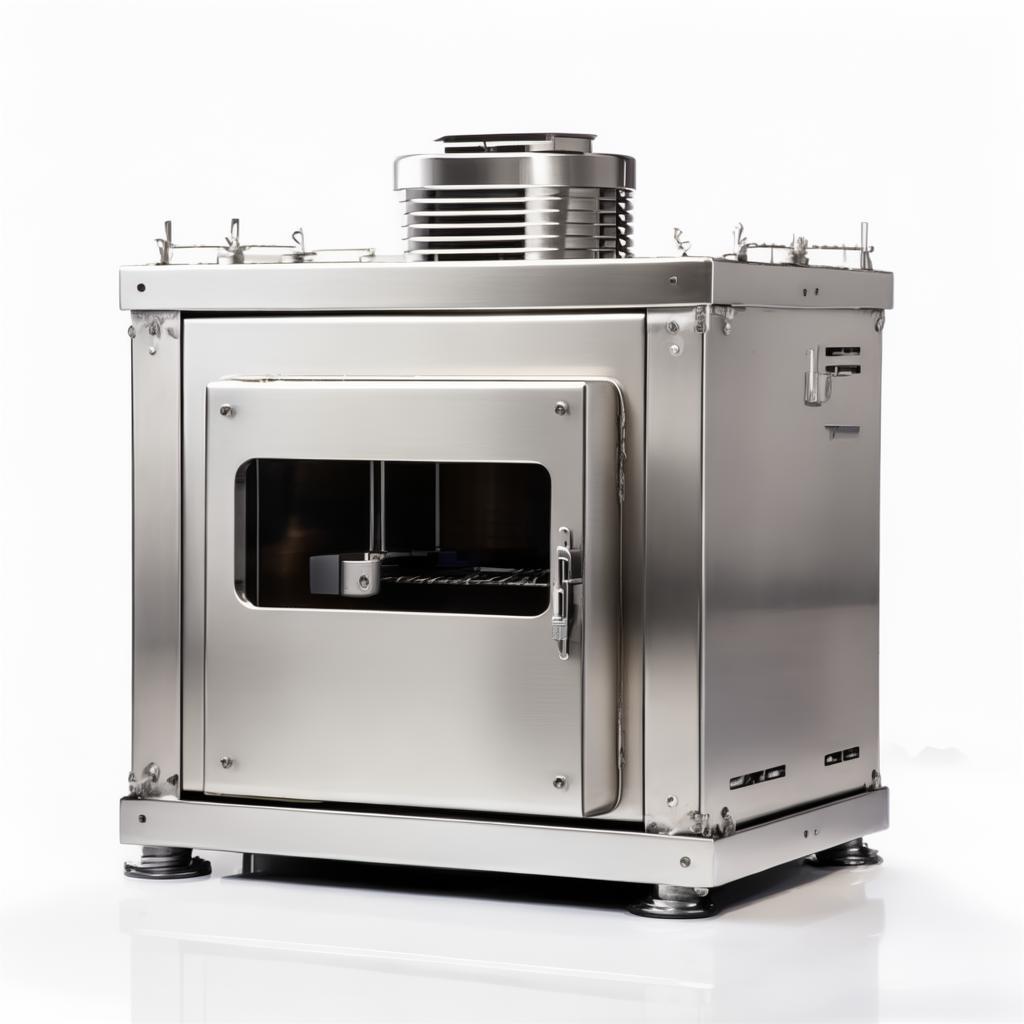
Vacuum Transducer
Precision Vacuum Transducers for Demanding Industrial Applications
Reliable pressure measurement is non-negotiable. Our advanced vacuum transducers deliver unparalleled accuracy and durability, ensuring your critical processes run smoothly.
 By Dr. Anya Sharma, Lead Process Engineer
Understanding the Critical Role of Vacuum Transducers in Modern Industry
In any industrial setting where pressure control is paramount, the precision and reliability of your measurement tools aren't just important – they're foundational. This is particularly true when dealing with vacuum levels. Whether you're involved in high-purity semiconductor manufacturing, advanced food processing, sophisticated medical device production, or robust chemical synthesis, the ability to accurately gauge and maintain negative pressure environments is crucial. A lapse in measurement accuracy can lead to process deviations, reduced product quality, costly material waste, and, in worst-case scenarios, significant safety hazards. This is where the humble, yet indispensable, vacuum transducer steps in. Far from being a simple gauge, it's a sophisticated sensor designed to translate the subtle nuances of sub-atmospheric pressure into usable data for your control systems.
The market for vacuum transducers is vast and diverse, catering to an equally diverse range of applications. From the ultra-high vacuum (UHV) required for particle accelerators and thin-film deposition to the relatively mild vacuums used in packaging and material handling, the technology must be adaptable. This means there isn't a one-size-fits-all solution. Factors like the required pressure range, the type of gas or vapor being measured (corrosive or non-corrosive), the operating temperature, vibration levels, and the necessary output signal all play a role in selecting the right transducer. For instance, a transducer used in a cleanroom environment for semiconductor etching will have vastly different material and sealing requirements than one employed in a food packaging line where occasional moisture or food particles might be present.
Furthermore, the integration of these transducers into broader automation systems demands compatibility. Modern industrial control relies on digital communication protocols, standardized analog signals (like 0-10V or 4-20mA), and sometimes even specific industrial Ethernet standards. Ensuring that your chosen vacuum transducer can seamlessly communicate with your PLC, SCADA system, or data acquisition hardware is a critical, often overlooked, aspect of procurement. A technically superior transducer that cannot interface with existing infrastructure becomes a bottleneck, negating its potential benefits. We've seen instances where procuring teams, focused solely on raw accuracy figures, overlooked the communication protocol, leading to costly retrofits or delayed project timelines. It's this holistic view – from raw measurement to system integration – that guides our approach to supplying these vital components.
The operational insights we've gathered over decades in manufacturing and process engineering highlight a consistent theme: the "Fit For Now" principle, which will only become more pronounced by 2026. This means selecting components that not only meet current demands but are also robust enough to handle anticipated process evolutions and increasing regulatory scrutiny. For vacuum transducers, this translates to choosing sensors with wider operating ranges where possible, greater resistance to process upsets, and enhanced data logging or diagnostic capabilities. It's about future-proofing your infrastructure to avoid costly replacements or upgrades down the line. Our commitment is to provide solutions that offer immediate performance gains and long-term operational value, built on a foundation of deep industry experience and a clear understanding of evolving market needs. This introductory exploration sets the stage for a deeper dive into what makes a vacuum transducer truly effective in demanding B2B environments.
Common Challenges in Vacuum Measurement and How We Address Them
Working with vacuum systems, especially in international export markets, presents unique challenges. From maintaining consistent performance across varying environmental conditions to ensuring component longevity in demanding operational cycles, reliability is key. Buyers often grapple with:
- Inaccurate Readings: Fluctuations due to temperature changes, vibration, or sensor drift can render data unreliable.
- Limited Pressure Ranges: Many applications require measurement across a wide spectrum of vacuum, from fine to coarse, necessitating flexible solutions.
- Contamination Sensitivity: Corrosive gases, particulate matter, or moisture can degrade sensor elements and lead to premature failure.
- Signal Integration Issues: Non-standard or incompatible output signals can complicate integration with existing control and monitoring systems.
- Durability and Lifespan: Harsh industrial environments can shorten the operational life of sensitive instrumentation.
At Hebei Yuanchang, we understand these pain points intimately. Our vacuum transducers are engineered with these challenges in mind. We utilize robust sensing technologies, often employing solid-state silicon piezoresistive or capacitive principles, designed for stability and resistance to contamination. Many of our models feature built-in temperature compensation circuits, ensuring accuracy is maintained even with significant ambient temperature swings – a common issue in facilities with less-than-perfect climate control. For aggressive media, we offer specialized materials like stainless steel (316L being a common choice) and Hastelloy diaphragms, along with appropriate sealing options (Viton, Kalrez) to ensure chemical compatibility and prevent ingress.
Signal output flexibility is another area we prioritize. We offer a comprehensive range of analog outputs (0-5V, 0-10V, 4-20mA) and digital communication options, including RS-485 with Modbus RTU, ensuring seamless integration into nearly any industrial control architecture. This adaptability is crucial for our international B2B clients who might be working with diverse legacy systems or specific regional standards. The robust construction, often with IP65 or higher ingress protection ratings, means our transducers can withstand washdowns and exposure to industrial dust, contributing to an extended service life and reducing the total cost of ownership. We often advise clients to consider the expected uptime and maintenance schedules when selecting a transducer; a slightly higher upfront investment in a more durable unit can save significantly on downtime and replacement costs over the system's lifecycle.
Our Vacuum Transducer Product Line: Features and Benefits
We offer a curated selection of vacuum transducers designed for precision and reliability across various pressure ranges and application needs. Each series is built to meet rigorous industrial standards, delivering performance that our clients have come to depend on.
- Pressure Range: 100 mbar to 10⁻³ mbar (or equivalent Torr/inHg). Ideal for high-purity applications.
- Accuracy: Up to ±0.5% FS, ensuring precise process control.
- Materials: Stainless steel (316L) wetted parts, robust sensor element for longevity.
- Output: Configurable analog (0-5V, 0-10V) and digital (RS-485).
- Applications: Semiconductor manufacturing, vacuum coating, research & development, freeze-drying.
The YCVT-F series is a workhorse for applications where subtle pressure variations can impact final product quality. Its high sensitivity and stable zero-point make it invaluable for processes requiring tight vacuum regulation.
- Pressure Range: 1000 mbar to 1 mbar. Suitable for general industrial vacuum needs.
- Accuracy: Up to ±1.0% FS, providing dependable industrial-grade performance.
- Materials: Stainless steel construction, built for durability in standard industrial environments.
- Output: Standard 4-20mA loop-powered, offering excellent noise immunity for long cable runs.
- Applications: Vacuum conveying, pick-and-place automation, packaging machines, filter monitoring.
For common industrial vacuum tasks, the YCVT-C series offers an excellent balance of performance, cost-effectiveness, and ruggedness. The 4-20mA output is a staple in industrial automation, simplifying integration.
- Pressure Range: Down to 10⁻⁶ mbar. For ultra-high vacuum requirements.
- Accuracy: Precision-engineered for critical research and high-tech manufacturing.
- Materials: Ultra-clean stainless steel, vacuum-compatible seals, and specialized sensor designs.
- Output: Often integrates directly with specialized vacuum system controllers or offers advanced digital interfaces.
- Applications: Scientific research, mass spectrometry, UHV systems, advanced materials processing.
When your application demands the absolute best in vacuum measurement, the YCVT-X series is engineered to deliver. We collaborate closely with R&D teams and advanced manufacturers to ensure these transducers meet the most stringent specifications.
Each series can be customized. Whether you need a specific thread size, a unique electrical connector, or a specialized calibration range, our engineering team is equipped to tailor solutions. This OEM/ODM capability is a cornerstone of our service, allowing clients to integrate our technology seamlessly into their own branded equipment or specialized process lines.
Technical Specifications at a Glance
Understanding the detailed technical specifications is vital for proper selection and application. Below is a comparison of key parameters across our main vacuum transducer series. For full datasheets, please Request Our Full Catalog.
| Feature | YCVT-F (Fine Vacuum) | YCVT-C (Coarse Vacuum) | YCVT-X (Extreme Vacuum) |
|---|---|---|---|
| Pressure Range | 100 mbar to 10⁻³ mbar | 1000 mbar to 1 mbar | Atmospheric to 10⁻⁶ mbar |
| Accuracy (% FS) | ±0.5% (typical) | ±1.0% (typical) | ±1.5% (typical, range dependent) |
| Wetted Materials | 316L Stainless Steel | 304/316 Stainless Steel | 316L Stainless Steel (high purity finish) |
| Output Signal | 0-5V, 0-10V, RS-485 (Modbus RTU) | 4-20mA | 0-5V, 4-20mA, RS-485 |
| Operating Temperature | -20°C to +85°C | -20°C to +85°C | -10°C to +70°C |
| Ingress Protection | IP65 / IP67 | IP67 | IP65 |
| Electrical Connection | M12 connector / Flying leads | DIN 43650 / Flying leads | M12 connector / KF flange |
| Certifications | CE, RoHS | CE, RoHS | CE, RoHS |
vacuum pressure transducer vacuum transducer sensor vacuum distiller
Key Application Scenarios
Our vacuum transducers are the silent enablers of critical processes across numerous industries. Here are a few common scenarios where they play a vital role:
Procurement Considerations for Vacuum Transducers
Selecting the right vacuum transducer involves more than just looking at a pressure range. As experienced suppliers and manufacturers ourselves, we advise our B2B partners to consider these critical factors:
- Application Media: What gas or vapor will the transducer be exposed to? Is it corrosive, non-corrosive, or contain particulates? This dictates wetted material choices (e.g., stainless steel grades, Hastelloy) and sealing compounds (e.g., Viton, Kalrez). Improper selection here is a common cause of premature failure.
- Environmental Conditions: Consider ambient temperature, humidity, vibration, and potential for washdowns. IP ratings and operating temperature range are key here. Many industrial facilities have significant temperature fluctuations that can affect sensor accuracy if not properly compensated for.
- Output Signal & Connectivity: Does the transducer output match your control system's requirements (e.g., 0-10V, 4-20mA, digital protocols like Modbus)? What type of electrical connector is needed? Ensuring seamless integration from day one avoids costly rework.
- Accuracy vs. Cost vs. Lifespan: The most accurate transducer isn't always the best choice if it’s outside your budget or if its lifespan is compromised by the application. We help clients find the optimal balance, focusing on total cost of ownership rather than just the initial purchase price. For instance, a slightly more expensive transducer with a guaranteed lifespan of 5 years might be more economical than a cheaper one that fails after 2 years, considering replacement labor and potential downtime.
- OEM/ODM Requirements: If you are integrating transducers into your own equipment, what are your needs for customization? This could include proprietary connectors, specific pressure ranges, custom labeling, or packaging. Our 40 years of manufacturing experience and extensive in-house machining capabilities allow us to offer comprehensive OEM/ODM services.
- Calibration and Traceability: For critical applications, ensure the transducer can be calibrated and that calibration records are traceable to international standards.
Our team is available to discuss your specific project needs. Often, a brief conversation can clarify which transducer series and options will provide the best fit, saving you time and potential headaches. We've found that understanding the "Fit For Now" aspect means anticipating future process needs, not just current ones.
Experience the Hebei Yuanchang Difference: Our Manufacturing Prowess
As a company with 40 years of experience since 1986, Hebei Yuanchang Food Mechanism & Technology Co., Ltd. brings a depth of manufacturing expertise that translates directly into the quality and reliability of our vacuum transducers. We are not merely distributors; we are manufacturers with a profound understanding of precision engineering.

Our team of 80-100 dedicated employees, including skilled engineers and technicians, is committed to delivering exceptional products. This integration of R&D, production, and sales, combined with our extensive experience in meat processing equipment (which shares many principles of precision engineering and hygiene), provides us with a unique perspective on robust industrial instrumentation. When you partner with Hebei Yuanchang, you are engaging with a factory that prioritizes precision, durability, and customer satisfaction.
What Our Clients Say
Real feedback from businesses like yours:

Operations Manager, AgriTech Solutions USA
"We switched to Hebei Yuanchang's YCVT-C transducers for our automated packaging lines about two years ago. The consistency in vacuum readings has been remarkable, leading to fewer product defects. Plus, the 4-20mA output integrated seamlessly with our existing Siemens PLCs. Definitely a solid choice for industrial automation."

Senior Research Scientist, BioMed Innovations
"For our lyophilization equipment, precision is paramount. The YCVT-F transducers from Yuanchang have consistently provided the stable, accurate readings required for sensitive pharmaceutical samples. The technical support was also excellent when we needed to confirm compatibility with our custom control interface."

Procurement Director, Global Electronics Mfg.
"We needed a reliable supplier for vacuum sensors for our automated assembly machines. Hebei Yuanchang provided competitive pricing for bulk orders of the YCVT-C series, and their communication regarding lead times and shipping logistics was top-notch. The product quality has met our stringent requirements."
Frequently Asked Questions (FAQ)
- Q: What is the difference between absolute and gauge vacuum transducers?
- An absolute vacuum transducer measures pressure relative to a perfect vacuum (zero pressure). A gauge vacuum transducer measures pressure relative to the ambient atmospheric pressure. For most vacuum applications, absolute pressure is the relevant measurement. Our transducers are typically specified in absolute pressure units (mbar, Torr).
- Q: How do I choose the right pressure range for my application?
- It's best to select a transducer where your typical operating pressure falls within the middle to upper portion (e.g., 25% to 75%) of the specified range. This ensures optimal accuracy and avoids operating at the extremes, which can reduce lifespan or resolution. If your vacuum level fluctuates significantly, consider a transducer with a broader range or consult with our technical team.
- Q: Can your transducers handle corrosive gases?
- For mildly corrosive or aggressive media, our transducers with 316L stainless steel wetted parts and Viton seals are often suitable. For highly corrosive environments, we recommend consulting our specialists, as options with Hastelloy diaphragms or other specialized materials may be necessary. Always confirm compatibility with your specific process gas.
- Q: What is the typical lead time for a bulk order?
- Lead times can vary based on order volume and customization requirements. For standard configurations, lead times are typically 2-4 weeks. For larger OEM orders or specialized designs, we provide an estimated lead time upon order confirmation. Our extensive in-house manufacturing capabilities help us maintain relatively short lead times for many configurations.
- Q: Do you offer calibration services?
- Yes, we can provide calibration certificates traceable to international standards. Please specify this requirement when requesting a quote, as it may involve additional lead time and cost.
Ready to Enhance Your Process Control?
Don't let inaccurate vacuum measurements compromise your operations. Partner with an experienced manufacturer committed to quality, reliability, and innovation.
Or talk to an engineer: +86 15830991513
ycmeatmech@gmail.com | Shijiazhuang, Hebei Province, China