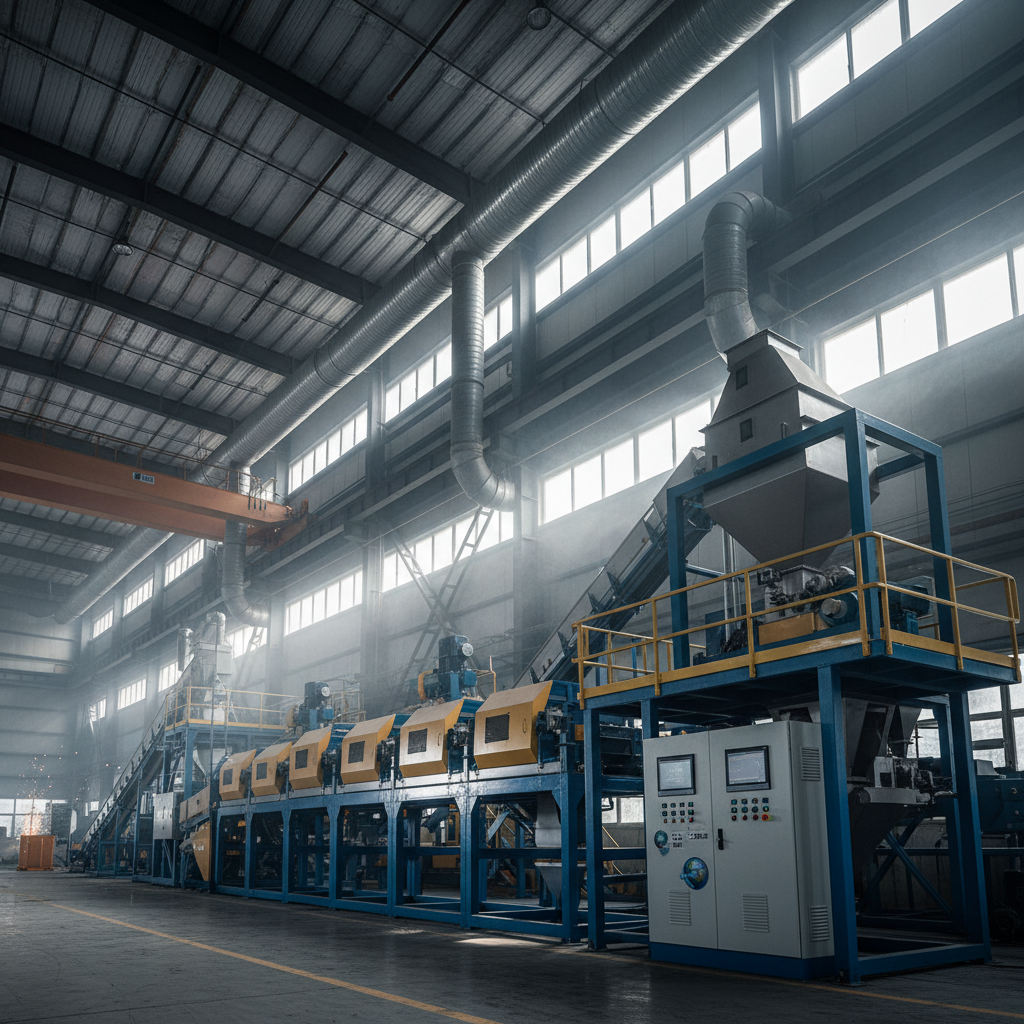
The global demand for natural sweeteners has surged, placing immense pressure on producers to scale their output without compromising the purity of their products. An automatic honey filling machine represents the pinnacle of this transition, moving from labor-intensive manual pouring to high-precision automated systems. By integrating these systems, businesses can ensure volumetric accuracy, reduce waste, and meet stringent hygiene standards required by international food safety regulations.
Beyond simple efficiency, the implementation of an automatic honey filling machine solves the inherent challenges of handling high-viscosity liquids. Honey's tendency to drip and its sensitivity to temperature make manual filling a volatile process prone to inconsistency. Automation introduces controlled heating and precision dosing, allowing brands to maintain a professional aesthetic and a consistent weight per jar, which is critical for consumer trust and regulatory compliance in global markets.
Investing in the right filling technology is not merely an operational upgrade but a strategic move toward scalability. As the industry shifts toward smarter manufacturing, the automatic honey filling machine serves as a gateway to increased throughput and lower long-term labor costs. Understanding the nuances of these machines—from piston-driven accuracy to PLC-controlled synchronization—is essential for any food processor aiming to compete in today's fast-paced commercial landscape.
Global Context and the Demand for Automated Filling
In the current global food economy, the pursuit of "clean label" products has driven consumers toward natural alternatives like honey. According to industry trends aligned with ISO food safety standards, the volume of packaged honey has seen a steady increase, yet many small-to-medium enterprises still struggle with outdated filling methods. The introduction of an automatic honey filling machine has become a necessity to bridge the gap between artisanal quality and industrial quantity.
The challenge lies in the physical properties of honey—its non-Newtonian flow and high viscosity vary based on floral source and temperature. Manual filling often results in "overfill," which erodes profit margins, or "underfill," which leads to legal disputes over net weight. By automating this process, producers can synchronize their production lines with precision, ensuring that every single unit meets the exact specifications required for export to stringent markets like the EU or North America.
Defining the Automatic Honey Filling Machine
An automatic honey filling machine is a specialized industrial system designed to dispense precise volumes of honey into containers with minimal human intervention. Unlike standard liquid fillers, these machines are engineered to handle dense, sticky substances, often incorporating integrated heating elements and specialized nozzles to prevent clogging and dripping.
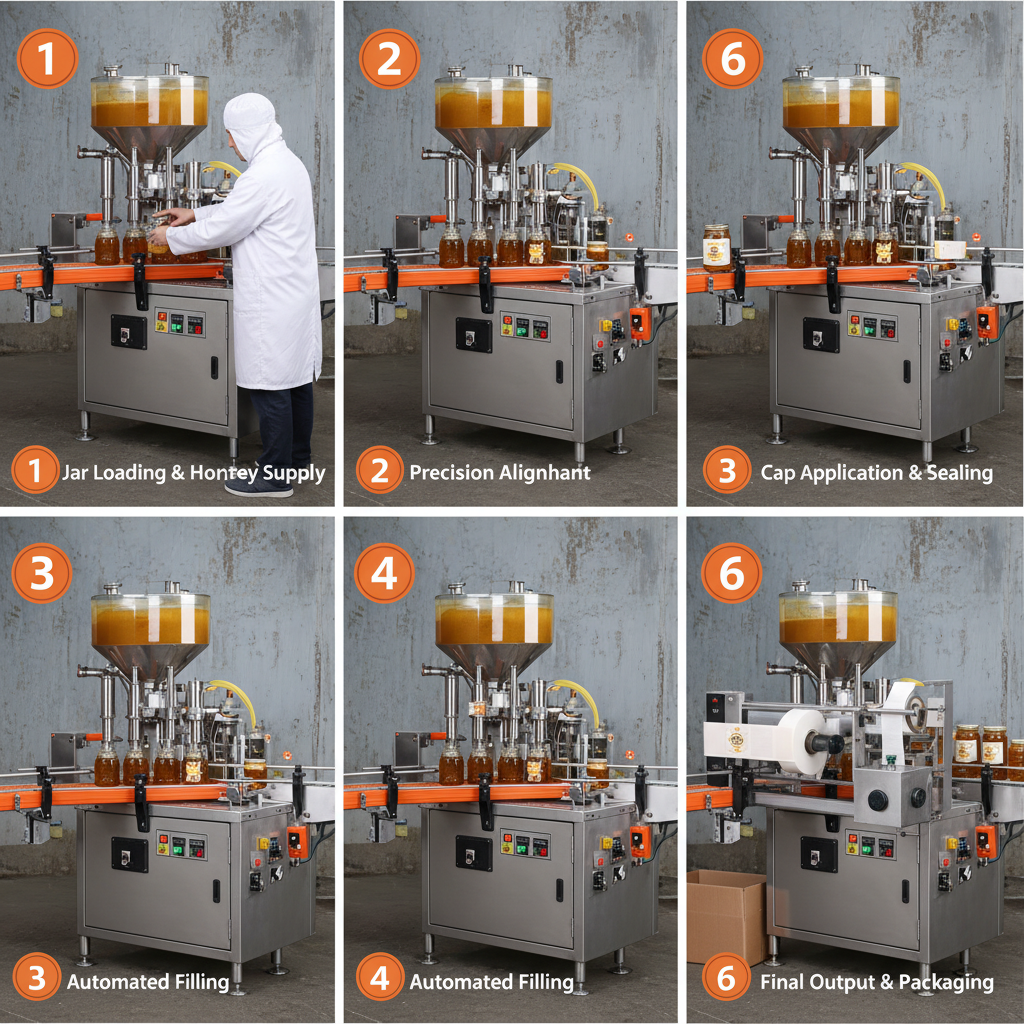
At its core, this technology is an intersection of mechanical engineering and food science. It utilizes advanced pumping mechanisms—such as peristaltic or piston pumps—to move the honey from a hopper into the bottle. The "automatic" aspect refers to the seamless integration of bottle feeding, filling, and capping, often governed by a Programmable Logic Controller (PLC) that allows the operator to adjust fill volumes with a simple touchscreen interface.
In the broader context of the food machinery industry, these machines fulfill a critical humanitarian and economic need: reducing food waste and increasing the accessibility of natural nutrients. By lowering the cost of packaging through automation, honey becomes more affordable for the general population while ensuring that the product remains uncontaminated and safe for consumption.
Core Components for Viscous Liquid Precision
The effectiveness of an automatic honey filling machine relies heavily on its material durability. Since honey can be corrosive over long periods and requires specific temperatures to flow, most high-end machines are constructed from SUS304 or SUS316L stainless steel. This ensures that the equipment meets FDA standards and can withstand rigorous CIP (Clean-in-Place) cycles without degrading.
Precision dosing is the second critical pillar. The automatic honey filling machine typically employs a volumetric piston system or a mass flow meter. This allows the machine to compensate for the density of the honey, ensuring that whether the honey is clover or manuka, the weight in the jar remains identical to the milligram, eliminating the variance common in gravity-fed systems.
Finally, the integration of temperature control systems is what separates professional equipment from basic fillers. An automatic honey filling machine often includes a water-jacketed hopper that gently warms the honey. This reduces viscosity just enough to facilitate a smooth flow without overheating the product, which would otherwise destroy the natural enzymes and aromatic properties of the honey.
Performance Metrics and Operational Efficiency
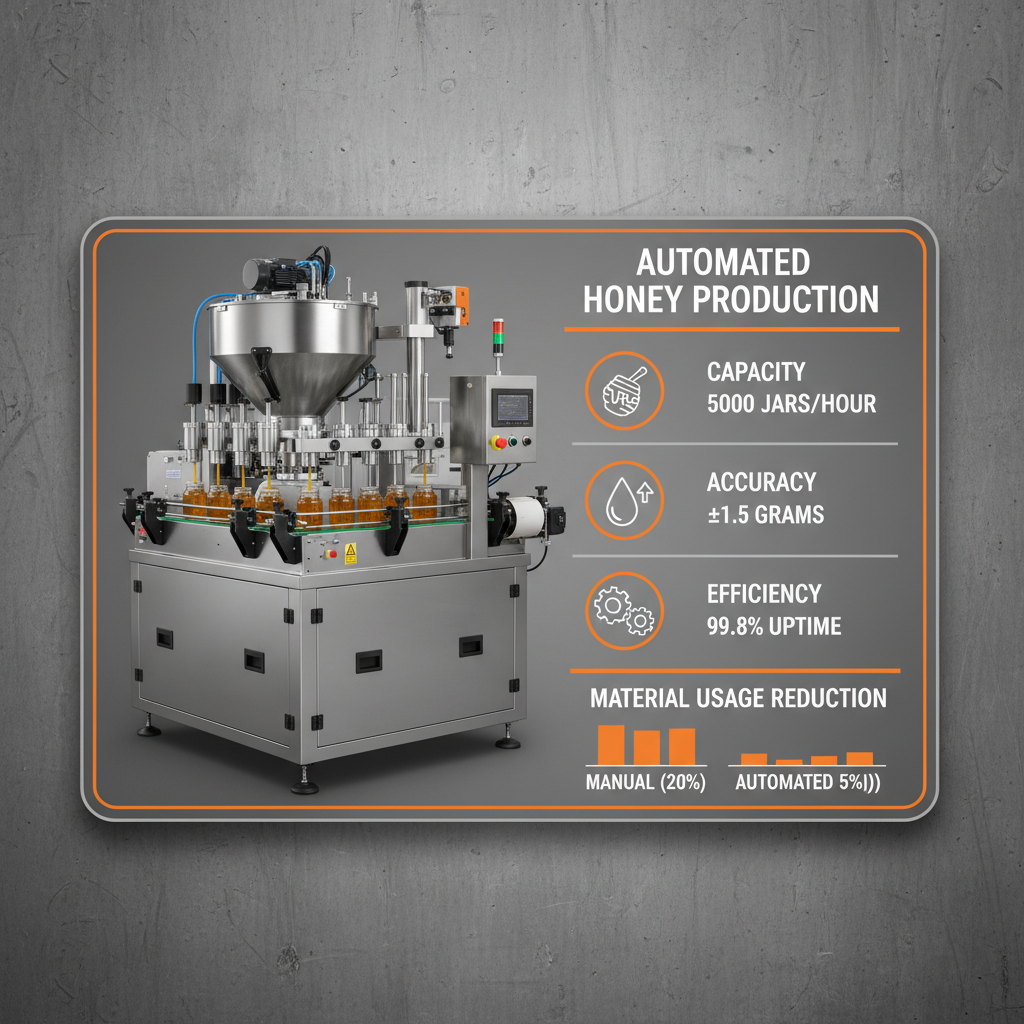
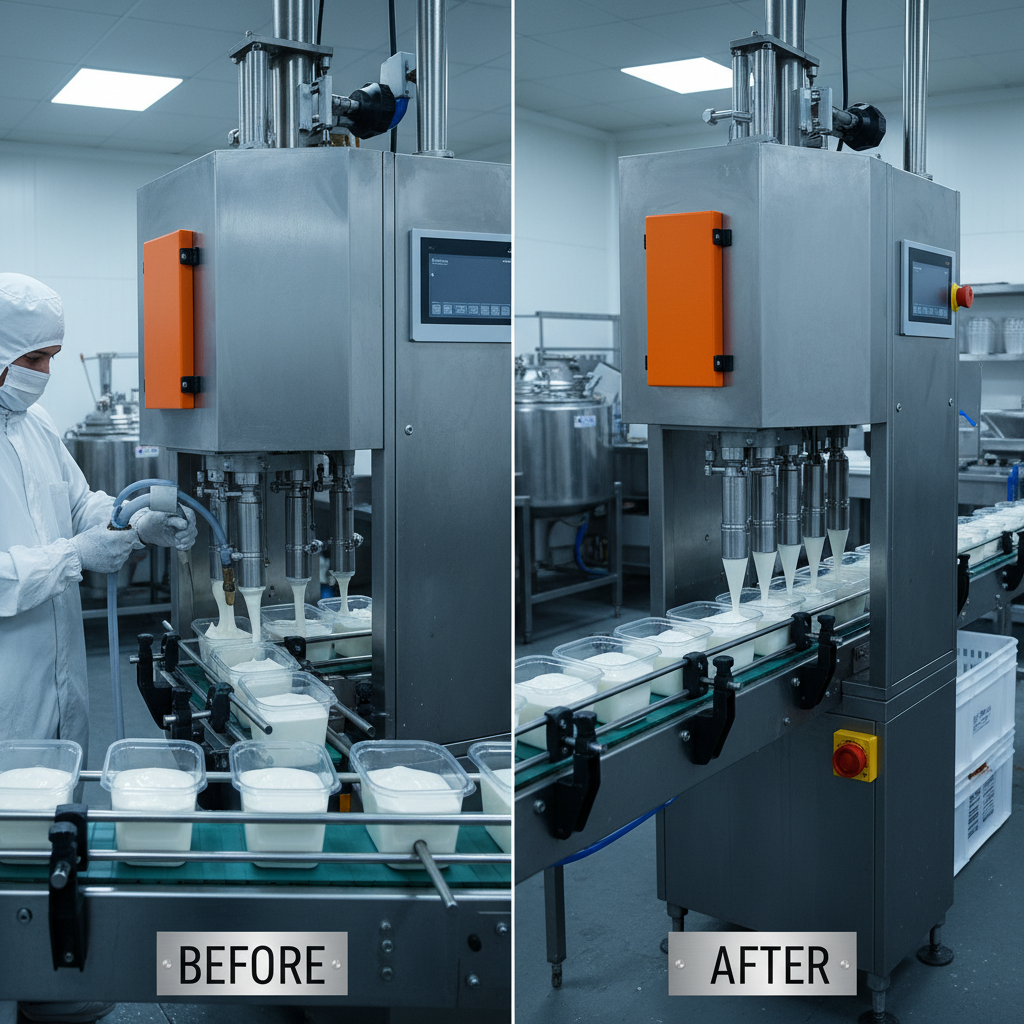
When evaluating the ROI of an automatic honey filling machine, manufacturers look at throughput and accuracy rates. Automation allows for a dramatic increase in units per hour (UPH), turning a process that once took a full team of workers into a streamlined operation managed by a single technician. This shift not only reduces labor costs but significantly lowers the risk of human error during the bottling phase.
Furthermore, the reduction in product giveaway—the small amount of extra honey added to ensure a bottle isn't under-filled—can save a large-scale producer thousands of dollars annually. With a high-precision automatic honey filling machine, the tolerance for error is reduced to less than 1%, maximizing the yield from every batch of raw honey.
Filling Method Efficiency Comparison
Real-World Applications in Global Markets
In the sprawling apiaries of New Zealand and the honey hubs of Turkey, the automatic honey filling machine is the backbone of the export economy. These regions utilize high-capacity rotary fillers to handle thousands of jars per hour, ensuring that the distinct properties of Manuka or Highland honey are preserved during the packaging process. The ability to quickly switch between bottle sizes allows these producers to cater to both bulk wholesale and premium retail markets.
Beyond large-scale industrial zones, smaller organic cooperatives are adopting modular automatic honey filling machine setups. In these contexts, the focus is on flexibility and hygiene. By using a smaller-footprint automated filler, these cooperatives can maintain their "small-batch" appeal while eliminating the sanitary risks associated with open-air manual filling, thus meeting the strict health requirements for selling in gourmet supermarkets.
Long-Term Value and Sustainable Production
The long-term value of an automatic honey filling machine extends beyond simple productivity. From a sustainability perspective, automation reduces the amount of product wasted during the filling process. In a world where raw honey production is threatened by environmental changes, every drop saved contributes to a more sustainable supply chain and reduces the overhead costs of raw material acquisition.
Moreover, the psychological impact on the workforce is significant. By removing the repetitive, physically demanding task of manual filling, employees can be upskilled to manage the technical aspects of the machinery. This transition promotes a culture of innovation and precision within the factory, moving the role of the worker from a manual laborer to a system operator, which increases job satisfaction and overall workplace safety.
Reliability and trust are the ultimate outcomes. When a consumer buys a jar of honey, they expect a full, clean, and properly sealed container. An automatic honey filling machine guarantees this consistency. This reliability builds brand equity over time, allowing a company to command premium pricing based on the professional quality of their packaging and the guaranteed accuracy of their product volume.
Future Trends in Honey Processing Automation
The future of the automatic honey filling machine lies in the integration of Industry 4.0. We are seeing a shift toward "Smart Fillers" equipped with IoT sensors that can monitor honey viscosity in real-time and automatically adjust filling speeds and temperatures. This eliminates the need for manual calibration and ensures that the machine adapts to the product's natural variations instantly.
Sustainability is also driving the adoption of new materials and energy-efficient motors. Next-generation machines are focusing on reducing the energy required for heating hoppers and implementing "zero-drip" nozzle technology that uses vacuum suction to pull back the last drop of honey. This not only keeps the production area cleaner but maximizes the utilization of the raw honey.
Digital transformation will also introduce advanced traceability. Future automatic honey filling machine systems will likely integrate with blockchain-based labeling, where the exact time, weight, and batch of honey filled into a specific jar are recorded. This provides consumers with unprecedented transparency regarding the origin and purity of their honey.
Analysis of Automatic Honey Filling Machine Technology Levels
| Technology Tier |
Filling Accuracy |
Operational Speed |
Maintenance Level |
| Entry-Level Piston |
+/- 2% |
Low (10-20 bpm) |
Simple/Manual |
| Semi-Auto Linear |
+/- 1% |
Medium (30-60 bpm) |
Moderate |
| Full-Auto Linear |
+/- 0.5% |
High (80-120 bpm) |
Technical |
| High-Speed Rotary |
+/- 0.2% |
Very High (200+ bpm) |
Specialized |
| IoT-Enabled Smart |
+/- 0.1% |
Optimized Adaptive |
Predictive |
| Custom Enterprise |
Exact |
Industrial Scale |
Contract-Based |
FAQS
Most professional machines utilize a combination of heated hoppers and adjustable piston strokes. The heating element lowers the honey's viscosity to a consistent level, while the PLC allows the operator to calibrate the volume based on the specific density of the batch, ensuring accuracy regardless of whether the honey is thick or runny.
Not with modern designs. High-quality machines are built with "Clean-in-Place" (CIP) capabilities and use food-grade stainless steel. Most components that touch the honey can be easily disassembled for deep cleaning, and the smooth internal surfaces prevent honey buildup, making it much more hygienic than manual filling.
Yes, most automatic honey filling machines are designed for versatility. By changing the nozzle height and adjusting the star-wheel or conveyor guides, a single machine can switch from small 250g jars to large 1kg bottles in a matter of minutes, making it ideal for diverse product lines.
Depending on production volume, most businesses see a full return on investment within 12 to 24 months. This is achieved through a combination of reduced labor costs, the elimination of product overfill (waste reduction), and a significant increase in total output capacity.
On the contrary, it often improves it. By using precise temperature controls instead of erratic high-heat methods, an automatic honey filling machine preserves the natural enzymes and flavor profiles. Additionally, the closed-system nature of automation reduces the risk of external contamination.
Linear systems are generally more cost-effective and better for small-to-medium operations with moderate speed requirements. Rotary systems are designed for industrial-scale production where maximum throughput and space efficiency are the primary goals. Your choice should depend on your target bottles-per-hour (BPH) and available floor space.
Conclusion
The transition to an automatic honey filling machine is a pivotal step for any honey producer looking to modernize. From ensuring milligram-perfect dosing and maintaining strict hygienic standards to drastically increasing hourly throughput, automation addresses the most persistent pain points of viscous liquid packaging. By integrating stainless steel durability with PLC precision, these machines provide a foundation for consistent quality and operational scalability.
As the industry moves toward Industry 4.0, the integration of IoT and smart sensors will further refine the efficiency of honey processing. For producers, the focus should now be on selecting a system that not only meets current demand but allows for future growth. Embracing this technology is the most effective way to protect profit margins, ensure consumer satisfaction, and secure a competitive edge in the global natural sweeteners market. Visit our website: www.ycmeatmech.com