Meal Tray Sealing Machine Market
Mastering Meal Tray Sealing: Your Guide to Reliable Automation
Empowering Food Processors with Precision, Efficiency, and Shelf-Life Extension

By: Alex Chen
Senior Export Manager & Food Processing Solutions Specialist
What You'll Discover in This Guide:
- The core benefits of automated meal tray sealing for your operation.
- Key considerations for selecting the right sealing machine.
- Technical aspects crucial for efficient operation and maintenance.
- Our factory's commitment to quality and international standards.
- How to navigate procurement for optimal ROI.
The Evolving Landscape of Food Packaging: Why Tray Sealing Matters
In today's fast-paced food industry, efficiency, safety, and product integrity are paramount. For businesses involved in preparing, packaging, and distributing meals – whether for retail, catering, healthcare, or airline services – the sealing of meal trays isn't just a final step; it's a critical control point. A robust meal tray sealing machine directly impacts shelf life, prevents contamination, maintains product quality, and significantly streamlines your production line. Gone are the days of manual film application and inefficient heat sealing. Modern automation is the backbone of competitive food processing, and the right tray sealer is a cornerstone of that success.
The global market for meat processing equipment, a sector that heavily relies on effective packaging solutions, is substantial. Reports indicate this market was valued at approximately USD 11.29 billion in 2025 and is projected to grow to USD 17.39 billion by 2034, with a CAGR of around 5.0% (Fortune Business Insights). This growth is driven by increased demand for processed meats, the adoption of automation for hygiene and efficiency, and stringent food safety standards. Meal tray sealing machines are integral to this ecosystem, particularly for pre-portioned meals, ready-to-eat dishes, and takeaway options. They ensure that food reaches the consumer as intended – fresh, safe, and appealing.
Consider the operational challenges many food service providers face: inconsistent sealing quality leading to spoilage, labor-intensive manual processes slowing down output, and the risk of cross-contamination. These issues don't just affect profitability; they can damage brand reputation. Investing in a dependable meal tray sealing machine is a strategic decision that addresses these pain points head-on. It's about implementing technology that guarantees a tight, reliable seal, batch after batch, day after day. This capability is not a luxury; it's a necessity for any serious player in the food packaging arena looking to scale and maintain high standards.
The demand for convenience foods, including pre-packaged meals, continues to surge globally. This trend is fueled by changing consumer lifestyles, urbanization, and a growing preference for ready-to-eat options. The processed meat market, for instance, is expected to reach USD 1,330.45 billion by 2035 (Precedence Research). This burgeoning demand directly translates into a higher volume of packaged meals requiring efficient, safe, and effective sealing. Therefore, the capabilities of your meal tray sealing equipment become a direct enabler of your business's capacity to meet market demand.
From a procurement perspective, evaluating tray sealing machines involves looking beyond just the upfront cost. It's about understanding the total cost of ownership, including energy consumption, maintenance requirements, consumable costs (like film and trays), and, crucially, the machine's contribution to reducing product spoilage and labor overhead. A machine that offers a slightly higher initial investment but delivers superior sealing performance, lower downtime, and better energy efficiency will almost always yield a superior return on investment over its operational life. Our focus at Hebei Yuanchang Food Mechanism & Technology Co., Ltd. is precisely on delivering that long-term value.
We understand that choosing the right equipment can feel complex. Are you looking for a semi-automatic solution for smaller batch runs, or a fully automated inline system to integrate with your existing conveyor lines? Do you need to seal specific types of trays – PET, PP, CPET, or even biodegradable options? What kind of film are you using – PET, CPP, or a barrier film for extended shelf life? These are critical questions that influence machine selection. Our expertise lies in helping you answer them clearly, ensuring you select a system that is not only fit for your current needs but also scalable for future growth.
Why Automate Your Meal Tray Sealing Process? The Tangible Benefits
Integrating automated meal tray sealing into your operation isn't just about adopting new technology; it's about unlocking significant operational advantages. For businesses in the competitive food sector, efficiency and quality are not negotiable.
- Enhanced Food Safety & Shelf Life: A consistent, hermetic seal is your first line of defense against spoilage and contamination. This directly extends the shelf life of your products, reducing waste and opening up wider distribution channels. This is crucial given the rising demand for processed and convenience meats, where product integrity is key. The processed meat market is projected to grow significantly, emphasizing the need for superior packaging.
- Increased Production Throughput: Manual sealing is a bottleneck. Automated systems operate at speeds far exceeding human capabilities, allowing you to process more trays per hour. This is vital for meeting fluctuating demand and for scaling operations without proportional increases in labor.
- Labor Cost Reduction & Reallocation: Automating the sealing process frees up your valuable staff from repetitive, manual tasks. This not only cuts down on labor costs but also allows your team to focus on higher-value activities like quality control, product development, or line management.
- Consistent Quality Assurance: Human error is a reality in manual processes. Automated tray sealers apply precise temperature, pressure, and dwell time for every seal, ensuring uniformity and reliability that is impossible to achieve manually. This consistency builds consumer trust and reduces costly product recalls or returns.
- Reduced Material Waste: Well-calibrated machines minimize film creep, seal failures, and excessive trim, leading to more efficient use of packaging materials. This translates to direct cost savings on consumables.
- Adaptability to Various Materials: Modern tray sealing machines can handle a wide range of tray materials (like PET, PP, CPET, aluminum) and film types (including barrier films for extended shelf life), offering flexibility for diverse product lines.
Food packaging machinery Commercial food packaging machines food packing machinery
Think about the operational impact. A bakery supplying pre-packaged sandwiches, a meal kit company, or a caterer preparing large volumes of individual meals all benefit from these efficiencies. The ability to maintain strict hygiene standards is also a major driver, especially with increasing scrutiny on food safety regulations across international markets.
Choosing Your Meal Tray Sealing Machine: Key Technical & Operational Factors
Selecting the right meal tray sealing machine requires a clear understanding of your production needs and the technical capabilities of different models. It's not a one-size-fits-all situation.
1. Automation Level: Semi-Automatic vs. Fully Automatic
Semi-Automatic: These machines typically require manual loading of trays and films. Operators place the pre-filled tray into the machine, initiate the sealing cycle (often with a button or foot pedal), and then remove the sealed tray. They are ideal for lower to medium production volumes, offering a significant step up from manual methods without the complexity or cost of full automation. Lead times can vary, but our standard models are often readily available.
Fully Automatic: Designed for high-volume, continuous production. These machines can be integrated into a complete packaging line, often featuring automatic tray denesting, filling (if applicable), sealing, and even film cutting or lid application. They require minimal human intervention, offering maximum throughput and efficiency. Integration into existing lines often involves discussions about conveyor heights, power requirements, and control system compatibility.
2. Sealing Technology: Heat Sealing, MAP, Vacuum Skin Packaging (VSP)
Most meal tray sealers employ advanced heat sealing techniques. The critical elements here are precise control over sealing temperature, pressure, and time.
- Standard Heat Sealing: For general-purpose packaging where a reliable hermetic seal is needed.
- Modified Atmosphere Packaging (MAP): For extending shelf life by flushing the tray with a specific gas mixture (e.g., nitrogen, CO2) before sealing. This requires a MAP-capable machine with gas flushing capabilities.
- Vacuum Skin Packaging (VSP): A specialized technique where a plastic film is heated and stretched over the product and tray, then vacuum is applied to create a tight, skin-like seal. This is often used for premium meat products and seafood.
3. Tray and Film Compatibility
Your choice of tray material (PET, PP, CPET, PS, aluminum, paperboard, compostable alternatives) and film type (PE, PP, PET, barrier films, aluminum foil laminates) significantly influences machine requirements. The sealing jaws and temperature settings must be calibrated for optimal adhesion without melting or damaging the tray or film. We can provide compatibility charts and guide you based on your current and future packaging needs. If you're exploring reconstituted meat market trends, which rely heavily on molding and pretreatment, effective sealing of the final product is key.
4. Size and Footprint
Consider the available space on your production floor. Machines vary in size, from compact benchtop models to large, standalone units. Ensure adequate clearance for operation, maintenance, and material loading/unloading. For international shipping, we optimize container loading to minimize freight costs.
5. Electrical and Utility Requirements
Verify that your facility's power supply (voltage, phase, amperage) matches the machine's specifications. Some machines may also require compressed air. We provide detailed spec sheets for all models.
6. Ease of Operation and Maintenance
Look for user-friendly interfaces, clear controls, and straightforward access for cleaning and maintenance. Our machines are designed with practical operation in mind, supported by our traceable after-sales management system for spare parts.
Our Commitment: Quality Manufacturing & International Standards
At Hebei Yuanchang Food Mechanism & Technology Co., Ltd., we don't just build machines; we engineer solutions. With over 40 years of experience since 1986, we've honed our processes to deliver equipment that meets the rigorous demands of the international food processing industry.

ISO Certified Production
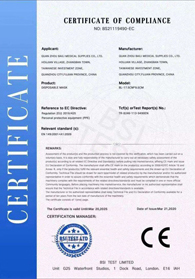
CE Compliant Designs

RoHS Material Compliance
Our 14,000 square meter facility is equipped with over 20 sets of advanced machining equipment, including Japanese Mazak CNC machining centers. This allows us to produce high-precision components that meet strict specifications, ensuring durability and reliable performance for our meal tray sealing machines. We understand that equipment downtime is lost revenue, so our manufacturing precision is designed to minimize service interruptions.
Our commitment extends to:
- Independent Part Production: We can produce critical high-precision parts in-house, ensuring quality control and faster availability of spares, which is crucial for maintaining operational uptime for our global clientele.
- Rigorous Quality Control: Every machine undergoes thorough testing before shipment, adhering to international standards.
- Experienced Engineering Team: Our R&D and engineering staff have decades of combined experience in food processing equipment design and application.
- Traceable After-Sales Support: We offer comprehensive support, including installation guidance and readily available spare parts, ensuring a worry-free ownership experience.
The global food processing equipment market is dynamic, with consistent growth driven by demand for automation and efficiency. Reports suggest market sizes ranging from USD 11.28 billion to over USD 19 billion by 2030-2035 across various analyses (Grand View Research, Skyquestt). Our position within this market is built on delivering reliable, high-performance sealing solutions that contribute to our clients' success.
Procurement & Supplier Evaluation: What to Look For
Sourcing industrial equipment requires careful due diligence. When evaluating suppliers for meal tray sealing machines, consider these factors to ensure you're making a sound investment:
1. Manufacturing Experience & Reputation
How long has the company been in business? Do they specialize in food packaging machinery? A long track record, like ours at Hebei Yuanchang (since 1986), suggests a stable company with proven product reliability and deep industry knowledge. Look for testimonials and case studies.
2. Technical Support & After-Sales Service
This is critical for industrial equipment. Can they offer installation support, troubleshooting assistance, and readily available spare parts? A company with a well-documented after-sales process, like our traceable system, provides peace of mind. For international clients, assess their ability to manage logistics and provide support remotely or through local agents if available.
3. Customization Capabilities (OEM/ODM)
Does your operation have unique requirements? A capable manufacturer can offer OEM (Original Equipment Manufacturer) or ODM (Original Design Manufacturer) services. This means they can adapt existing designs to your specific needs or develop entirely new solutions. Our advanced CNC capabilities allow us to produce non-standard, high-precision components for custom projects.
4. Compliance and Certifications
Ensure the equipment meets relevant international standards (e.g., CE for European markets, FDA compliance for food contact materials if applicable). Our certifications underscore our commitment to quality and safety.
5. Pricing and Value
While cost is a factor, focus on the overall value proposition. Consider factors like build quality, expected lifespan, efficiency gains, and the cost of consumables. A machine that performs reliably for years without constant breakdowns offers the best long-term value. We provide competitive factory pricing directly to our international partners.
Installation, Operation, and Maintenance Insights
Proper setup and ongoing care are essential for maximizing the lifespan and performance of your meal tray sealing machine.
Installation Considerations:
Ensure the machine is placed on a stable, level surface. Connect it to the appropriate power supply and any required compressed air lines. For fully automatic systems, integration with existing conveyors or filling equipment will require careful planning and potentially on-site adjustments. We provide detailed installation manuals and can offer remote or on-site support as needed. Proper ventilation is also important, especially for heat-sealing components.
Operational Best Practices:
Train operators on correct machine startup, product loading, cycle initiation, and shutdown procedures. Regularly inspect sealing jaws for any debris or damage. Ensure the correct film and tray materials are being used as per specifications. Monitor seal quality visually and conduct periodic integrity tests if required by your quality assurance protocols.
Maintenance Schedule:
Daily: Clean sealing surfaces, check for any foreign objects. Weekly: Lubricate moving parts (as per manual), inspect pneumatic components, check electrical connections. Monthly/Quarterly: More in-depth inspection of heating elements, wear parts, and calibration checks. Our traceable maintenance system ensures you have a record and reminders for scheduled servicing, helping to prevent unexpected breakdowns.
Hebei Yuanchang: Your Partner in Food Processing Automation
With 40 years of dedicated experience in food processing machinery, Hebei Yuanchang Food Mechanism & Technology Co., Ltd. has built a reputation for robust engineering, reliable performance, and customer-centric service. We are more than just a supplier; we are a partner invested in your operational success.
Our comprehensive range of meat processing equipment, from pretreatment to auxiliary items, is complemented by our advanced sealing solutions. We understand the intricate needs of the modern food industry – the demand for high-quality output, strict hygiene standards, and efficient production. Our meal tray sealing machines are designed to meet these challenges head-on, providing a critical link in your value chain.
Whether you're looking to upgrade your current packaging process, expand your production capacity, or develop new product lines requiring precise sealing, we have the expertise and the manufacturing capabilities to support you. Our in-house precision machining and dedication to quality assurance mean you receive equipment built to last.
We cater to a global market, understanding the complexities of international trade, logistics, and compliance. Let us help you achieve optimal efficiency, product integrity, and market competitiveness with our advanced meal tray sealing solutions.
Ready to Elevate Your Packaging Efficiency?
Frequently Asked Questions (FAQ)
- Q: What is the typical lead time for a standard meal tray sealing machine?
- A: For our standard semi-automatic models, lead times typically range from 4 to 8 weeks, depending on current production schedules and customization requirements. Fully automatic or highly customized machines may have longer lead times. We always strive to provide the most accurate delivery estimates upon order confirmation.
- Q: Can your machines seal different types of trays and films?
- A: Yes, our machines are designed for versatility. We can configure sealing jaws and temperature controls to accommodate various tray materials (PET, PP, CPET, etc.) and film types. It's best to discuss your specific material requirements with our sales engineers to ensure optimal compatibility and sealing performance.
- Q: What kind of after-sales support do you offer for international clients?
- A: We offer comprehensive after-sales support including detailed operation and maintenance manuals, remote troubleshooting assistance, and a traceable system for spare parts. We can also discuss options for on-site installation and training if required, subject to logistical arrangements and associated costs.
- Q: Do your machines comply with US food safety regulations?
- A: Our machines are designed and manufactured to meet high international standards, including CE compliance where applicable. For specific US regulatory requirements related to food contact materials, we ensure that any materials used in the sealing process (like films) are compliant, and we can provide documentation upon request. The sealing process itself is critical for maintaining the integrity of food packaged in compliance with FDA guidelines.
- Q: Can I request a custom modification for a specific application?
- A: Absolutely. Our engineering team is experienced in developing custom solutions. We utilize our in-house CNC machining capabilities to produce specialized components. Please contact us with your specific application needs, and we can discuss the feasibility and scope of a custom-built machine or modification.
Client Testimonials
"Since implementing the automated tray sealer from Hebei Yuanchang, our packaging speed has doubled, and seal integrity issues are a thing of the past. The transition was smooth, and their support team was excellent."

Maria Rodriguez
Operations Manager, Gourmet Meals Inc.
"We needed a reliable solution for sealing our pre-packaged protein trays for export. Hebei Yuanchang provided a machine perfectly suited to our needs, handling barrier films flawlessly and ensuring product freshness throughout long transit times. Their understanding of international logistics was impressive."

David Lee
Procurement Director, Asia Foods Export
"The build quality of the tray sealer is exceptional. It's a robust piece of equipment that has significantly reduced our manual labor costs and improved the consistency of our final product. The after-sales support has been prompt and effective."

Sarah Jenkins
Production Supervisor, ReadyBites Catering
Connect with Us
Have questions about meal tray sealing machines or other food processing equipment? We're here to help.
Hebei Yuanchang Food Mechanism & Technology Co., Ltd.
Phone: +86 15830991513
Email: ycmeatmech@gmail.com
Address: Shijiazhuang, Hebei Province, China