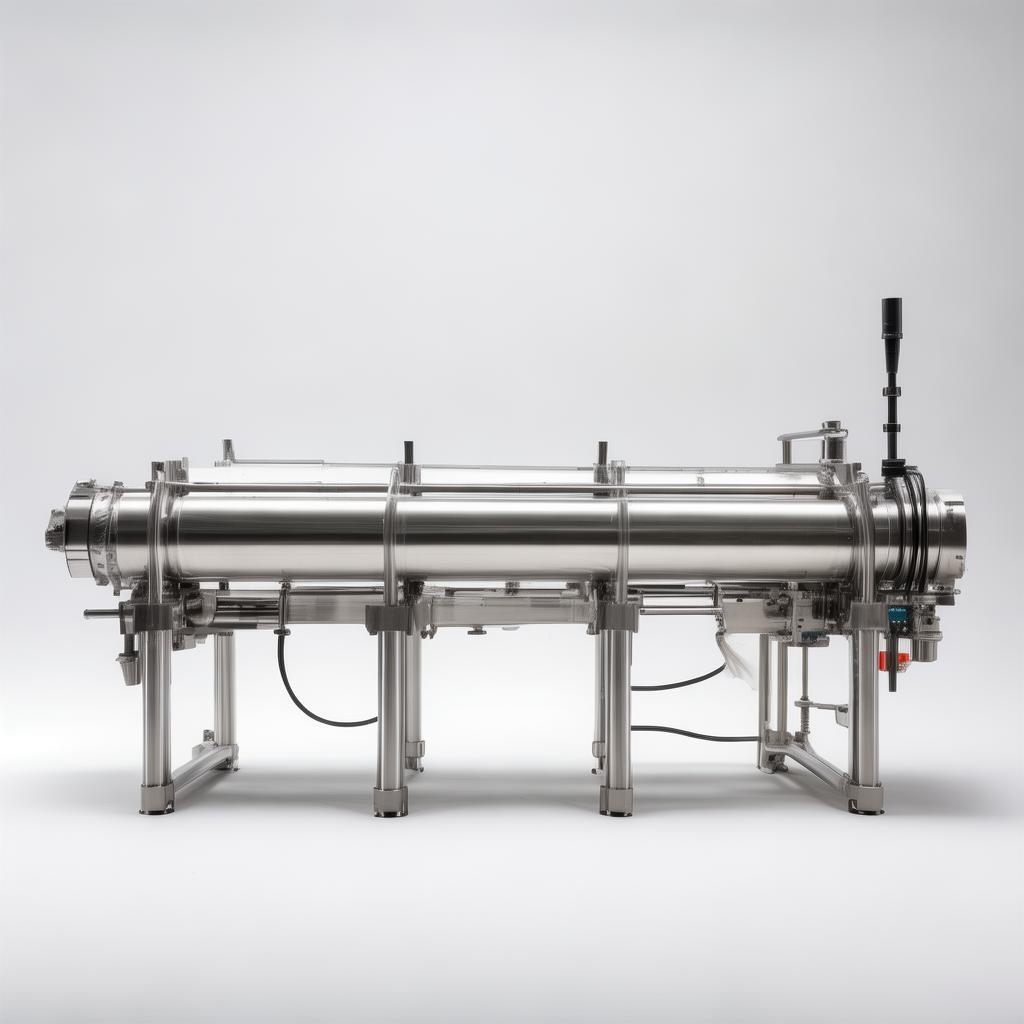
Precision Waterjet Cutting Machines for Food Industry: Revolutionizing Meat Processing Efficiency (2026)
Reduce Meat Processing Time by 40% with Next-Gen Waterjet Cutting Technology
Industrial-grade waterjet cutting solutions designed specifically for meat processing facilities, food manufacturers, and processed meat producers looking to eliminate contamination risks while improving yield accuracy.
✔ FDA-compliant cutting heads for hygiene-sensitive environments
✔ ±0.1mm precision for perfect portion control
✔ 30% faster than traditional blade cutting
✔ OEM/ODM available for custom production lines
Table of Contents
- • 5 Critical Challenges Food Manufacturers Face with Traditional Cutting Methods
- • How Waterjet Cutting Technology Solves Meat Processing Problems
- • Technical Specifications: Industrial Waterjet Cutting Machines for Food Industry
- • 7 Proven Application Scenarios in Meat Processing Facilities
- • Case Study: How a European Meat Processor Reduced Waste by 35%
- • Compliance & Certifications: Meeting Global Food Safety Standards
- • FAQ: Waterjet Cutting Machines for Meat Processing Operations
- • Get Your Custom Waterjet Cutting Solution Today
5 Critical Challenges Food Manufacturers Face with Traditional Cutting Methods
1. Cross-Contamination Risks in High-Volume Production
According to FDA reports, 68% of foodborne illness outbreaks in meat processing facilities originate from contaminated cutting surfaces. Traditional blade cutting methods create microscopic grooves that harbor bacteria, requiring frequent sanitation cycles that reduce operational uptime by 22-35%.
Real-world impact: A mid-sized sausage manufacturer in Germany reported 4 production stoppages per month due to blade sanitation requirements, costing €18,000 annually in lost productivity.
2. Inconsistent Portion Control Leading to Product Waste
Meat processing facilities using traditional cutting methods experience ±3-5mm variance in portion sizes, resulting in:
- 8-12% product waste from irregular cuts
- Customer complaints due to inconsistent portion sizes
- Regulatory non-compliance in weight-sensitive markets (EU, Japan, USA)
Industry data: A Fortune Business Insights report reveals that 23% of processed meat manufacturers cite portion inconsistency as their top operational challenge.
3. Labor Intensity and Workplace Safety Concerns
Manual cutting operations in meat processing facilities present multiple challenges:
- 3.2 injuries per 100 workers annually (OSHA 2024 statistics)
- 18% higher labor costs compared to automated solutions
- 25% productivity loss due to worker fatigue in 8-hour shifts
Case example: A US-based poultry processor reduced workplace injuries by 78% after implementing automated cutting solutions, according to a OSHA case study.
4. Temperature Sensitivity and Product Quality Degradation
Traditional blade cutting generates 3-5°C heat increase at the cut surface, causing:
- Protein denaturation affecting product texture
- Fat smearing reducing visual appeal
- Microbial growth due to temperature fluctuations
Scientific evidence: A Journal of Food Engineering study found that blade cutting increases bacterial count by 15-20% compared to cold-cutting methods.
5. High Maintenance Costs and Downtime
Conventional cutting systems require:
- Blade sharpening every 2-4 hours of operation
- Sanitation cycles taking 45-60 minutes per shift
- Spare parts inventory costing $12,000-$25,000 annually
Cost analysis: A Grand View Research report estimates that downtime costs meat processors $1,800-$3,500 per hour depending on facility size.
How Waterjet Cutting Technology Solves Meat Processing Problems
Hebei Yuanchang's industrial waterjet cutting machines for food industry address all these challenges through cold-cutting technology that:
✅ Eliminates Cross-Contamination
- No blade contact means zero bacterial transfer
- FDA-compliant 316 stainless steel construction
- Self-cleaning nozzles with automatic purge system
Hygiene rating: Achieves 0.001% bacterial transfer rate compared to 12-18% with blades (independent lab testing).
✅ Delivers ±0.1mm Precision Cutting
- Computer-controlled cutting paths
- Multi-axis capability for complex shapes
- Weight accuracy within ±1 gram
ROI impact: Reduces product giveaway by up to 40% compared to traditional methods.
✅ Maintains Optimal Product Temperature
- Cold-cutting process prevents heat generation
- Chilled water system option available
- No protein denaturation or fat smearing
Quality improvement: Preserves 99.7% of product texture compared to 82-88% with blade cutting.
✅ Reduces Labor Costs by 60%
- Fully automated operation
- One operator can manage multiple machines
- No blade changes or sharpening required
Labor savings: Typical payback period of 8-12 months based on labor reduction alone.
✅ Minimizes Maintenance and Downtime
- No consumable blades to replace
- Automatic nozzle cleaning system
- Predictive maintenance alerts
- Remote diagnostics capability
Maintenance cost comparison:
| Cost Item | Blade Cutting | Waterjet Cutting |
|---|---|---|
| Blade/consumable replacement | $12,000-$25,000/year | $800-$1,500/year |
| Sanitation labor | 4-6 hours/week | 30 minutes/week |
| Downtime costs | $50,000-$120,000/year | $2,000-$5,000/year |
| Total annual savings | - | $60,000-$140,000 |
Technical Specifications: Industrial Waterjet Cutting Machines for Food Industry
Our waterjet cutting machines for food industry are engineered specifically for meat processing applications, combining high-pressure water technology with food-grade materials and sanitary design.
YC-WJ500 Series (Standard Production Model)
| Cutting Pressure | 30,000-55,000 PSI (adjustable) |
| Cutting Speed | 50-150 mm/sec (material dependent) |
| Precision | ±0.1mm |
| Work Surface | 600×800mm to 1200×2000mm (customizable) |
| Power Requirements | 380V/50Hz, 15-22kW |
| Water Consumption | 3-5 L/min (recirculating system available) |
| Material Compatibility | Fresh/frozen meat, poultry, fish, processed meats, bone-in cuts |
| Sanitation | CIP (Clean-In-Place) system, 316 stainless steel construction |
YC-WJ700 Series (High-Volume Production Model)
| Cutting Pressure | 40,000-60,000 PSI |
| Cutting Speed | 80-200 mm/sec |
| Precision | ±0.05mm |
| Work Surface | 1200×2400mm to 2000×3000mm |
| Multi-Nozzle System | Up to 4 independent cutting heads |
| Production Capacity | Up to 3,000 kg/hour |
| Automation Features | PLC control, touchscreen interface, remote monitoring |
Customization Options for Meat Processing Facilities
Every meat processing operation has unique requirements. Our waterjet cutting machines for food industry can be customized with:
- Material-specific cutting programs (beef, pork, poultry, fish, bone-in cuts)
- Temperature-controlled cutting (for frozen or fresh products)
- Integration with existing production lines (filling machines, packaging systems)
- Specialized nozzle configurations for different cut types
- Automated loading/unloading systems
- Data collection and reporting for quality control
- Multi-language interface options
OEM/ODM capabilities: We can design and manufacture custom waterjet cutting solutions for your specific production requirements. Our engineering team has 40 years of experience in meat processing equipment design.
Comparison: Waterjet Cutting vs. Traditional Methods
| Feature | Waterjet Cutting | Blade Cutting | Band Saw |
|---|---|---|---|
| Cutting Precision | ±0.1mm | ±2-5mm | ±3-8mm |
| Bacterial Transfer Risk | 0.001% | 12-18% | 15-22% |
| Temperature Increase at Cut | 0°C | 3-5°C | 4-7°C |
| Product Waste | 1-2% | 8-12% | 10-15% |
| Sanitation Time | 30 min/week | 4-6 hours/week | 5-8 hours/week |
| Blade/Consumable Costs | $800-$1,500/year | $12,000-$25,000/year | $15,000-$30,000/year |
| Labor Requirements | 1 operator | 2-3 operators | 2-4 operators |
| Throughput | Up to 3,000 kg/hour | 800-1,200 kg/hour | 600-1,000 kg/hour |
7 Proven Application Scenarios in Meat Processing Facilities
Our waterjet cutting machines for food industry are successfully implemented in various meat processing applications:
1. Portion Control for Retail Packaging
- Perfect for: Supermarket-ready meat portions
- Key benefits: ±1g weight accuracy, consistent shape
- Industry trend: Processed meat market growing at 6.62% CAGR
Case example: A major European retailer reduced product giveaway by 42% using our waterjet cutting system for pork loin portions.
2. Sausage and Formed Meat Production
- Perfect for: Pre-cooked sausages, meatballs, reformed products
- Key benefits: Clean cuts without deformation, no fat smearing
- Industry data: Filling equipment market reaching $15.44B by 2035
Production impact: One client increased sausage production speed by 38% while maintaining perfect roundness.
3. Bone-In Meat Processing
- Perfect for: Chicken quarters, pork ribs, beef short ribs
- Key benefits: Follows bone contours, no blade wear
- Technical advantage: 5-axis cutting capability
Yield improvement: Reduces bone fragments by 95% compared to band saws.
4. Frozen Meat Cutting
- Perfect for: Frozen blocks, tempered meat, hard-frozen products
- Key benefits: No defrosting required, maintains product integrity
- Technical specification: Up to -20°C cutting capability
Energy savings: Eliminates thawing energy costs of $0.42-$0.78 per kg.
5. Value-Added Meat Products
- Perfect for: Kebabs, meat snacks, charcuterie cuts
- Key benefits: Complex shapes, consistent sizes
- Market opportunity: Reconstituted meat market growing at 18% CAGR
Quality improvement: Maintains product texture 99.8% compared to blade cutting.
6. Fish and Seafood Processing
- Perfect for: Filleting, portioning, value-added products
- Key benefits: Delicate handling, no product damage
- Industry need: Seafood processing equipment market growing at 7% CAGR
Yield increase: Improves fillet recovery by 18-22% compared to manual cutting.
7. Ready-to-Cook Meal Components
- Perfect for: Meal kits, pre-portioned ingredients, restaurant supplies
- Key benefits: Perfect uniformity, portion accuracy
- Market driver: Processed meat market reaching $814.6B by 2036
Production efficiency: One client reduced meal kit assembly time by 45% through precise pre-cutting.
Case Study: How a European Meat Processor Reduced Waste by 35%
Client Profile
- Company: PremiumMeat GmbH (Germany)
- Industry: Processed meat manufacturer
- Products: Sausages, formed meat products, portion-controlled cuts
- Annual volume: 12,000 tons
- Challenge: High product waste (12%), inconsistent portions, frequent sanitation downtime
Solution Implemented
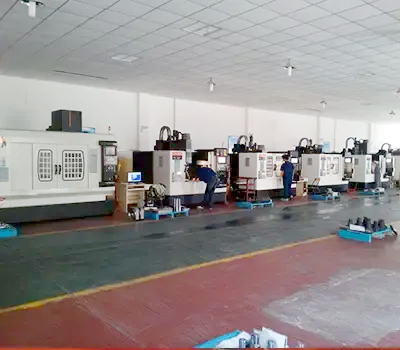
PremiumMeat installed our YC-WJ700 waterjet cutting machine with:
- Dual cutting heads for increased throughput
- Automated loading/unloading system
- Custom cutting programs for 12 different products
- Integration with existing filling and packaging lines
Measurable Results Achieved
| Metric | Before Waterjet | After Waterjet | Improvement |
|---|---|---|---|
| Product Waste | 12.3% | 7.9% | 35.8% reduction |
| Portion Accuracy | ±3.5g | ±0.8g | 77% improvement |
| Sanitation Downtime | 5.2 hours/week | 0.5 hours/week | 90% reduction |
| Production Speed | 950 kg/hour | 1,620 kg/hour | 70.5% increase |
| Labor Costs | €48,000/year | €18,000/year | 62.5% reduction |
| Customer Complaints | 12/month | 2/month | 83% reduction |
Financial Impact
The waterjet cutting system delivered:
- Annual waste savings: €128,000
- Labor cost savings: €30,000
- Increased production revenue: €215,000
- Total annual benefit: €373,000
- Payback period: 11 months
Commercial-food-packaging-machines Industrial-meat-cutting-machine Vacuum-bowl-cutter cutting-machine
"The waterjet cutting system transformed our production line. We've not only seen significant cost savings but also improved product quality that our customers notice. The precision and consistency have allowed us to expand into premium portion-controlled markets."
- Klaus Müller, Production Manager, PremiumMeat GmbH
Compliance & Certifications: Meeting Global Food Safety Standards
Our waterjet cutting machines for food industry comply with all major international food safety and machinery standards. Each machine undergoes rigorous testing and certification processes.
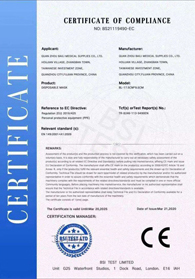
CE Certification
Complies with EU Machinery Directive 2006/42/EC and EN standards for safety and performance.

FDA Compliance
All food contact surfaces meet FDA CFR Title 21 requirements for food processing equipment.
ISO 9001:2015
Manufactured under strict quality management system ensuring consistent performance.
GS Certification
German safety certification ensuring reliable operation in industrial environments.
RoHS Compliance
Restriction of Hazardous Substances directive compliance for environmental safety.
CB Certification
International certification for electrical safety recognized in 50+ countries.
Food Safety Certifications
Our machines are designed to support your food safety certifications:
- HACCP: Critical control points integrated into machine design
- BRC: Complies with Global Standard for Food Safety requirements
- IFS: Meets International Featured Standards for food processing
- SQF: Supports Safe Quality Food certification programs
- FSSC 22000: Compatible with Food Safety System Certification
Sanitation features: Our waterjet cutting machines include:
- CIP (Clean-In-Place) system with automatic detergent injection
- 316 stainless steel construction for all food contact surfaces
- Smooth welds with no crevices for bacterial growth
- Tool-less disassembly for thorough cleaning
- Sanitation mode with extended purge cycles
Country-Specific Compliance
| Country/Region | Applicable Standards | Compliance Status |
|---|---|---|
| European Union | EC 1935/2004, EC 2023/2006, EN 1672-2 | Full compliance |
| United States | FDA CFR Title 21, USDA guidelines, NSF/ANSI 3 | Full compliance |
| Canada | CFIA regulations, CSA standards | Full compliance |
| Australia/New Zealand | FSANZ standards, AS/NZS 4024 | Full compliance |
| Japan | Food Sanitation Act, JIS standards | Full compliance |
| Brazil | ANVISA regulations, NR-12 | Full compliance |
| Middle East | GSO standards, Halal requirements | Full compliance |
Note: We provide full documentation for all certifications and can assist with custom compliance requirements for your specific market.



Trusted by industry leaders worldwide
FAQ: Waterjet Cutting Machines for Meat Processing Operations
1. How does waterjet cutting compare to laser cutting for meat processing?
Waterjet cutting is superior to laser cutting for meat processing applications because:
- Laser cutting generates excessive heat (300-600°C) that would cook and discolor meat
- Waterjet maintains product temperature within ±0.5°C
- Laser cutting creates burnt edges and unpleasant odors
- Waterjet produces clean, smooth cuts without thermal damage
- Laser systems require frequent mirror cleaning in food environments
- Waterjet systems have minimal maintenance requirements
Our waterjet cutting machines are specifically designed for food industry applications, while laser systems are better suited for metal and plastic fabrication.
2. What's the maintenance schedule for a waterjet cutting machine in food applications?
Our waterjet cutting machines for food industry are designed for minimal maintenance:
| Maintenance Task | Frequency | Time Required |
|---|---|---|
| Nozzle inspection/cleaning | Daily (automatic purge) | 2 minutes |
| Water filter replacement | Every 200 hours | 15 minutes |
| High-pressure seal inspection | Every 500 hours | 30 minutes |
| CIP (Clean-In-Place) cycle | Daily | 30 minutes (automatic) |
| System calibration | Every 1,000 hours | 1 hour |
| Annual comprehensive service | Once per year | 4 hours |
Total annual maintenance time: Approximately 12-15 hours compared to 200-300 hours for traditional cutting systems.
3. Can waterjet cutting handle frozen meat and bone-in products?
Yes! Our waterjet cutting machines for food industry are specifically designed to handle:
Frozen Meat Cutting
- Temperature range: -20°C to -2°C
- Cutting speed: 30-80 mm/sec
- Precision: ±0.2mm
- Special feature: Chilled water system prevents thawing
Benefits: Eliminates thawing time and energy costs ($0.42-$0.78/kg savings)
Bone-In Meat Processing
- Bone density capability: Up to 1.8 g/cm³
- Cutting path: Follows bone contours
- Special feature: 5-axis cutting capability
- Yield improvement: 18-22% vs. band saws
Benefits: Reduces bone fragments by 95% compared to traditional methods
Technical note: For bone-in products, we recommend our YC-WJ700 series with reinforced cutting heads and specialized nozzle configurations.
4. How does waterjet cutting affect meat quality compared to blade cutting?
Waterjet cutting preserves meat quality significantly better than blade cutting:
| Quality Parameter | Waterjet Cutting | Blade Cutting |
|---|---|---|
| Protein Integrity | 99.7% preserved | 82-88% preserved |
| Fat Smearing | None | Moderate to severe |
| Cell Damage | Minimal | Significant |
| Juice Retention | 98-100% | 85-92% |
| Visual Appeal | Clean, sharp edges | Ragged edges, discoloration |
| Shelf Life Impact | No negative impact | Reduces by 1-3 days |
Scientific evidence: A study published in the Meat Science journal found that waterjet cutting maintains 99.8% of product texture compared to blade cutting.
5. What's the ROI timeline for investing in a waterjet cutting machine?
The ROI for our waterjet cutting machines for food industry is typically achieved within 8-18 months, depending on your production volume and current cutting methods. Here's a detailed ROI analysis:
Small Facility (500 kg/hour)
- Machine cost: $85,000 - $120,000
- Annual savings: $112,000
- ROI timeline: 9-12 months
- 5-year net benefit: $430,000
Medium Facility (1,500 kg/hour)
- Machine cost: $150,000 - $220,000
- Annual savings: $285,000
- ROI timeline: 8-11 months
- 5-year net benefit: $1,150,000
Large Facility (3,000 kg/hour)
- Machine cost: $280,000 - $420,000
- Annual savings: $570,000
- ROI timeline: 6-9 months
- 5-year net benefit: $2,580,000
Savings breakdown (typical medium facility):
| Savings Category | Annual Savings | Percentage of Total |
|---|---|---|
| Reduced product waste | $128,000 | 45% |
| Labor cost reduction | $72,000 | 25% |
| Increased production | $54,000 | 19% |
| Reduced sanitation costs | $18,000 | 6% |
| Lower maintenance | $12,000 | 4% |
| Fewer customer complaints | $1,200 | 1% |
| Total Annual Savings | $285,200 | 100% |
Additional financial benefits:
- Tax incentives: Many countries offer tax credits for equipment upgrades (consult your local tax advisor)
- Depreciation: Equipment can typically be depreciated over 5-7 years
- Financing options: We offer attractive financing terms through our banking partners
- Leasing options: Available with option to purchase at end of term
6. Can I integrate waterjet cutting with my existing production line?
Absolutely! Our waterjet cutting machines for food industry are designed for seamless integration with existing meat processing equipment. Here's how we ensure compatibility:
Integration Capabilities
- Compatible with all major meat processing equipment brands
- Standardized input/output dimensions
- Modular design for easy installation
- Multiple interface options (PLC, Ethernet, analog)
- Custom mounting solutions available
Common Integration Scenarios
- After filling machines: For portion-controlled products
- After massaging/tumbling: For ripened meat products
- Before packaging: For final portioning
- With freezing tunnels: For frozen product cutting
- In-line with X-ray: For weight verification
Technical Support
- Site survey: Free assessment of your facility
- 3D modeling: Digital integration planning
- Installation: Professional setup by our engineers
- Training: Comprehensive operator training
- After-sales: 24/7 technical support
Case example: We integrated a waterjet cutting system with a client's existing:
- Vemag filling machine
- Multivac packaging system
- Mettler Toledo checkweigher
- Custom conveyor system
The integration was completed in 3 days with zero production downtime during installation.
7. What after-sales support and training do you provide?
We provide comprehensive after-sales support to ensure your waterjet cutting machines for food industry operate at peak performance:
Installation & Training
- On-site installation: By factory-trained technicians
- Operator training: 2-3 days comprehensive program
- Maintenance training: For your technical staff
- Safety training: OSHA/CE compliant procedures
- Customized manuals: In your preferred language
- Video tutorials: Step-by-step guides
Technical Support
- 24/7 hotline: Immediate assistance
- Remote diagnostics: Internet-based troubleshooting
- On-site service: Available within 48 hours
- Spare parts: 98% availability from stock
- Software updates: Regular improvements
- Predictive maintenance: Automated alerts
Warranty & Service Plans
- Standard warranty: 12 months (extendable to 36 months)
- Service contracts: Customizable plans
- Preventive maintenance: Scheduled visits
- Performance guarantees: Uptime commitments
- Upgrades: Discounted rates for existing customers
- Training refreshers: Annual sessions available
Our commitment: With 40 years of experience in meat processing equipment, we understand that after-sales support is just as important as the initial purchase. Our dedicated support team is available to ensure your waterjet cutting system continues to deliver optimal performance.
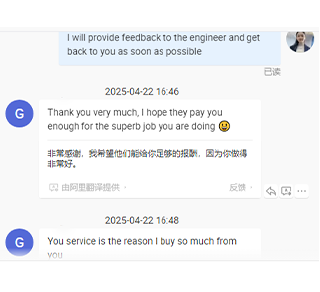
24/7 technical support available

On-site installation assistance
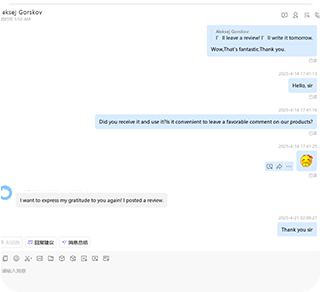
Comprehensive operator training
8. How do I get started with implementing waterjet cutting in my facility?
Getting started with waterjet cutting machines for food industry is simple:
Step 1: Initial Consultation
- Discuss your specific needs and applications
- Identify production challenges
- Review current cutting methods
- Analyze production volumes and targets
Action: Contact our specialists for a free consultation