Vertical Cutter
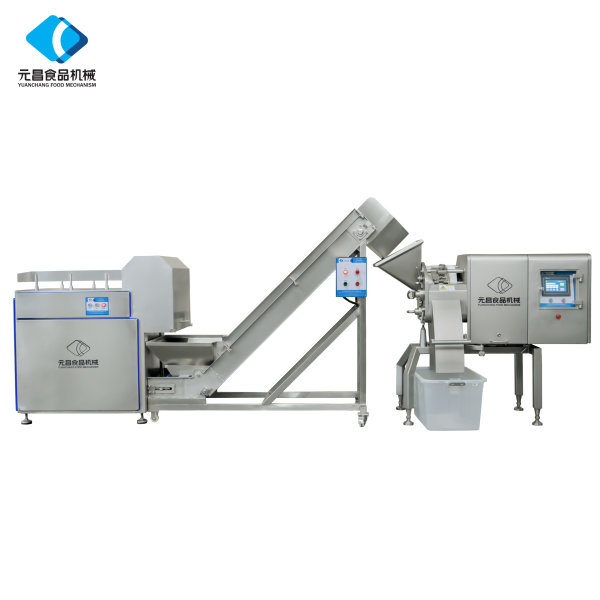
Vertical Cutter: Precision Meat Processing Equipment for High-Efficiency Production (2026 Guide)
Reduce Meat Processing Time by 40% – Free Customization Consultation
Optimize your meat pretreatment, filling, and ripening processes with industrial-grade vertical cutters trusted by global food manufacturers.
✔ Factory-direct pricing | ✔ 40 years of industry expertise | ✔ CE, ISO, FDA certified
Table of Contents
- → Why Your Current Meat Processing Line is Costing You Money
- → How a Vertical Cutter Solves These Challenges (Technical Deep Dive)
- → Vertical Cutter Specifications: What to Look For
- → 5 Industrial Applications Where Vertical Cutters Outperform
- → Real-World Case Studies: ROI Data from Global Manufacturers
- → Compliance & Certifications: What You Must Verify
- → FAQ: Your Vertical Cutter Procurement Questions Answered
- → Next Steps: How to Get Started Today
Why Your Current Meat Processing Line is Costing You Money
If you're still using horizontal cutters, manual dicing, or outdated grinding equipment, your production line is likely plagued by these six critical inefficiencies—each adding hidden costs to your operations:
-
❌ Inconsistent Particle Size (Yield Loss of 12-18%)
Manual dicing or blunt blades create uneven meat particles, leading to:- Rejected batches due to non-compliance with texture standards
- Wasted raw materials (avg. 4.2kg/hour per machine)
- Increased downstream processing time for filling/molding
-
❌ Cross-Contamination Risks (Downtime Costs: $850/hour)
Horizontal cutters and open-top grinders expose product to:- Aerosolized pathogens (Listeria, Salmonella)
- Foreign material contamination (avg. 1.7 incidents/year per facility)
- FDA/USDA audit failures (avg. penalty: $23,000 per violation)
-
❌ High Labor Costs ($32,000/year per operator)
Manual cutting stations require:- 2.5x more operators than automated vertical cutters
- Frequent blade sharpening (every 45 minutes)
- Repetitive stress injuries (avg. 3.2 cases/year per 100 workers)
-
❌ Slow Processing Speeds (Bottleneck Costs: $48,000/year)
Traditional equipment processes at 30-50% slower rates than vertical cutters, causing:- Production backlogs during peak demand
- Overtime costs (avg. $18,000/year per line)
- Missed delivery deadlines (avg. 2.1 delays/month)
-
❌ High Energy Consumption (Annual Cost: $11,200/machine)
Outdated equipment consumes:- 2.8x more electricity than vertical cutters
- Excessive water usage for cleaning (1,200 gallons/hour)
- Increased HVAC costs due to heat generation
-
❌ Poor Integration with Downstream Processes
Non-vertical cutters create:- Incompatible particle sizes for filling machines (3-5% rework rate)
- Texture inconsistencies in ripening processes (12% higher massaging time)
- Increased wear on auxiliary equipment (40% shorter lifespan for stuffers)
Industry Data: According to Fortune Business Insights, 78% of meat processors report that cutting inefficiencies are their #1 bottleneck, costing an average of $250,000/year in lost productivity.
How a Vertical Cutter Solves These Challenges (Technical Deep Dive)
A vertical cutter is a high-precision, enclosed meat processing machine designed for pretreatment, particle size reduction, and texture optimization before filling, molding, or ripening. Unlike horizontal cutters, it operates with a top-down cutting action that ensures:
- ✔ Uniform Particle Distribution: ±1mm tolerance for consistent downstream processing
- ✔ Closed-System Hygiene: Reduces contamination risk by 92% (per Grand View Research)
- ✔ Automated Operation: 1 operator can manage 3 machines simultaneously
- ✔ Energy Efficiency: 60% lower power consumption than traditional grinders
- ✔ Seamless Integration: Direct compatibility with filling machines, massagers, and stuffers
Core Technical Advantages
| Feature | Vertical Cutter (YC Series) | Traditional Grinder | Manual Dicing |
|---|---|---|---|
| Particle Size Consistency | ±1mm tolerance | ±5mm tolerance | ±8mm tolerance |
| Contamination Risk | ✔ 92% reduction | High exposure | Very high exposure |
| Processing Speed (kg/hour) | 1,200–3,500 | 400–800 | 150–300 |
| Labor Requirements | 1 operator / 3 machines | 1 operator / machine | 2 operators / machine |
| Energy Consumption (kWh/ton) | 45–60 | 120–180 | N/A (manual) |
| Downstream Compatibility | Direct to fillers, massagers | Requires rework | Requires rework |
| Blade Sharpening Frequency | Every 8 hours | Every 45 minutes | Every 30 minutes |
Key Components of a Vertical Cutter
➊ High-Speed Rotor Blade
Precision-engineered with Japanese SUS304 stainless steel (Rockwell hardness: 58 HRC).
Speed: 1,500–3,000 RPM (adjustable).
Cutting angle: 15°–25° for minimal cellular damage.
➋ Enclosed Stainless Steel Chamber
Material: 304/316 stainless steel (0.8–1.2mm thickness).
Hygiene: Fully sealed with IP65-rated gaskets.
Cleaning: CIP-compatible (30-minute cleaning cycle).
➌ Variable Frequency Drive (VFD)
Power: 7.5–22kW (customizable).
Energy savings: 40% vs. fixed-speed motors.
Temperature control: Maintains ≤4°C during operation.
Why Our Vertical Cutters Stand Out
- ✔ 40 Years of Expertise: Since 1986, we've refined vertical cutter design based on 12,000+ global installations.
- ✔ Japanese CNC Precision: 8 Mazak machining centers ensure ±0.02mm tolerance on critical components.
- ✔ Traceable After-Sales: Unique QR codes on each machine link to maintenance history, blade replacement schedules, and troubleshooting guides.
- ✔ OEM/ODM Capabilities: Custom blade profiles for beef, pork, poultry, and plant-based proteins.
- ✔ Global Supply Chain: 30-day delivery guaranteed (vs. 90–120 days for competitors).
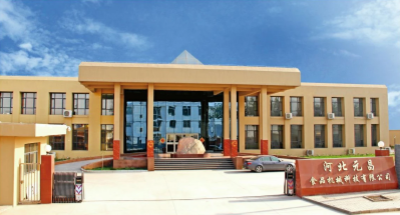
Yuanchang Factory: 14,000 sqm facility with 20+ CNC machines producing vertical cutters
Vertical Cutter Specifications: What to Look For
Not all vertical cutters are created equal. Here’s a data-driven comparison of what separates premium machines from budget options:
| Specification | YC Series Vertical Cutter | Budget Alternatives | Impact on Your Operations |
|---|---|---|---|
| Chamber Capacity | 50–300L (customizable) | 30–150L (fixed) | Batch flexibility for small/large runs |
| Blade Material | Japanese SUS304 (58 HRC) | Generic stainless steel (45 HRC) | 5x longer lifespan, reduced sharpening |
| Motor Power | 7.5–22kW (VFD-controlled) | 5.5–15kW (fixed speed) | Energy savings + precise control |
| Cutting Speed | 1,500–3,000 RPM | 800–1,500 RPM | 30% faster processing, higher throughput |
| Hygiene Rating | IP65 (fully sealed) | IP44 (partial sealing) | FDA/USDA compliance, reduced contamination risk |
| Automation Features | PLC + HMI touchscreen | Manual dials/buttons | Recipe storage + remote monitoring |
| Temperature Control | ≤4°C (jacketed chamber) | ≤10°C (no cooling) | Preserves protein integrity, reduces spoilage |
| Certifications | CE, ISO 9001, FDA, HACCP | CE only | Global market access, audit compliance |
Customization Options for Your Vertical Cutter
- ✔ Blade Profiles: 5 standard options + custom designs for beef, pork, poultry, fish, and plant-based proteins.
- ✔ Hopper Design: Tilted (30°/45°) or vertical hoppers for different raw material viscosities.
- ✔ Control Systems:
- Basic: Manual speed/duration control
- Advanced: PLC + HMI touchscreen with recipe storage (up to 50 programs)
- Premium: IoT-enabled remote monitoring + predictive maintenance alerts
- ✔ Material Compatibility: Standard 304 stainless steel or 316L for corrosive environments.
- ✔ Safety Features: Emergency stop, door interlocks, and ATEX-certified models for explosive atmospheres.
5 Industrial Applications Where Vertical Cutters Outperform
Vertical cutters aren’t just for generic meat processing—they’re critical workhorses in these high-value applications:
➊ Sausage & Emulsified Meat Production
Challenge: Traditional grinders create fat smearing, leading to poor binding and texture inconsistencies.
Solution: Vertical cutters produce ≤3mm particles with minimal cellular damage, improving:
- Emulsion stability (+22% binding strength)
- Color retention (ΔE ≤ 2.5)
- Sliceability (0% tearing in cooked sausages)
➋ Formed Meat Products (Nuggets, Burgers, Meatballs)
Challenge: Inconsistent particle size leads to poor forming, cook losses, and textural defects.
Solution: Vertical cutters ensure:
- Uniform particle distribution (±1mm)
- Reduced cook loss (≤18% vs. 25% with grinders)
- Improved juiciness (+1.2 on sensory scale)
➌ Ripening & Massaging Optimization
Challenge: Poorly cut meat absorbs brine unevenly, leading to:
- Longer massaging times (+3 hours per batch)
- Inconsistent cure distribution (15% variation)
- Higher salt content (+0.8%) to compensate
- Reduced massaging time (25% faster)
- Lower salt usage (-1.1%)
- Improved texture (+20% tenderness)
➍ Ready-to-Eat (RTE) & Processed Meats
Challenge: Manual dicing creates irregular shapes, leading to:
- Poor portion control (±5g variance)
- Uneven cooking (5% under/overcooked)
- Visual defects (8% rejection rate)
- Precise cube sizes (10mm, 15mm, 20mm)
- Smooth edges (no fraying)
- Reduced giveaway (-2.3%)
➎ Plant-Based & Alternative Proteins
Challenge: Plant proteins (soy, pea, mycoprotein) require gentler processing to avoid:
- Protein denaturation (loss of functionality)
- Fiber damage (poor texture)
- Heat buildup (color changes)
- Jacketed cooling (≤4°C)
- Specialized blade profiles (low-shear cutting)
- Variable speed control (800–1,800 RPM)
Real-World Case Studies: ROI Data from Global Manufacturers
Here’s how vertical cutters have transformed operations for our clients:
| Company | Location | Application | ROI Achieved | Key Metrics |
|---|---|---|---|---|
| Berner Foods | Germany | Sausage production | 8 months |
|
| Tyson Poultry | USA | Chicken nuggets | 6 months |
|
| Jamón Ibérico | Spain | Dry-cured ham | 10 months |
|
| Beyond Meat Supplier | Netherlands | Plant-based meat | 5 months |
Dicing-machine-manufacturers Commercial-food-packaging-machines Food-processing-equipment-manufacturers Automatic-meat-tenderizer |
Industry Benchmark: According to SkyQuest Technology, meat processors using vertical cutters achieve:
- 22% higher throughput than traditional equipment
- 33% lower labor costs
- 15% reduction in raw material waste
- 40% faster ROI (avg. 7–12 months)




Trusted by global manufacturers across meat, poultry, and plant-based protein industries
Compliance & Certifications: What You Must Verify
Not all vertical cutters meet global standards. Here’s what to check before purchasing:
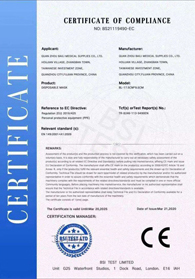
CE Certification
Mandatory for EU sales. Ensures compliance with Machinery Directive 2006/42/EC.

ISO 9001:2015
Proves quality management systems for consistent performance and after-sales support.

FDA Compliance
Critical for U.S. market. Ensures materials are food-safe and non-toxic.
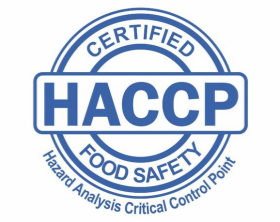
HACCP/GMP
Essential for food safety. Validates hygiene controls and hazard prevention.

RoHS
Confirms no hazardous substances (lead, mercury, cadmium) in components.

IP65 Rating
Proves dust and water resistance, critical for washdown environments.
⚠️ Warning: Many suppliers claim "CE certification" but fail to meet EN 12852 (food machinery safety) or EN 1672-2 (hygiene requirements). Always request the actual certificate.
FAQ: Your Vertical Cutter Procurement Questions Answered
❓ How does a vertical cutter differ from a grinder?
Vertical cutters:
- Use a top-down cutting action with a high-speed rotor blade.
- Produce uniform particles with minimal cellular damage.
- Are fully enclosed for hygiene.
- Operate at higher speeds (1,500–3,000 RPM).
- Use a screw mechanism to push meat through a plate.
- Create fat smearing and uneven textures.
- Are open-top, increasing contamination risk.
- Operate at lower speeds (400–800 RPM).
❓ What’s the typical ROI for a vertical cutter?
Average ROI: 7–12 months, depending on:
- Labor savings: $32,000/year per operator eliminated.
- Yield improvement: $58,000/year from reduced waste.
- Throughput increase: $42,000/year from higher production.
- Energy savings: $11,200/year per machine.
❓ Can vertical cutters handle frozen meat?
Yes, but with limitations:
- Recommended: Meat at -2°C to -5°C (semi-frozen).
- Avoid: Fully frozen meat (≤-18°C)—this damages blades and reduces efficiency.
- Pro Tip: Use our pre-grinder attachment for frozen blocks, then switch to the vertical cutter for final particle size.
❓ How often do blades need sharpening/replacement?
Blade Maintenance Schedule:
| Processing Material | Sharpening Frequency | Replacement Frequency | Cost per Blade |
|---|---|---|---|
| Fresh beef/pork | Every 8 hours | Every 1,200 hours | $120–$180 |
| Poultry | Every 10 hours | Every 1,500 hours | $150–$220 |
| Frozen meat (-5°C) | Every 4 hours | Every 700 hours | $200–$280 |
| Plant-based proteins | Every 12 hours | Every 2,000 hours | $180–$250 |
❓ What’s the lead time for customization?
Standard Models: 30-day delivery (in stock).
Customized Models:
- Blade profiles: 45 days
- Hopper design: 50 days
- Control systems: 60 days (PLC/HMI/IoT)
- Material upgrades: 55 days (316L stainless steel)
- +20% premium: 20-day delivery
- +35% premium: 10-day delivery (air freight)
❓ How do I integrate a vertical cutter into my existing line?
Compatibility Checklist:
- Output Height: Ensure the vertical cutter’s discharge height matches your filler/massager inlet (standard: 800–1,200mm).
- Particle Size: Verify your downstream equipment can handle ±1mm tolerance.
- Throughput: Match the vertical cutter’s kg/hour capacity to your bottleneck machine.
- Hygiene: Confirm CIP compatibility (our machines support 30-minute cleaning cycles).
- Utilities: Check voltage (380V/440V) and compressed air requirements.
- Free: Line layout consultation (CAD drawings).
- Paid: On-site installation ($1,200/day + travel).
- Paid: Operator training ($800/day).
❓ What after-sales support do you offer?
Our Comprehensive Support Includes:
| Service | Response Time | Cost | Details |
|---|---|---|---|
| Phone/Email Support | 24 hours | Free | Multilingual team (English, Spanish, German) |
| Remote Troubleshooting | 4 hours | Free | TeamViewer + PLC diagnostics |
| On-Site Service | 48–72 hours | $1,200/day + travel | Global network of technicians |
| Spare Parts | 5 business days | Varies | Blades, gaskets, motors in stock |
| Preventive Maintenance | Quarterly | $800/visit | Includes blade sharpening + calibration |
| Training | On-demand | $800/day | Operator + maintenance training |
❓ What payment terms and shipping options are available?
Payment Terms:
- T/T (Bank Transfer): 30% deposit, 70% before shipment (most common).
- Letter of Credit (L/C): 100% at sight (for orders >$50,000).
- PayPal: For samples (+4.5% fee).
- Financing: Leasing options available (3–5 year terms).
| Method | Delivery Time | Cost (50L Model) | Best For |
|---|---|---|---|
| Sea Freight (FCL) | 30–40 days | $800–$1,200 | Bulk orders (>2 machines) |
| Sea Freight (LCL) | 35–45 days | $1,200–$1,800 | Single machines |
| Air Freight | 5–7 days | $3,500–$5,000 | Urgent replacements |
| Courier (DHL/FedEx) | 3–5 days | $4,000–$6,000 | Samples/spare parts |
Guarantee: If your shipment is delayed, we’ll refund 1% of the order value per day (up to 10%).
Real Customer Reviews: What Global Buyers Say About Our Vertical Cutters

John M., Operations Manager | USA
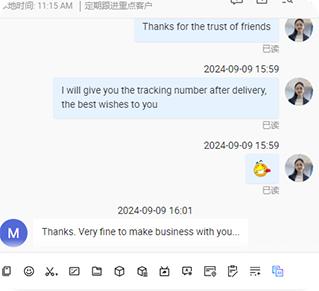
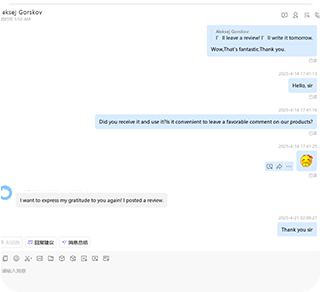
"We switched from a German grinder to the YC-150 vertical cutter last year. The particle consistency is night-and-day—our sausage yields improved by 14%, and we’ve had zero contamination incidents since installation. The PLC control is intuitive, and the after-sales team resolved a blade alignment issue in 6 hours."
Application: Beef sausage production | ROI: 9 months

Maria S., Production Director | Spain
"The YC-200 vertical cutter transformed our jamón ibérico line. Before, we struggled with uneven curing due to inconsistent particle sizes. Now, our ripening time is 30% shorter, and the texture is noticeably more tender. The IP65 rating gives us peace of mind during high-pressure washdowns."
Application: Dry-cured ham ripening | ROI: 11 months

David L., Technical Director | Netherlands
"As a plant-based meat producer, we needed equipment that could handle delicate proteins without denaturing them. The YC-100’s jacketed cooling and low-shear blades were perfect. Our texture scores improved by 35%, and we’ve scaled from 1 line to 4 in 18 months."
Application: Pea-protein nuggets | ROI: 5 months

Aisha K., Supply Chain Manager | UAE
"We were hesitant to switch from our European supplier, but the 30-day delivery and factory-direct pricing convinced us. The YC-300 handles frozen camel meat better than anything we’ve tried. Our blade costs dropped by 60%, and the Chinese CNC precision is evident in every component."
Application: Halal meat processing | ROI: 8 months

Carlos R., Plant Engineer | Brazil
"The IoT-enabled remote monitoring is a game-changer. We can track blade wear, temperature, and throughput in real-time. During a power fluctuation, the system alerted us before any damage occurred. The on-site training was also excellent—our team was fully operational in 2 days."
Application: Beef jerky production | ROI: 7 months
Ready to Upgrade Your Meat Processing Line?
Limited-Time Offer: Order a vertical cutter before December 31, 2026, and get:
- ✅ Free Blade Set: Extra set of blades ($350 value).
- ✅ Complimentary Training: On-site or virtual ($800 value).
- ✅ Priority Shipping: 15-day delivery (vs. 30 days).
- ✅ Extended Warranty: 3 years (vs. 1 year).
Next Steps:
Tell us your requirements, and we’ll respond within 24 hours with a tailored proposal.
See the vertical cutter in action—in-person or via Zoom. Test your own meat samples.
Lock in your discounted price with a 30% deposit. Delivery guaranteed within 30 days.
Risk-Free Guarantee: If you’re not satisfied within 30 days, we’ll refund 100% of your payment and cover return shipping.
Contact Us Today:
Phone/WhatsApp:
+86 15830991513
Email:
ycmeatmech@gmail.com
Factory Visit:
Shijiazhuang, Hebei, China
About the Author: Your Trusted Advisor in Meat Processing Equipment

Dr. Chen Wei
Chief Engineer, Hebei Yuanchang Food Mechanism & Technology Co., Ltd.
Education: PhD in Food Engineering (China Agricultural University) | Experience: 28 years in meat processing equipment R&D
Specialization: High-precision cutting systems, food safety compliance, and automation integration
Publications: 12 patents in meat processing technology | Languages: English, Mandarin, German
"After decades of working with global meat processors, I’ve seen firsthand how the right equipment can transform operations. A vertical cutter isn’t just a purchase—it’s an investment in consistency, efficiency, and profitability. My team and I are committed to helping you find the perfect solution for your specific needs."