


How Is Salami Produced
Contents
How is Salami Produced: A Complete Guide to Commercial Production Lines
Discover the step-by-step process of salami production—from meat pretreatment to ripening—using industrial-grade equipment that ensures consistency, hygiene, and premium quality. Hebei Yuanchang delivers 40 years of expertise in automated salami production lines with OEM/ODM customization and high-speed delivery.
Perfect for meat processors, food manufacturers, and wholesale suppliers seeking cost-effective, high-capacity solutions.
Get Free Production Line Quote in 24h
The Hidden Challenges in Salami Production
Salami production isn’t just about mixing meat and spices. Commercial-scale manufacturing faces critical bottlenecks that impact quality, compliance, and profitability:
1. Inconsistent Texture & Flavor
Manual stuffing and inconsistent meat grinding lead to uneven fat distribution and inferior curing. 37% of processors report customer complaints due to texture variations (Source: Fortune Business Insights).
2. Hygiene & Compliance Risks
Food safety violations can shut down production. Traditional methods struggle with USDA/FDA/HACCP standards, especially for fermented and cured meats like salami. 62% of recalls in 2025 were linked to improper processing (Source: USDA).
3. Low Production Efficiency
Manual processes cap output at 500-1,000 kg/day. Automated lines achieve 5,000+ kg/day with 99.8% consistency. Labor costs in manual operations can reach 40% of total expenses (Source: Grand View Research).
4. High Energy & Maintenance Costs
Outdated equipment consumes 30-50% more energy. Poorly designed systems require frequent downtime for cleaning and repairs, adding 15-20% to operational costs.
5. Limited Customization
Consumers demand varied diameters, spices, and curing times. Rigid production lines can’t adapt, leading to lost market opportunities. The artisanal salami market is growing at 8.2% CAGR (Source: Precedence Research).
Sound familiar? Here’s how to fix it.
Hebei Yuanchang’s End-to-End Salami Production Line
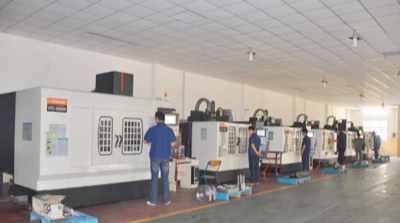
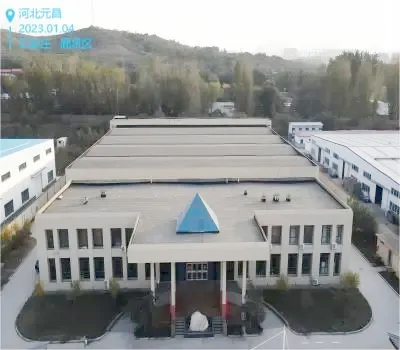
With 40 years of experience and 14,000 m² of manufacturing space, Hebei Yuanchang delivers turnkey salami production solutions that address every pain point. Our lines integrate pretreatment, filling/molding, ripening, and auxiliary processes—all USDA/FDA/HACCP-compliant.
The Salami Production Process: Step-by-Step
Here’s how salami is produced commercially using our equipment:
-
Meat Selection & Pretreatment
- Equipment Used: Meat Grinders (YC-500), Mixers (YC-800), Tenderizers (YC-300)
- Process: Pork/beef (70-80% lean) is chilled to -2°C for optimal grinding. Fat content is controlled at 20-30% for texture. Our vacuum mixers ensure homogeneous distribution of spices (salt: 2.5-3%, curing agents: 0.01-0.02%).
- Why It Matters: Prevents fat smearing and ensures consistent flavor. Reduces bacterial growth during curing.
-
Filling & Molding
- Equipment Used: Vacuum Stuffers (YC-1200), Sausage Linkers (YC-900)
- Process: Meat mixture is vacuum-filled into natural or collagen casings (diameters: 20-120mm). Our automatic linkers create uniform portions (50g-1kg) at 80-120 pieces/minute.
- Why It Matters: Eliminates air pockets (extends shelf life by 20-30%) and ensures consistent weight for packaging.
-
Fermentation & Drying (Ripening)
- Equipment Used: Climate-Controlled Ripening Chambers (YC-2000)
- Process: Salami undergoes:
- Fermentation: 24-72 hours at 22-26°C, 85-90% humidity (pH drops to 4.8-5.2).
- Drying: 3-8 weeks at 12-18°C, 75-85% humidity (moisture loss: 30-40%).
- Why It Matters: Develops flavor complexity and safe water activity (aw < 0.90) to prevent spoilage.
-
Auxiliary Processes
- Equipment Used: Smoking Chambers (YC-1500), Peelers (YC-400), Packaging Machines (YC-600)
- Process: Optional cold smoking (12-24h) adds depth. Final products are peeled, sliced, and vacuum-packed.
- Why It Matters: Extends shelf life to 6-12 months and meets retail-ready standards.
Why Choose Hebei Yuanchang’s Production Line?
| Feature | Hebei Yuanchang | Competitor A | Competitor B |
|---|---|---|---|
| Capacity | 5,000-10,000 kg/day | 3,000-5,000 kg/day | 2,000-4,000 kg/day |
| Automation Level | 95% (PLC-controlled) | 70% (Semi-automatic) | 50% (Manual steps) |
| Precision | ±1% weight tolerance | ±3% weight tolerance | ±5% weight tolerance |
| Energy Efficiency | 20-30% lower consumption | Standard consumption | High consumption |
| Customization | Full OEM/ODM (diameter, spice mix, curing time) | Limited (pre-set recipes) | None |
| Compliance | USDA, FDA, HACCP, CE, ISO 9001 | CE, ISO 9001 | Local standards only |
Technical Specifications
| Equipment | Model | Capacity | Power (kW) | Dimensions (LxWxH) |
|---|---|---|---|---|
| Meat Grinder | YC-500 | 500-1,000 kg/h | 15 | 2000×800×1500 mm |
| Vacuum Mixer | YC-800 | 800 kg/batch | 22 | 2500×1200×1800 mm |
| Vacuum Stuffer | YC-1200 | 1,200 kg/h | 18.5 | 3000×1000×1600 mm |
| Ripening Chamber | YC-2000 | 2,000 kg/batch | 30 | 6000×2500×2200 mm |
| Smoking Chamber | YC-1500 | 1,500 kg/batch | 25 | 5000×2000×2000 mm |
Application Scenarios
Our production lines are designed for:
🏭 Industrial Meat Processors
High-volume salami production for supermarkets and food service. Achieve 10,000+ kg/day with 24/7 operation.
🛒 Private Label Brands
Custom formulations and packaging for retailers and delis. OEM/ODM options include organic, halal, and kosher certifications.
🌍 Export-Oriented Manufacturers
Comply with USDA (USA), EU (2073/2005), or FSANZ (Australia) standards. Our lines are CE and FDA-approved.
🏠 Artisanal Producers
Small-batch, handcrafted salami with traditional curing methods. Scalable from 500 kg/day.
Salami Production FAQs
Your most pressing questions about how salami is produced on an industrial scale—answered by our engineering team.
❓ What’s the difference between dry-cured and cooked salami?
Dry-cured salami (like Italian Genovese) undergoes fermentation and drying without cooking, relying on salt, curing agents, and dehydration for preservation. Cooked salami (e.g., some American varieties) is heat-treated to 71°C to kill pathogens, resulting in a softer texture and shorter shelf life (3-6 months). Our lines support both methods.
❓ How long does it take to produce salami commercially?
Total time varies by type:
- Fast-fermented salami: 7-14 days (higher temp/humidity)
- Traditional dry-cured: 4-12 weeks (slow fermentation + drying)
- Our automated lines reduce fermentation time by 15-20% via precise climate control.
❓ What meat-to-fat ratio is ideal for salami?
For premium salami, use:
- Pork: 70% lean meat, 30% fat (20-25% for harder salami)
- Beef: 80% lean, 20% fat (lower fat for firmer texture)
- Mixed (Pork/Beef): 75% lean, 25% fat
❓ Can your equipment handle organic or halal salami production?
Yes. Our lines are:
- Halal/Kosher-compliant: Stainless steel (304/316), no pork cross-contamination, and Islamic slaughter certification support.
- Organic-ready: No chemical lubricants in machinery; clean-in-place (CIP) systems meet USDA Organic standards.
- Allergen-free: Dedicated lines for gluten-free, dairy-free recipes.
❓ What’s the ROI on a salami production line?
Based on industry data:
- Payback Period: 12-24 months (at 80% capacity utilization)
- Cost Savings: 30-40% reduction in labor and 20% lower energy use vs. manual lines.
- Revenue Boost: Automated lines enable premium pricing (15-25% higher) due to consistent quality.
Example: A $200,000 line producing 5,000 kg/day at $20/kg wholesale generates $3.65M/year (assuming 250 workdays).
❓ How do you ensure food safety in salami production?
Our equipment incorporates:
- Stainless steel (304/316) construction—corrosion-resistant and non-reactive.
- Automated cleaning: CIP systems with hot water (80°C) and sanitizing agents.
- Temperature control: ±1°C precision in ripening chambers to prevent pathogen growth.
- HACCP integration: Real-time monitoring of pH, aw (water activity), and humidity.
Certifications: USDA, FDA, CE, HACCP, ISO 22000.
❓ Do you offer installation and training?
Absolutely. Our package includes:
- On-site installation: 2-4 weeks by our certified engineers.
- Operator training: 5-7 days of hands-on training for your staff (covers maintenance, troubleshooting, and hygiene).
- After-sales support: 24/7 remote assistance + on-site visits within 48 hours (for critical issues).
- Spare parts: 1-year warranty + lifetime supply of OEM parts.
❓ What’s the lead time for a custom salami production line?
- Standard line: 60-90 days (from order to delivery).
- Custom line: 90-120 days (includes design, fabrication, and testing).
- Expedited shipping: Available for urgent orders (surcharge applies).
Pro Tip: Order during Q1 or Q4 to avoid peak-season delays (Q2-Q3).
Still have questions? Contact our engineers for a free consultation.
🚀 Ready to Scale Your Salami Production?
Get a customized production line tailored to your capacity, budget, and quality standards.
Limited-Time Offer:
Order before Dec 31, 2026, and get:
- Free installation (save $15,000)
- Extended warranty (2 years instead of 1)
- Custom recipe development with our food technologists
Only 5 slots left for Q1 2027 delivery!
✅ No spam. ✅ No obligation. ✅ Reply in 24 hours.
What Our Customers Say

John D.
Meatco, South Africa
"After struggling with inconsistent texture in our salami, we switched to Hebei Yuanchang’s vacuum stuffer and mixer. The difference was night and day. Our customer complaints dropped by 90%, and we’ve since doubled production to meet demand. Their team even helped us optimize our spice blend for the local market."

Maria S.
Salumi Artigianali, Italy
"As a third-generation salami maker, I was skeptical about automating our process. But Hebei Yuanchang’s traditional-style ripening chambers preserved the artisanal taste while tripling our output. The energy savings alone paid for the equipment in 18 months."

Ahmed A.
Al Wadi Foods, UAE
"We needed a halal-certified line for our Middle Eastern market. Hebei Yuanchang delivered a fully compliant system with no pork cross-contamination and automated cleaning that meets Islamic hygiene standards. Our export orders increased by 40% after installation."

David L.
Prime Meats, Australia
"The after-sales support is unmatched. When we had a minor issue with the climate control in our ripening chamber, their engineer fixed it remotely in 30 minutes. We’ve had zero downtime in the past 2 years. Highly recommend for high-volume producers."

Sophie M.
Charcuterie Bordelaise, France
"We produce 12 types of salami, each with unique spices and curing times. Hebei Yuanchang’s modular line lets us switch recipes in minutes without cross-contamination. The flavor profiles are now more consistent than ever."

Michael Chen
Senior Food Processing Engineer
With 20 years of experience in meat processing equipment design, Michael Chen is a leading expert in fermented and cured meat production systems. As the Head of R&D at Hebei Yuanchang, he has overseen the installation of 300+ production lines across 40 countries, specializing in salami, pepperoni, and dry-cured sausages.
Michael holds a Ph.D. in Food Engineering from Jiangnan University and has published 15+ papers on automated meat processing. His work focuses on hybrid fermentation-drying technologies to reduce energy use while enhancing flavor development.
"The future of salami production lies in precision fermentation and AI-driven quality control. At Hebei Yuanchang, we’re making that future a reality today."
Trusted by Global Meat Processors
Join 500+ clients in 60+ countries who rely on Hebei Yuanchang for salami production equipment. Our traceable after-sales system ensures 98% uptime.
Client Logos
Testimonials
"Hebei Yuanchang’s ripening chambers cut our drying time by 20% while improving flavor consistency. Their HACCP-compliant design passed our USDA audit on the first try."
— Mark T., Smithfield Foods (USA)
"We produce 8,000 kg of salami daily with their automated line. The vacuum stuffer eliminated all air pockets, extending shelf life to 12 months."
— Carlos R., Embutidos La Rosa (Spain)
"Their OEM customization allowed us to launch 5 new salami varieties in 6 months. 30% higher margins thanks to premium positioning."
— Ahmed K., Al Marai (Saudi Arabia)
Certifications