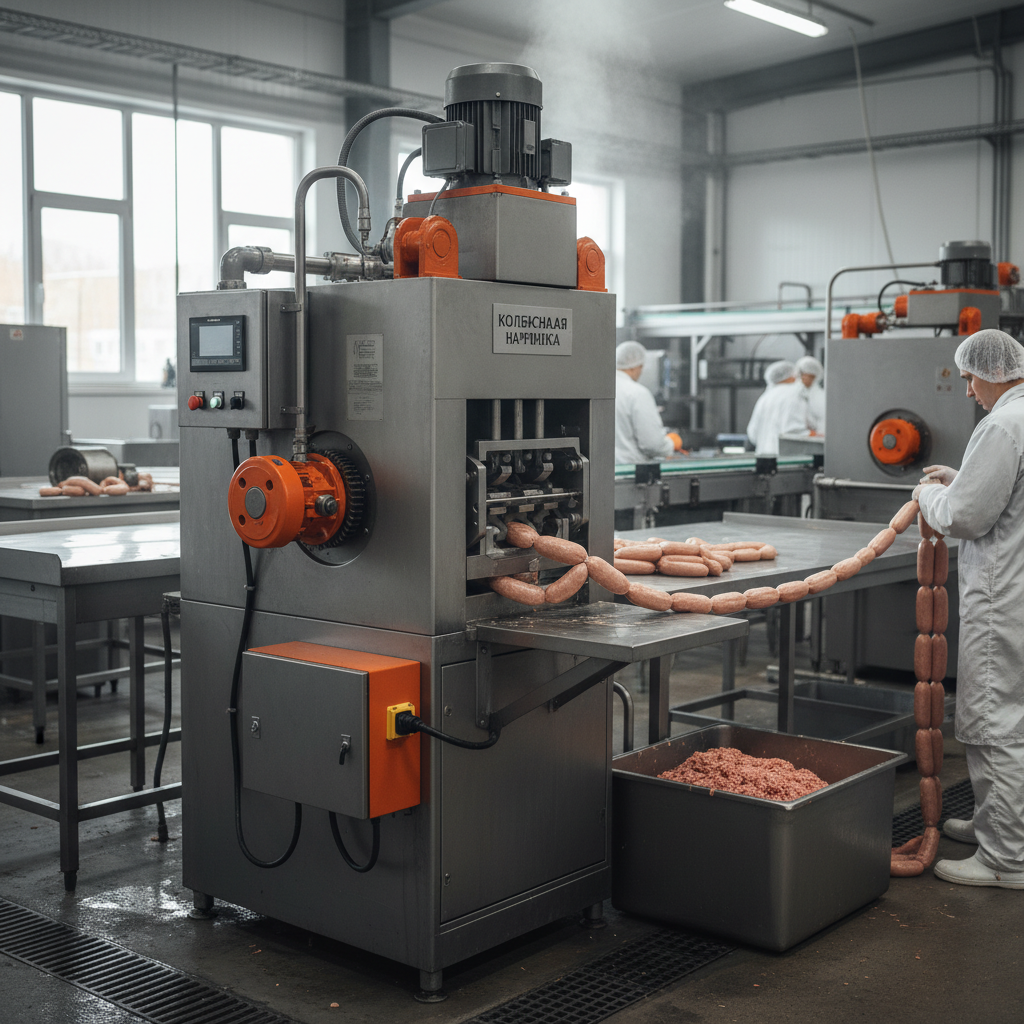
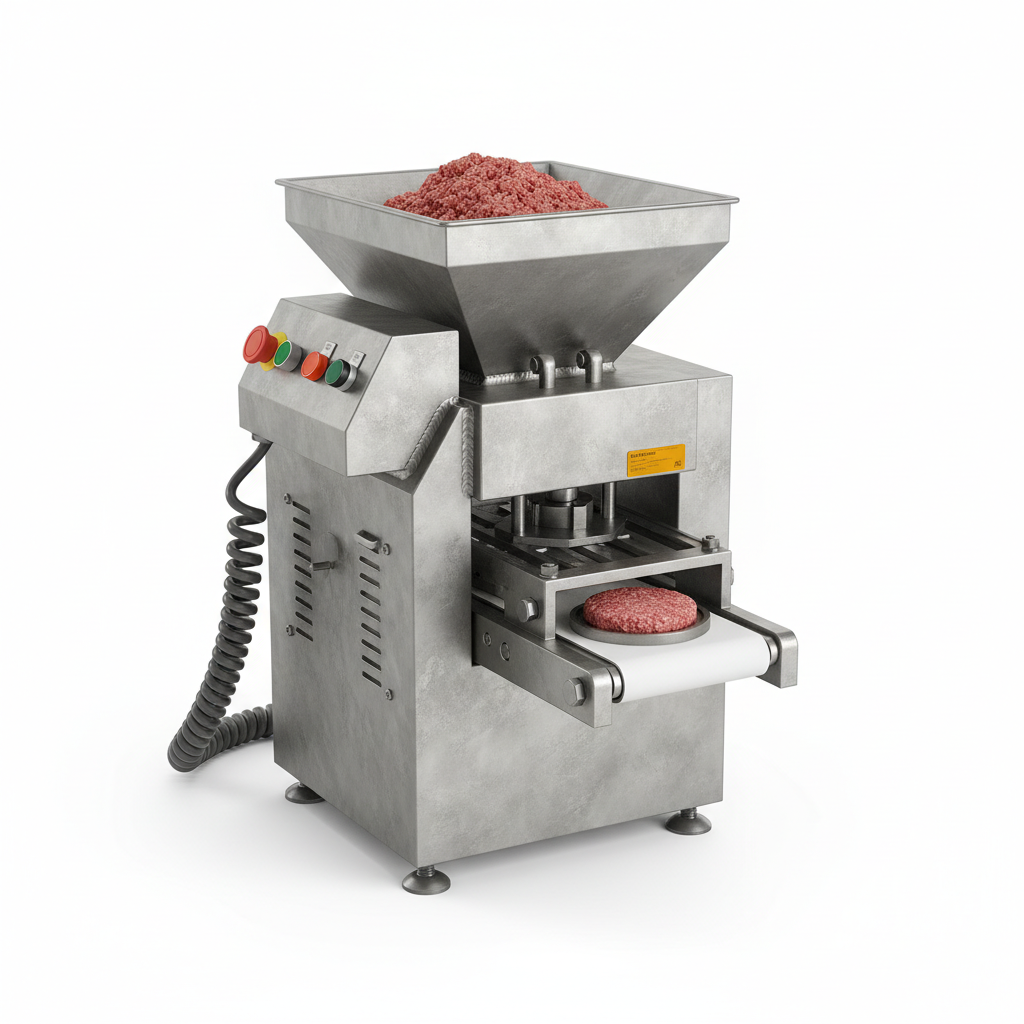
To be honest, things in the industrial meat processing equipment manufacturing world are moving fast. It feels like just yesterday we were all arguing about stainless steel grades, and now everyone's obsessed with modular designs and full automation. I’ve been on sites all year, from massive packing plants in Iowa to smaller artisan butcheries trying to scale up, and the demand for efficiency is insane. Everyone wants more throughput, less downtime, and frankly, fewer people getting hurt.
Have you noticed how much focus there is on sanitation now? It's not just about meeting regulations – though that's a big part of it – it’s about consumer trust. And believe me, a single recall can bankrupt a smaller operation. We’re seeing a lot of clients wanting fully clean-in-place (CIP) systems, and honestly, integrating those properly is a headache.
It's a bit of a wild west out there, honestly. A lot of companies promising the world and then delivering… well, something less. I think the biggest problem right now is people trying to over-engineer things. They get caught up in the bells and whistles and forget about the practicalities of actually running a processing line.
Key Industry Trends and Pitfalls
Strangely, a lot of manufacturers are chasing after robotic solutions, thinking it's the silver bullet. It's not. I encountered this at a big poultry plant in Georgia last time – spent three days troubleshooting a robotic deboning system. The robots were fantastic, when they worked. But the variability in bird size and bone structure kept causing jams. The operators ended up spending more time clearing jams than they would have just deboning by hand. It highlighted how critical it is to understand the nuances of the raw product.
The biggest pitfall? Assuming a 'one-size-fits-all' approach. Every meat processor has unique needs. A small, family-owned sausage maker isn't going to have the same requirements as a massive beef processing facility. You need to really listen to their challenges and tailor the equipment accordingly.
Material Selection: Beyond Stainless Steel
Everyone thinks stainless steel is the answer, and it is… mostly. But there are so many grades! 304 is fine for general use, but 316 is essential for anything dealing with corrosive products like brines or certain marinades. I’ve seen too many machines prematurely fail because someone skimped on the grade. And honestly, the feel of the steel matters. A good 316L will have a weight and smoothness to it, you can just tell it's quality.
But we’re also seeing more and more use of specialized polymers – specifically, food-grade UHMW polyethylene for wear strips and sliding surfaces. It’s incredibly durable, self-lubricating, and easy to clean. Plus, it's significantly cheaper than stainless in some applications. We use a lot of it in conveyor systems to reduce friction and noise.
Then there's the rubber. I'm talking about the seals and gaskets. Cheap rubber smells awful and degrades quickly. A good EPDM rubber – you can smell the difference, it’s a clean, almost minty scent – will last years. It's one of those small details that makes a big difference in the long run.
Testing in the Real World
Lab testing is important, sure. But it doesn’t tell you everything. I always push for on-site trials. Get the equipment into a real processing environment, running with actual product. That's where you find out the real problems. We had one client who wanted a new slicing machine. It passed all the lab tests with flying colors. But when we put it in their facility, it couldn’t handle the fat content in their bacon. Kept clogging up.
We also do stress testing that’s… less formal. Basically, we try to break it. We overload it, run it 24/7, subject it to extreme temperatures. I mean, things will go wrong on the production floor, and you want to know how the equipment will respond. If a part breaks after two hours of continuous operation, that's a problem.
Anyway, I think that’s more valuable than any fancy simulation.
Real-world testing reveals flaws that simulations just can’t predict.
How Users Actually Employ the Equipment
This is where things get interesting. You design something to be used a certain way, and then the operators find a completely different way to use it. It’s frustrating, but also kind of brilliant. I once designed a tenderizing machine with very specific settings. The operators ignored all the settings and just cranked it to the highest level for everything. They said it saved them time.
We've also found that training is absolutely crucial. It doesn’t matter how sophisticated the equipment is if the operators don’t know how to use it properly. And it’s not just about pressing buttons. It’s about understanding the principles of operation, recognizing potential problems, and knowing how to troubleshoot them.
industrial meat processing equipment manufacturers Performance Metrics
Advantages, Disadvantages, and Customization Options
The advantage of modular designs, without a doubt, is flexibility. You can easily reconfigure a line to handle different products or increase capacity. But the downside is the cost. It’s usually more expensive upfront than a traditional system. And those connections between modules? They can be a source of leaks and contamination if not properly sealed.
We offer a lot of customization. Last year, a customer wanted a vacuum packaging machine that could handle incredibly fragile smoked salmon fillets. They needed to control the vacuum pressure with extreme precision. It was tricky, but we were able to modify the system to meet their exact requirements. It involved changing the pump, adding a sophisticated pressure sensor, and rewriting the control software.
A Customer Story: The Debacle
Last month, that small boss in Shenzhen who makes smart home devices – real stubborn guy – insisted on changing the interface on our meat grinder to . Said it was 'more modern'. I tried to explain that a meat grinder doesn’t need a reversible connector, and that it would introduce a potential point of failure, but he wouldn’t listen.
He wanted it for… aesthetics, I think. Anyway, he got his grinder, and two weeks later, he was back on the phone, screaming about how the port kept getting clogged with meat. He finally agreed to switch back to the standard connector. Learned his lesson, I guess. Some things just don’t need to be ‘innovated’.
The Final Verdict: On-Site Reality
Ultimately, whether this thing works or not, the worker will know the moment he tightens the screw. You can have all the fancy engineering and sophisticated features in the world, but if it doesn't make the worker's job easier and more efficient, it's a failure. That's what I’ve learned after all these years.
It’s about understanding the real-world challenges, listening to the operators, and building equipment that’s durable, reliable, and easy to maintain. It’s not glamorous work, but it’s important work.
And honestly, if it doesn’t make good meat, nothing else matters.
Key Considerations for Selecting industrial meat processing equipment manufacturers
| Maintenance Requirements |
Sanitation Capabilities |
Operational Complexity |
Initial Investment Cost |
| High (requires daily lubrication) |
Moderate (manual cleaning needed) |
Simple (basic operation) |
$5,000 |
| Low (sealed bearings) |
High (CIP compatible) |
Moderate (PLC controlled) |
$12,000 |
| Moderate (periodic inspection) |
Moderate (easy disassembly) |
Moderate (requires training) |
$8,000 |
| Very Low (minimal moving parts) |
High (fully automated sanitation) |
Complex (requires skilled technicians) |
$25,000 |
| Moderate (weekly checks) |
Moderate (hose-down cleaning) |
Simple (intuitive interface) |
$6,000 |
| High (requires specialized tools) |
Low (difficult to sanitize) |
Complex (manual adjustments) |
$4,000 |
FAQS
Lead times vary significantly depending on the complexity of the customization and our current workload. However, a typical custom order generally takes between 12 and 20 weeks from design approval to delivery. We try to be as transparent as possible about timelines and provide regular updates throughout the process. The biggest delays usually come from sourcing specialized components, so we get that ball rolling early.
Sanitation is paramount. We adhere to strict 3-A Sanitary Standards and use materials like 316L stainless steel, which are corrosion-resistant and easy to clean. Our designs prioritize smooth surfaces, eliminate dead spaces where bacteria can accumulate, and incorporate clean-in-place (CIP) systems wherever possible. We also conduct rigorous testing to ensure our equipment can withstand harsh cleaning chemicals.
We offer comprehensive training packages tailored to the specific equipment purchased. This includes on-site training, virtual training sessions, and detailed operator manuals. Our training covers everything from basic operation and troubleshooting to preventative maintenance and safety procedures. We also offer refresher courses and advanced training for maintenance personnel.
We offer a standard one-year warranty on all our equipment, covering defects in materials and workmanship. Extended warranties are available for purchase. The warranty does not cover wear and tear items, misuse, or damage caused by improper installation or maintenance. We’re pretty fair about warranty claims, but we do expect customers to follow the recommended maintenance schedule.
Yes, absolutely. We design our equipment to be versatile and adaptable to different types of meat processing. However, certain modifications may be required depending on the specific product and process. For example, poultry processing often requires stricter hygiene standards and smaller blade sizes. We work closely with our clients to ensure the equipment is configured to meet their specific needs.
We offer a wide range of automation options, from basic PLC control systems to fully integrated robotic solutions. We can automate tasks such as slicing, dicing, grinding, mixing, and packaging. The level of automation depends on the client’s budget, throughput requirements, and labor availability. We always recommend a phased approach to automation, starting with the most critical areas.
Conclusion
So, to recap, the industrial meat processing equipment manufacturing landscape is shifting rapidly, with a growing emphasis on efficiency, sanitation, and customization. The key is understanding that there's no one-size-fits-all solution, and that a successful implementation requires a collaborative approach, careful material selection, and rigorous testing in real-world conditions.
Looking ahead, I think we’ll see even more integration of AI and machine learning to optimize processes and predict equipment failures. Sustainable materials and energy-efficient designs will also become increasingly important. But ultimately, whether this thing works or not, the worker will know the moment he tightens the screw. Visit our website for more information.