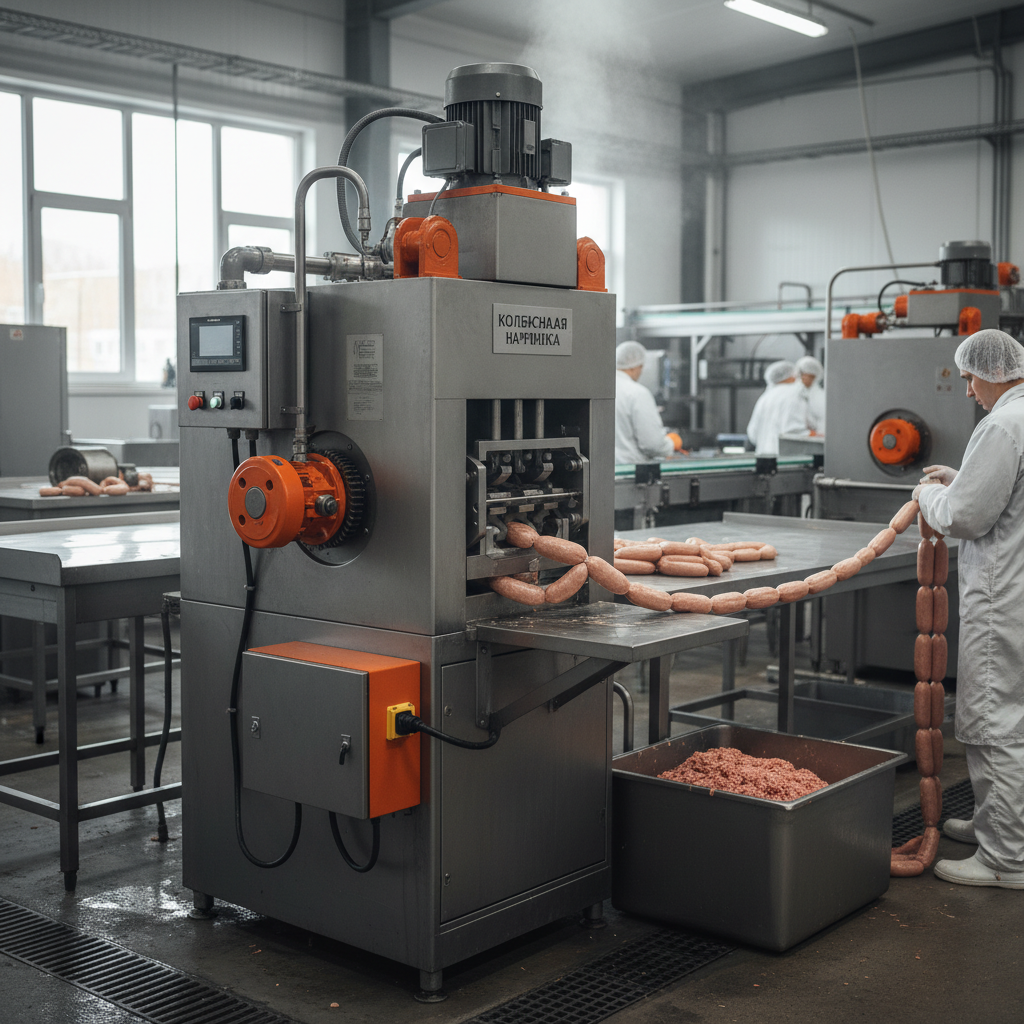
In the fast-paced world of meat processing, the shift toward precision and efficiency has made automated filling machines an indispensable asset for modern producers. These systems eliminate the inconsistencies of manual stuffing, ensuring that every sausage, salami, or meat product maintains a uniform weight and texture. By integrating advanced vacuum and pressure control, these machines significantly reduce air pockets and product waste, which directly impacts the bottom line and product shelf life.
Global demand for processed meat products continues to climb, driven by urbanization and the need for convenient, high-protein food options. To meet this demand without compromising safety or quality, manufacturers are turning to high-capacity automation. Implementing automated filling machines allows plants to scale their production rapidly while adhering to stringent international food safety standards, such as HACCP and ISO, which are critical for entering export markets.
Understanding the technical nuances of these systems is not just about increasing speed; it is about optimizing the entire ripening and molding process. From the pretreatment of raw materials to the final packaging, the filling stage acts as the heart of the production line. This guide explores how modern automation transforms dry technical parameters into commercial success, helping meat processors achieve a balance between artisanal quality and industrial scale.
Global Industry Context of Automated Filling Machines
The global meat processing landscape is currently undergoing a digital transformation, where automated filling machines are shifting from luxury upgrades to operational necessities. In regions like Europe and North America, labor shortages and rising wages have forced manufacturers to optimize their "Meat product filling molding" stages to maintain profitability. According to industry trends aligned with ISO standards, the move toward automation has reduced operational errors by up to 30% in large-scale facilities.
Beyond labor, the challenge of food security and waste reduction has placed a spotlight on the precision of filling equipment. Inaccurate filling leads to "giveaway" (overfilling) or customer dissatisfaction (underfilling), both of which erode margins. By utilizing automated systems, producers can ensure that every unit of meat product is portioned with milligram accuracy, aligning with global sustainability goals to minimize food waste throughout the supply chain.
Defining Precision in Automated Filling Machines
At its core, automated filling machines are sophisticated pumping systems designed to transfer viscous meat emulsions, minced meats, or seasoned pastes into casings or molds without incorporating air. Unlike manual stuffing, these machines use controlled vacuum technology to ensure the meat is densely packed, which is essential for the subsequent ripening process for meat products.
These machines are the bridge between the "Pretreatment of meat products" and the final curing stage. By controlling the speed, pressure, and volume of the meat flow, the system ensures that the structural integrity of the product remains intact. This prevents the formation of internal holes or "voids," which can become breeding grounds for bacteria and compromise the safety of the final product.
In a humanitarian or high-demand industrial context, such as producing low-cost protein for large populations, the reliability of these machines ensures a steady supply of nutrient-dense food. The ability to switch between different product densities and viscosities with a few clicks on a PLC (Programmable Logic Controller) screen allows for extreme versatility in a single production line.
Core Components of High-Performance Filling Systems
The efficiency of automated filling machines depends heavily on the synergy between their mechanical and electronic components. The vacuum pump is perhaps the most critical element, as it removes air from the meat batter before filling, ensuring a smooth surface and a longer shelf life by eliminating oxidation.
Durability is achieved through the use of food-grade stainless steel (usually SUS304 or SUS316), which resists the corrosive nature of salts and spices used in meat curing. High-precision servo motors allow the operator to adjust the filling speed and volume with absolute precision, making the automated filling machines adaptable to both fine-textured emulsions and coarse-ground meats.
Finally, the integration of smart sensors provides real-time feedback on pressure and flow. This scalability ensures that whether a producer is handling a small batch of artisanal sausages or thousands of tons of commercial products, the machine maintains a consistent output, reducing the need for constant manual supervision and intervention.
Practical Applications Across Meat Product Categories
The versatility of automated filling machines allows them to be deployed across a wide array of meat processing scenarios. In the production of fermented sausages, for instance, the machine ensures a tight fill that is crucial for the ripening process for meat products, where any air pocket could lead to uneven curing or spoilage.
In remote industrial zones or high-volume plants, these machines are often integrated into a full line that includes pretreatment and molding. For example, in the production of meat-based patties or molded deli meats, automated fillers can dispense precise weights into molds, which are then moved to the cooking or steaming phase, ensuring every piece of meat is identical in size and weight.
Efficiency Comparison of Different Filling Methods
Tangible Advantages and Long-Term ROI
The investment in automated filling machines yields a rapid return on investment (ROI) through several channels. First, the reduction in material waste is immediate; precision filling means less product is lost during the molding phase. Second, labor costs are slashed as one operator can oversee multiple machines, allowing the workforce to focus on higher-value quality control tasks.
Beyond the numbers, there is an emotional and professional value in the reliability these systems provide. For the producer, the peace of mind knowing that the product is consistent—and thus safe for the consumer—builds brand trust. Innovation in automation allows smaller producers to compete with global giants by achieving the same level of product uniformity and hygiene.
Future Trends in Meat Filling Automation
The future of automated filling machines lies in the integration of Artificial Intelligence (AI) and the Internet of Things (IoT). We are moving toward "predictive maintenance," where sensors can detect a wearing seal or a failing motor before it leads to downtime. This digital transformation ensures that the production line never stops unexpectedly, which is critical during peak seasonal demands.
Sustainability is another driving force. New generations of filling equipment are being designed with energy-efficient motors and water-saving cleaning cycles (CIP - Clean-in-Place). By reducing the energy required per kilogram of filled meat, manufacturers can lower their carbon footprint while maintaining high output, aligning with the global push for green industrialization.
We also anticipate a move toward more modular designs. Future automated filling machines will likely feature "plug-and-play" attachments, allowing producers to switch between different casing sizes or fill types in minutes rather than hours, providing unprecedented flexibility for the "Auxiliary Items" and specialty meat markets.
Overcoming Common Challenges in Filling Operations
Despite the benefits, producers often face challenges such as "product separation" or the clogging of nozzles when handling coarse meat mixtures. The solution lies in the use of advanced agitators and variable-speed drives within the automated filling machines. By optimizing the flow rate and mixing speed, manufacturers can maintain a homogeneous mixture throughout the filling process.
Another common pain point is the complexity of cleaning. Meat residues can lead to bacterial growth if not removed entirely. Expert insights suggest implementing fully automated CIP systems that use high-pressure jets and specialized detergents to sanitize the internal chambers of the filler without requiring full disassembly, thereby reducing downtime and improving hygiene.
Lastly, the initial cost of high-end automation can be daunting for mid-sized enterprises. However, by focusing on scalable modules—starting with a basic vacuum filler and adding PLC controls and automated casing handlers over time—businesses can manage their cash flow while gradually upgrading their capabilities.
Comparative Analysis of Filling System Performance and Operational Impact
|
Technology Level
|
Filling Accuracy
|
Labor Requirement
|
Waste Reduction Score (1-10)
|
| Manual Stuffing |
Low (± 5-10%) |
High |
3 |
| Mechanical Filler |
Medium (± 2-5%) |
Medium |
5 |
| Standard Auto-Filler |
High (± 1%) |
Low |
8 |
| Vacuum Auto-Filler |
Very High (± 0.5%) |
Low |
9 |
| PLC-Integrated Line |
Ultra High (± 0.1%) |
Minimal |
10 |
| AI-Optimized System |
Absolute Precision |
Supervisory Only |
10 |
FAQS
Most professional automated filling machines utilize a vacuum system that removes air from the meat emulsion before it is pushed into the casing. By creating a vacuum in the hopper, the machine ensures that the meat is dense and cohesive, which prevents the formation of internal air pockets that could cause spoilage or unsightly holes in the finished product.
Yes, modern systems are designed with variable-speed drives and adjustable pressure settings. This allows operators to switch between a very fine, creamy emulsion for frankfurters and a coarse, chunky mixture for traditional salami without needing to replace the entire machine, simply by adjusting the PLC parameters.
While it varies by production volume, most plants see a return on investment within 12 to 24 months. This is achieved through a combination of reduced labor costs, a significant decrease in product "giveaway" due to precision portioning, and increased overall throughput speed.
High-end models are built with sanitary design principles, meaning they have smooth surfaces and no "dead zones" where meat can hide. Many now include Clean-in-Place (CIP) functionality, allowing the internal components to be sanitized with chemicals and hot water without requiring a full teardown of the machine.
Consistency in filling is the foundation of a successful ripening process. Because automated machines provide a uniform density and weight, the curing agents and moisture migrate evenly through the product. This results in a consistent color, texture, and flavor profile across every batch, eliminating the risk of "soft spots."
Absolutely. Most automated filling machines are designed with standard communication protocols (like Modbus or Profinet) that allow them to sync with pretreatment equipment, such as mixers and grinders, creating a seamless, end-to-end production flow.
Conclusion
In summary, automated filling machines represent a critical evolution in meat processing, moving the industry from imprecise manual labor to a scientific, data-driven approach. By optimizing precision, reducing waste, and ensuring strict adherence to hygiene standards, these systems provide a foundation for scalability and long-term profitability. The integration of vacuum technology and PLC controls not only enhances the physical quality of the product but also safeguards the brand's reputation for consistency and safety.
Looking ahead, the meat industry will continue to move toward smarter, more sustainable automation. Producers who embrace these technologies today will be better positioned to navigate the challenges of labor shortages and increasing regulatory scrutiny. We recommend starting with a comprehensive audit of your current filling losses to identify the specific automation level your facility requires for maximum impact. For world-class solutions in meat processing equipment, visit our website: www.ycmeatmech.com