

- Afrikaans
- Albanian
- Amharic
- Arabic
- Armenian
- Azerbaijani
- Basque
- Belarusian
- Bengali
- Bosnian
- Bulgarian
- Catalan
- Cebuano
- chinese_simplified
- chinese_traditional
- Corsican
- Croatian
- Czech
- Danish
- Dutch
- English
- Esperanto
- Estonian
- Finnish
- French
- Frisian
- Galician
- Georgian
- German
- Greek
- Gujarati
- haitian_creole
- hausa
- hawaiian
- Hebrew
- Hindi
- Miao
- Hungarian
- Icelandic
- igbo
- Indonesian
- irish
- Italian
- Japanese
- Javanese
- Kannada
- kazakh
- Khmer
- Rwandese
- Korean
- Kurdish
- Kyrgyz
- Lao
- Latin
- Latvian
- Lithuanian
- Luxembourgish
- Macedonian
- Malgashi
- Malay
- Malayalam
- Maltese
- Maori
- Marathi
- Mongolian
- Myanmar
- Nepali
- Norwegian
- Norwegian
- Occitan
- Pashto
- Persian
- Polish
- Portuguese
- Punjabi
- Romanian
- Russian
- Samoan
- scottish-gaelic
- Serbian
- Sesotho
- Shona
- Sindhi
- Sinhala
- Slovak
- Slovenian
- Somali
- Spanish
- Sundanese
- Swahili
- Swedish
- Tagalog
- Tajik
- Tamil
- Tatar
- Telugu
- Thai
- Turkish
- Turkmen
- Ukrainian
- Urdu
- Uighur
- Uzbek
- Vietnamese
- Welsh
- Bantu
- Yiddish
- Yoruba
- Zulu

Tilting Devices and Hopper Trolleys in Industrial Food Processing
In the modern food processing industry, efficiency, safety, and precision are critical for handling large quantities of ingredients and raw materials. Equipment such as tilting device, tilting machine, hopper trolley, and trolley hopper play a vital role in streamlining operations, improving workflow, and reducing manual labor. These machines are designed to assist in lifting, tilting, and transporting heavy materials safely and efficiently, making them indispensable in industrial kitchens, bakeries, and large-scale food production facilities. This article explores the types, functions, and benefits of these devices in the context of industrial food processing.
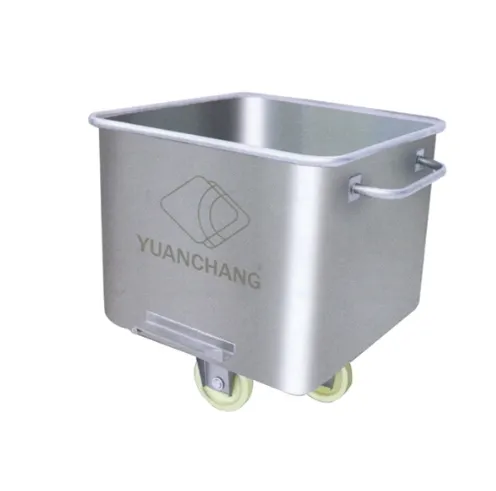
Types and Functions of Tilting Devices and Machines
A tilting device is primarily used for controlled pouring or emptying of bulk materials. In food processing, these devices help transfer ingredients such as flour, sugar, grains, or dough from mixing containers into production lines or storage units. The tilting mechanism ensures precision and reduces spillage, minimizing waste and maintaining hygiene standards. Advanced models may include automated tilting, hydraulic control, or motorized rotation for heavy-duty applications.
Similarly, a tilting machine serves a comparable purpose but often on a larger scale. These machines are designed to handle substantial loads, allowing operators to tilt large vats, kettles, or mixing tanks safely. In industrial bakeries or chocolate production facilities, tilting machines ensure that viscous materials, sauces, or liquids are transferred efficiently without requiring excessive manual effort. Features like adjustable tilt angles, secure locking mechanisms, and stainless steel construction make them suitable for food-safe environments and frequent use.
Both tilting device and tilting machine are essential for reducing the physical strain on workers, minimizing contamination risks, and maintaining consistency in food production. By allowing controlled material movement, these devices help maintain quality and safety standards across different stages of industrial food processing.
Hopper Trolleys and Their Applications
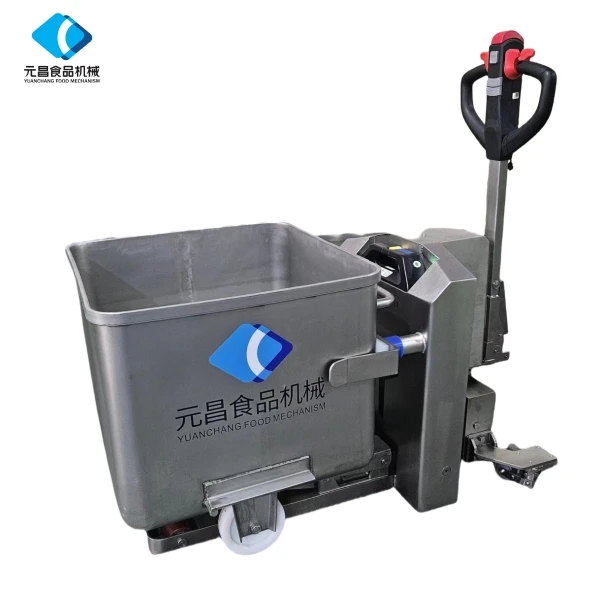
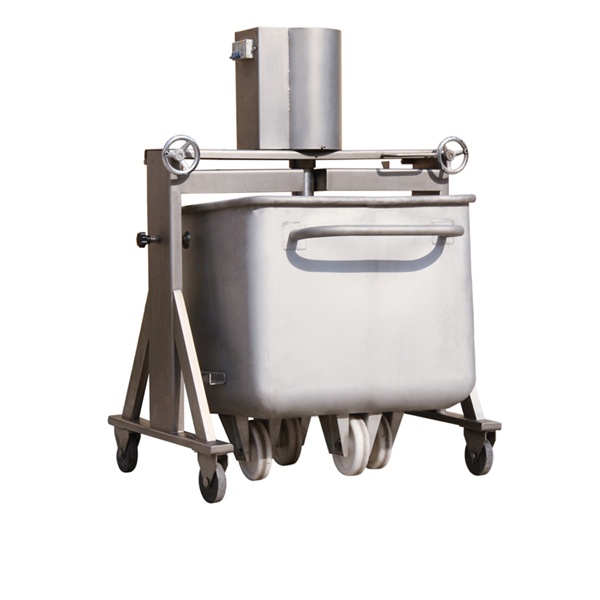
A hopper trolley is a mobile container designed to transport bulk ingredients or partially processed products within a facility. Its main advantage is mobility, allowing operators to move materials from storage areas to production lines or packaging stations efficiently. Hopper trolleys often feature casters, ergonomic handles, and easy-loading mechanisms, making them ideal for fast-paced industrial environments.
The trolley hopper is similar in function but often integrated with tilting features. For instance, a trolley hopper may be designed to tilt its contents directly into a mixing machine, filling station, or cooking vessel. This dual function—transportation plus tilting—significantly reduces manual labor, speeds up production, and ensures precise ingredient transfer. In food processing, these trolleys are commonly used for grains, powders, nuts, vegetables, and other bulk ingredients that require frequent movement and controlled pouring.
Hopper trolleys also improve hygiene and safety in food production areas. Many are constructed from stainless steel or food-grade materials, ensuring easy cleaning and compliance with sanitation regulations. The combination of mobility, durability, and tilting capability makes the hopper trolley and trolley hopper indispensable for modern industrial kitchens and processing plants.
Benefits of Using Tilting Devices and Hopper Systems in Food Processing
Implementing tilting devices, tilting machines, hopper trolley, and trolley hopper in industrial food processing offers multiple advantages. First, these machines enhance efficiency by automating the lifting and pouring of heavy or bulky ingredients. Operators can handle larger quantities in less time, accelerating production and reducing downtime.
Second, these devices improve worker safety. Manual handling of heavy containers or vats poses risks of back injuries, strains, and accidents. Using a tilting machine or hopper trolley minimizes physical labor, reducing the likelihood of workplace injuries. Ergonomically designed handles, wheels, and tilt mechanisms further enhance safety and comfort during operation.
Third, hygiene and food safety are greatly improved. Controlled tilting ensures minimal spillage and contamination, which is critical in industrial kitchens where standards for cleanliness are strict. Stainless steel construction and easy-to-clean surfaces allow these devices to meet regulatory requirements, maintaining the integrity of food products throughout processing.
Finally, tilting devices and hopper systems provide precision in ingredient handling. The controlled tilt angles and smooth discharge mechanisms ensure consistent portions, reducing material waste and maintaining uniformity across batches. This precision is essential in industrial food production, where quality and consistency directly impact product reputation and consumer satisfaction.
In industrial food processing, tilting device, tilting machine, hopper trolley, and trolley hopper are vital components for efficient, safe, and hygienic operations. These machines allow for controlled handling of bulk ingredients, reduce physical strain on workers, and ensure precision in transferring materials between production stages. Whether in bakeries, large-scale kitchens, or food manufacturing plants, tilting and trolley systems streamline workflow, minimize waste, and maintain high standards of quality and safety.
By investing in modern tilting machines and hopper trolleys, food processing facilities can enhance productivity, improve operational efficiency, and protect workers from injury, making these systems indispensable in contemporary industrial food production.
-
The Role of Smoke House Technology in Modern Meat Processing IndustryNewsApr.08,2026
-
The Role of Frozen Meat Slicing Machines in Modern Meat Processing IndustryNewsApr.08,2026
-
The Importance of Meat Dicing and Cutting Machines in Modern Meat ProcessingNewsApr.08,2026
-
The Essential Role of Meat Grinding Technology in Modern Meat Processing IndustryNewsApr.08,2026
-
Advancements in Meat Processing Equipment: The Role of Vacuum Stuffers and Filling MachinesNewsApr.08,2026
-
Vacuum Bowl Cutter ZKZB-125-Hebei Yuanchang|Vacuum Processing&Stainless Steel ConstructionNewsMar.16,2026