Procuring high-performance industrial slicing equipment often leads buyers to a critical crossroads where the cutting meat machine price must be balanced against long-term operational efficiency and yield accuracy.
In the specialized field of food processing, the cost of a meat cutter is rarely a fixed number; it is a variable influenced by automation levels, material durability, and the specific requirements of the meat product, whether frozen or fresh.
Understanding the drivers behind these price points allows processors to move beyond simple capital expenditure and instead focus on the Total Cost of Ownership (TCO) and the return on investment generated by reduced waste.

Analyzing Cost Variables in Industrial Meat Cutting Equipment

When researching a cutting meat machine price, it is essential to distinguish between entry-level mechanical slicers and integrated industrial systems. The price variance is typically driven by the degree of precision in segment length and the capacity for high-speed operation without compromising the structural integrity of the meat.
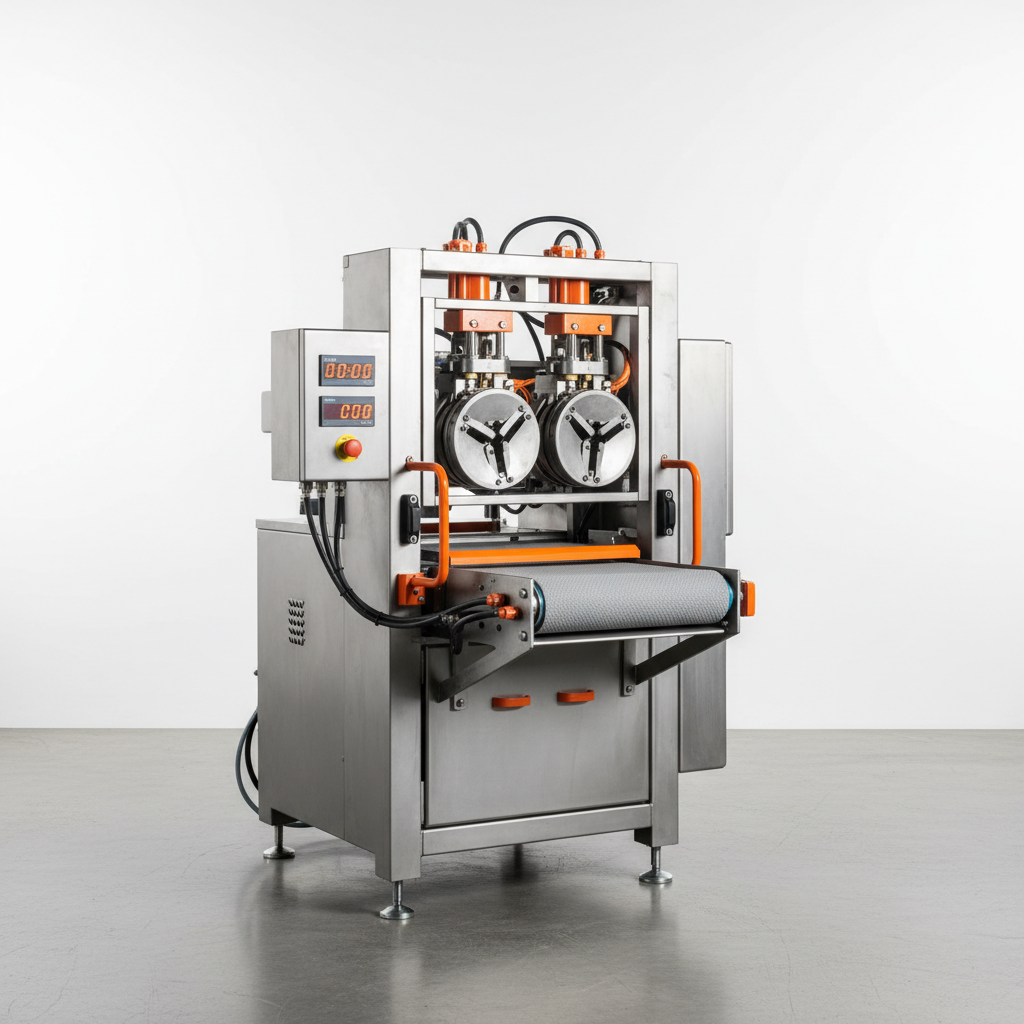
For instance, machines that integrate PLC programmable control and touch screen interfaces command a premium because they allow for rapid changeovers between different product specifications, which is critical for facilities handling diverse protein types.
Furthermore, the use of high-grade stainless steel across the entire chassis is not merely for hygiene; it directly impacts the machine's lifespan in corrosive environments, making a higher initial investment more economical over a ten-year cycle.
Key Technical Indicators That Influence Equipment Valuation
The valuation of a meat cutting system is closely tied to its mechanical tolerances and speed regulation capabilities. Variable frequency speed regulation is a primary cost driver, as it prevents "meat tearing" by adjusting the blade speed to the density of the protein.
Waterproof performance also plays a significant role. In a professional food factory, the ability to perform deep cleaning (CIP - Clean In Place) without damaging electronic components is a non-negotiable feature that elevates the price of the equipment.
Additionally, the integration of fixed-length functions ensure that every slice meets strict weight requirements, which directly prevents profit leakage associated with overweight portions.
Operational Application Scenarios for High-Precision Slicers
Different processing environments require different cutting architectures. In frozen meat pretreatment, machines must handle high-density blocks of protein, requiring high-torque motors and reinforced blade assemblies to maintain a consistent cutting meat machine price to performance ratio.
In contrast, for processed sausage products, the focus shifts toward high-speed twisting and portioning. Systems like the SGN-1200, which can achieve 1200 knots per minute, are designed for high-throughput lines where speed and consistent segment length are the primary KPIs.
Finally, for fresh meat dicing and slicing, the priority is the preservation of the meat's cellular structure, which requires specialized blade geometries and vacuum-assisted stability systems to ensure a clean cut.
Quantifying Efficiency Gains Through Automated Cutting Systems
Transitioning from manual or semi-automatic cutting to fully automated systems creates a measurable shift in throughput and waste reduction. The primary metric for evaluation is the "Yield Accuracy Percentage," which tracks the difference between theoretical and actual slice weight.
Automation reduces the human error associated with manual slicing, particularly in high-volume environments where fatigue leads to inconsistent portions and increased product loss.
cutting meat machine price Performance Metrics
The data suggests that while the initial capital expenditure is higher for automated systems, the reduction in raw material waste typically offsets the cost within the first 18 to 24 months of operation.
Strategic Procurement Guidelines for Food Processing Facilities
Procuring a cutting system requires a shift from "price-shopping" to "value-mapping." Buyers must evaluate the equipment's compatibility with existing upstream processes, such as vacuum mixers and saline injectors, to ensure a seamless production flow.
Key considerations include the availability of replacement parts and the ease of blade sharpening. A machine with a complex blade assembly may have a lower purchase price but higher operational costs due to the specialized labor required for maintenance.
It is also recommended to verify the machine's performance with the specific product casing diameter (e.g., 13-40mm) to avoid purchasing a system that is either underpowered or oversized for the target application.
Future Trajectories in Meat Portioning and Cutting Technology
The industry is moving toward "Intelligent Portioning," where sensors may be integrated into the cutting line to adjust slice thickness in real-time based on the density of the meat block.
We are likely to see an increase in the adoption of AI-driven vision systems that can detect internal fat marbling or bone fragments, adjusting the cutting path to maximize the value of each prime cut.
Sustainability will also drive design changes, with a shift toward energy-efficient motors and materials that require fewer chemical detergents for cleaning, potentially altering the long-term cost structure of these machines.
Evaluating Slicing Solutions Based on Production Volume
Selecting the right equipment requires aligning the machine's capacity with the facility's hourly output goals. A small-scale operation will find a high-speed automatic line cost-prohibitive, while a large factory will find manual slicers an operational bottleneck.
The following table provides a framework for comparing different technical approaches based on production requirements and operational constraints.
| Solution Type | Primary Application | Cost Driver | Scalability |
|---|---|---|---|
| Semi-Auto Slicer | Small Batch/Artisan | Manual Labor | Low |
| High-Speed Twister | Industrial Sausage | PLC Automation | High |
| Frozen Meat Cutter | Pre-processing | Motor Torque | Medium |
| Vacuum Bowl Cutter | Emulsion Mixing | Vacuum Seal | Medium |
| Integrated Line | Full Scale Factory | System Integration | Maximum |
| Precision Dicer | Cube/Dice Production | Blade Geometry | Medium |
Ultimately, the most cost-effective solution is the one that minimizes the gap between the machine's maximum capacity and the actual production demand while ensuring zero compromise on food safety standards.
Frequently Asked Questions
Conclusion
Evaluating a cutting meat machine price is not a exercise in finding the lowest number, but in identifying the equipment that optimizes the balance between throughput, precision, and longevity. The shift toward automated, PLC-controlled systems is no longer a luxury but a necessity for processors seeking to eliminate product giveaway and labor inefficiencies.
For those looking to optimize their production line with reliable meat processing technology, detailed specifications and customized solutions are available through www.ycmeatmech.com.