


Discover Efficient and Reliable Meat Curing Machines | YCM
The Unsung Hero of Food Preservation: Meat Curing Machines and Their Global Impact
If you’ve ever savored a perfectly cured ham, a smoky sausage, or a tender air-dried beef slice, you’ve indirectly met the marvel called the meat curing machine. This humble yet sophisticated piece of machinery does more than just preserve meat — it bridges age-old culinary traditions with modern industrial efficiency, ensuring food safety and longevity far beyond what a kitchen smoker can offer.
Worldwide, with increasing challenges around food security, supply chain fluctuations, and rising demand for quality protein, understanding the role and benefits of meat curing machines is crucial. They’re not just industrial gadgets but pivotal tools in reducing waste, extending shelf life, and enabling global meat trade under safe conditions.
Why the Meat Curing Machine Matters: A Global Perspective
Did you know the global meat industry processes over 330 million tons of meat annually? (FAO, 2022). A sizeable chunk undergoes curing to extend freshness and develop remarkable flavors. But curing isn't just a flavor enhancer — it tackles major challenges such as microbial spoilage, uneven drying, and oxidation. This is where the meat curing machine steps in, providing standardized, controlled curing environments that meet international food safety standards.
In regions like Europe and North America, curing plays a vital cultural and economic role, supporting artisan producers and large-scale companies alike. On the other hand, in emerging markets or post-disaster areas, reliable curing solutions can stabilize meat supply chains and avoid contamination risks where refrigeration infrastructure lags.
What Exactly Is a Meat Curing Machine?
At its core, a meat curing machine is an automatic or semi-automatic system designed to apply curing agents — think salt, nitrates, smoke, or other preservatives — under controlled humidity, temperature, and airflow conditions.
Unlike traditional manual curing methods, which rely heavily on time and environmental conditions, these machines optimize the process for consistency, safety, and efficiency. They’re essential in both factory-scale meat processing plants and smaller artisanal setups, bridging the gap between craft and scale.
Key Components That Make Meat Curing Machines Tick
1. Precise Environmental Controls
The hallmark of a good curing machine is its ability to maintain specific temperatures (usually between 2–15°C) and relative humidity levels (70–85%). These parameters are critical for inhibiting harmful bacterial growth while allowing desirable enzymatic reactions to tenderize and flavor the meat.
2. Uniform Air Circulation
Even airflow prevents uneven drying or curing spots. Many machines use adjustable fans and ducts to ensure every piece receives consistent exposure to smoke or curing agents.
3. Automated Injection or Brine Systems
Speed and uniformity are key, especially for larger volumes. Injection curing machines deliver precise brine solutions directly into the meat muscle, reducing curing time drastically compared to dry curing.
4. Durable, Food-Grade Materials
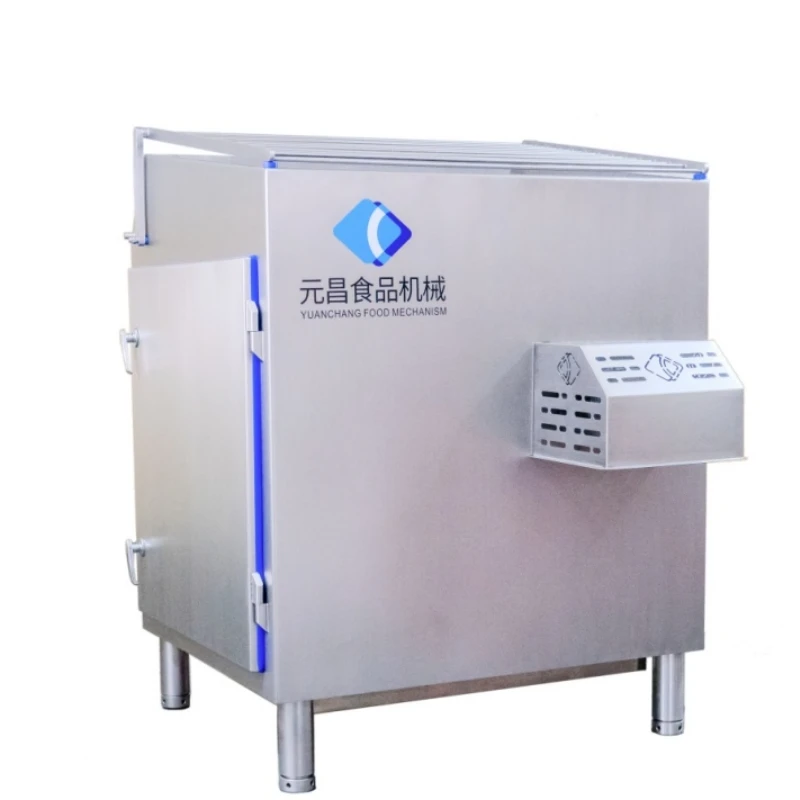
The internal chambers usually feature stainless steel to resist corrosion and microbial contamination. Smooth surfaces guarantee easy cleaning, an often overlooked but vital aspect.
5. Scalability and Customization Options
Applications vary from small butcher shops to multinational factories. Flexible sizing, modular designs, and programmable settings allow users to tailor the process as needed.
6. Integration with Digital Monitoring
Newer models come equipped with IoT sensors, cloud-based monitoring, and alerts for parameters deviations — a game-changer for remote operations or strict food safety compliance.
Mini takeaway: The blend of precise environment control, automation, and durable materials makes the meat curing machine a linchpin in modern meat processing.
Global Uses and Real-World Benefits
From the rolling hills of Spain producing jamón ibérico to industrial operations in the U.S. churning out cured sausages by the ton, meat curing machines enable diverse applications:
- Traditional European charcuterie: Delivering authentic textures with fewer losses through precise curing parameters.
- Emergency and humanitarian contexts: Post-disaster areas in Southeast Asia have used portable curing tech to preserve protein without relying on power-hungry refrigeration.
- Remote or off-grid industries: Mining camps or Arctic fishing operations use curing machines to stabilize meat stocks where cold storage isn’t feasible.
It’s also worth noting that meat curing machines help producers meet strict ISO and HACCP standards, giving them access to global export markets.
Advantages and Long-Term Value of Investing in Meat Curing Technology
What’s the payoff for businesses or organizations putting money into these machines? Quite a few things — cost efficiency from reduced spoilage, improved product consistency, and the ability to innovate in product offerings (think new flavors or types).
On a social level, reliable meat preservation supports food security and public health by lowering risks of foodborne illnesses. Emotionally, it builds consumer trust when products consistently arrive safe and delicious.
Environmental impact is another area. Meat curing machines that use energy-efficient technology and optimize resource use contribute to sustainability goals, reducing food waste drastically compared to traditional methods.
Product Specification Overview
| Feature | Details |
|---|---|
| Temperature Range | 2°C to 15°C (adjustable) |
| Humidity Control | 70% - 85% RH with automated control |
| Capacity | 100 - 1,000 kg per batch |
| Airflow | Uniform multi-directional fans |
| Material | AISI 304 Stainless Steel |
| Controls | Digital touchscreen with IoT monitoring |
Vendor Comparison Table: Choosing the Right Meat Curing Machine
| Vendor | Price Range | Capacity | Automation Level | Key Differentiator |
|---|---|---|---|---|
| YCM MeatTech | $20,000 - $45,000 | 100–800 kg | Semi to Fully Automated | Advanced IoT Monitoring; Modular Design |
| Global Cure Solutions | $25,000 - $60,000 | 200–1,000 kg | Fully Automated | High-Volume Industrial Efficiency |
| PureCure | $15,000 - $30,000 | 100–400 kg | Manual to Semi-Automatic | Affordable Entry Level for Artisans |
Looking Ahead: Trends and Innovations in Meat Curing
We’re seeing some pretty exciting shifts in meat curing technology — the kind that might make traditionalists squint but meat tech engineers smile. For starters, digital automation is becoming standard, with AI algorithms optimizing curing cycles in real time to tweak humidity and temperature for each batch.
Green energy integration is also picking up steam. Imagine curing chambers powered by solar panels in sunny regions, reducing carbon footprints while protecting that precious protein. And then there’s the booming interest in plant-derived curing agents and natural smoke alternatives to appeal to cleaner-label products.
Lastly, modular and portable curing units promise to open up new frontiers — from remote farming communities to mobile food startups — expanding meat curing's reach beyond the factory floor.
Common Challenges and How Experts Approach Them
Curing isn’t always straightforward. Machines can suffer from uneven airflow, leading to consistent under- or over-curing in certain batches. Then there’s the balancing act of speed versus quality — push it too fast and you risk texture or flavor compromises.
Experts recommend rigorous periodic calibration, staff training, and leveraging digital feedback loops to ensure conditions stay optimal. Frankly, not all machines are born equal, so choosing a vendor with after-sales support and user-friendly controls makes a huge difference.
Frequently Asked Questions About Meat Curing Machines
Q1: How long does the curing process take with a meat curing machine?
A: Depending on the meat type, size, and curing method (dry or injection), curing can take from a few hours to several days. Modern machines optimize cycles but often reduce curing times by 20-30% compared to traditional methods.
Q2: Can curing machines handle different meat types like poultry and fish?
A: Yes. Most curing machines are versatile enough for various proteins. Settings are adjusted for temperature and humidity to accommodate different textures and curing requirements.
Q3: Is automation necessary for small-scale artisanal producers?
A: Not strictly necessary, but automation can improve consistency and reduce manual labor. Semi-automatic models offer a good compromise.
Q4: How do curing machines contribute to food safety?
A: By maintaining precise environmental conditions and curing agent application, these machines reduce microbial risks and prevent spoilage, adhering to food safety standards like HACCP.
Wrapping It Up: Why Meat Curing Machines Are Here to Stay
Whether it’s preserving the integrity of artisan meat products or ensuring food security in challenging environments, meat curing machines marry tradition with technology. They offer consistent, reliable, and efficient meat preservation that reduces waste and enhances food safety globally.
If you’re intrigued and considering the leap to smarter meat curing technology, visit our website for product details, expert advice, and customer testimonials. The future of meat preservation is curing faster, smarter, and greener.
References:
- FAO - Food and Agriculture Organization of the United Nations
- ISO 22000 Food Safety Management
- Wikipedia: Curing (food preservation)
-
Efficient Meat Cubing Machine for Industrial Meat ProcessingNewsDec.09,2025
-
Meat Cube Cutter Machine – Efficient and Precise Meat Processing EquipmentNewsDec.09,2025
-
Machine Used To Cut Meat | High Performance Meat Cutting Machines for IndustryNewsDec.09,2025
-
Machine That Cuts Meat – Efficient, Durable Meat Processing Solutions for B2BNewsDec.09,2025
-
Machine Meat Cutter: Global Importance, Benefits & Future Trends ExplainedNewsDec.08,2025
-
Durable Machine Cut Meat Slicer for Industrial Efficiency | YC Meat MechNewsDec.08,2025