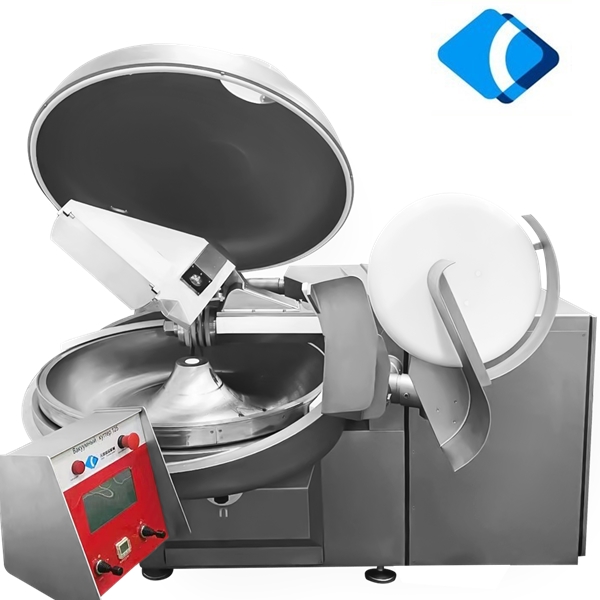
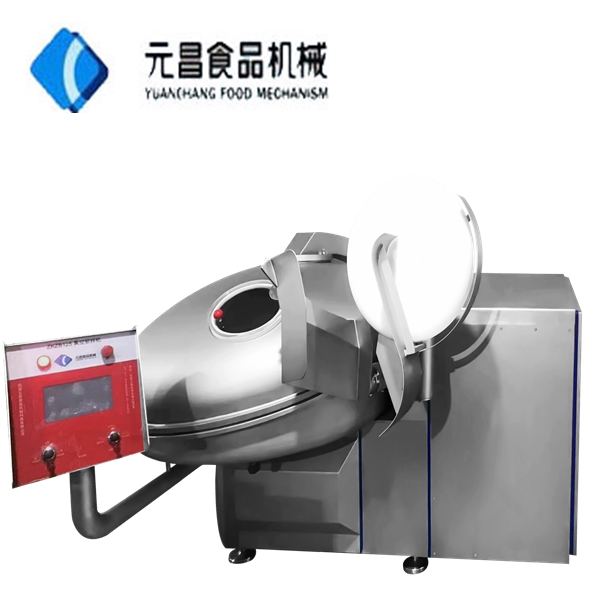
Sekha sekotlolo sa vacuum ZKZB-125
Selelekela
Ka boenjineri bo botle haholo le kaho ea boleng bo holimo ea tšepe e sa hloekang, litšepe tsa likotlolo tsa YC tsa mochini le li-vacuum cutters ha li bapisoe khahlano le tlholisano. Re ikemiselitse ho fana ka theknoloji ea ho sebetsana le litsebi ho etsa bonnete ba hore bareki ba rona ba fumana liphello tse ntle ka ho fetisisa tsa tlhahiso, kahoo ba fumana botumo bo ka tšeptjoang le bo ka tšeptjoang indastering.
Re motlotlo ka boikarabelo ba rona ho makholo a bareki ba khotsofetseng. Ha ho tluoa tabeng ea ho ntlafatsa 'mala, ponahalo, ho loma, sebopeho le boleng ba lihlahisoa, hammoho le ho eketsa lihlahisoa tsa li-sausage tse kopantsoeng, lihlahisoa tsa nama tse bōpiloeng kapa nama e meng e entsoeng ka ho khetheha, ho khaola sekotlolo ke tharollo.
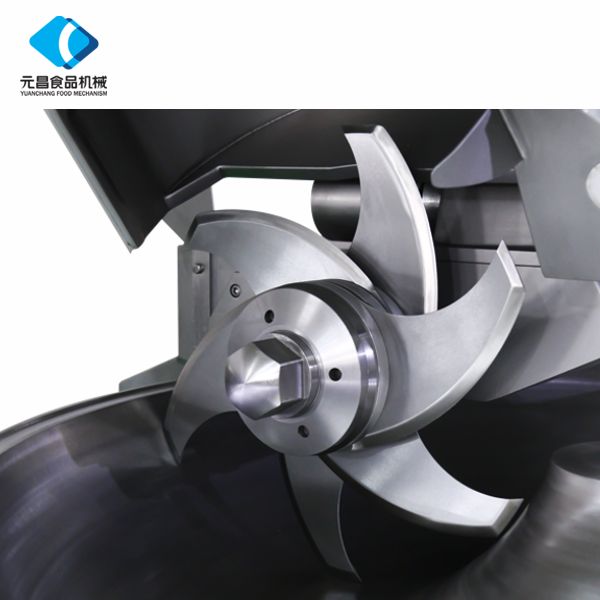
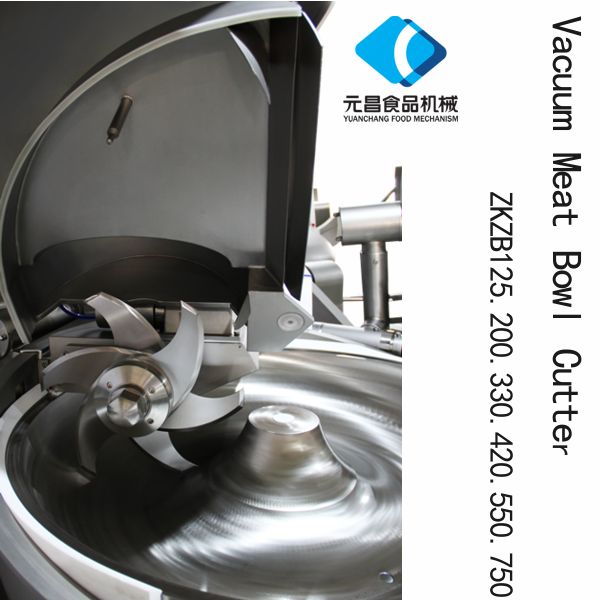
lithipa tsa tšepe tse sa hloekang li lumella emulsification, ho itšeha ka mahoashe, kapa ho itšeha hantle, ho fokotsa nako ea ho sila, nako ea ho hloekisa le litšenyehelo tsa mosebetsi.
Mohlala
|
Mohlala |
Bolumo (L) |
Lebelo la ho seha (rpm) |
Lebelo la pitsa (rpm) |
Lebelo la ho lahla (rpm) |
Matla (KW) |
Palo ea li-volts (V) |
Boemo ba vacuum (Mpa) |
Boima ba 'mele (Kg) |
Boholo (mm) |
|
ZKZB-125 |
125 |
400-4500rpm |
3---9 |
Taolo ea lebelo la koloi ea Hydraulic |
38 |
Customized |
0~ -0.085 |
2425 |
2150×1750×1400 |
|
ZKZB-200 |
200 |
360-5000rpm |
3---15 |
65 |
4100 |
3260×2585×1800 |
|||
|
ZKZB-330 |
330 |
360-4000rpm |
3---14 |
105 |
5000 |
3810×2855×1800 |
|||
|
ZKZB-420 |
420 |
360-3600rpm |
3—14 |
123 |
5800 |
3940×3030×1850 |
|||
|
ZKZB-550 |
550 |
360-3600rpm |
0—16 |
178 |
6600 |
3730x2920x2050 |
|||
|
ZKZB-750 |
750 |
360-3600rpm |
0-16 |
217 |
7500 |
4150x3100x2200 |
Kopo
Taolo e boreleli ea ho potoloha ha motsoako oa ho itšeha le ho potoloha ha sekotlolo ho lumella hore ho sebelisoe mekhoa e mengata nakong ea mokhoa o mong le o mong oa ho itšeha.
Thipa e bohale e kobehileng ka lebelo le phahameng e khaola nama ka boqhetseke, ho e-na le ho e pshatla ka tlas'a khatello, e netefatsa liphello tse molemo ka ho fetisisa.
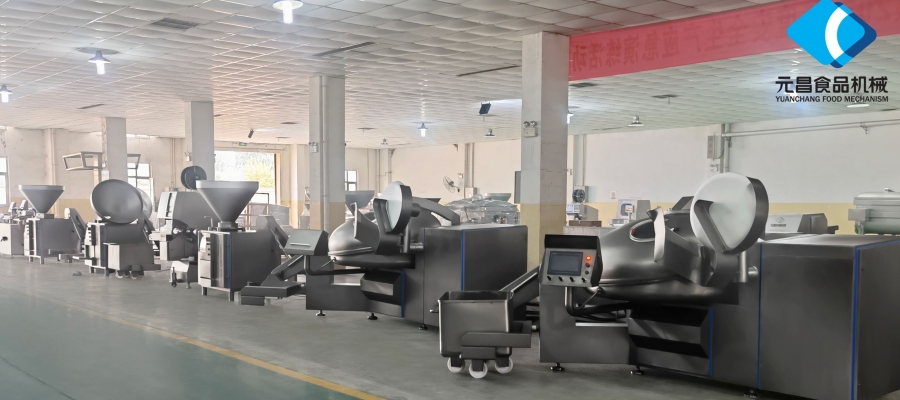
Lithako tsa rona tsa likotlolo li fumaneha ka boholo bo fapaneng, ka matla a ho tloha ho 80 ho isa ho 750 litres, ho fihlela litlhoko tse fapaneng tsa tlhahiso.
Why Choose a Meat Bowl Cutter for Sale
When upgrading meat processing equipment, the meat bowl cutter for sale has become a central choice for many producers. Unlike conventional chopping tools, a bowl cutter machine uses high-speed rotating knives and a stainless-steel bowl to chop, emulsify, and blend raw materials with precision. This process helps maintain natural color and texture while ensuring uniformity in particle size. In sausage production, the ability to balance protein extraction and fat distribution directly determines elasticity, flavor, and overall product stability.
The adaptability of a bowl cutter is another reason it attracts attention across different production scales. For mid-sized processors, a commercial bowl cutter provides an efficient way to handle daily batches while maintaining consistency. Facilities with higher demands may rely on an industrial bowl cutter, capable of processing larger volumes continuously without sacrificing quality. On the other hand, a small bowl cutter is often chosen by research centers, pilot plants, or artisanal producers who need to experiment with recipes in smaller capacities. Each of these options shares the same core advantage: precise cutting and mixing under hygienic, food-grade conditions.
One often overlooked factor is how these machines influence shelf life and food safety. By producing a more homogeneous mixture, the bowl cutter improves binding properties, which reduces air pockets and helps extend product durability. This makes bowl cutter meat processing not just about efficiency, but also about product integrity. Companies evaluating machinery also consider durability, cleaning requirements, and the long-term value of their investment. While the bowl cutter price varies depending on capacity and specifications, the cost is often offset by improvements in output quality and reduced waste.
With more than three decades of experience, Hebei Yuanchang Food Machinery Technology Co., Ltd. has contributed to refining equipment that balances precision, hygiene, and reliability. Using high-grade 304 stainless steel and user-oriented designs, the company ensures its cutters meet both industrial and small-scale needs. Selecting the right equipment is therefore not only a financial decision but a step toward ensuring consistent product standards and long-term production efficiency.
How a Meat Bowl Cutter Machine Works
A meat bowl cutter machine is designed to transform raw meat into finely processed mixtures through a combination of chopping, emulsifying, and mixing. At the heart of the system is a rotating bowl paired with high-speed knives. As the bowl turns, raw material is continuously moved toward the blades, where it is reduced to precise particle sizes. This controlled action ensures proteins are effectively extracted, allowing fat and lean meat to bind properly. The result is a smooth, elastic texture that is essential for sausages, meatballs, and pâtés.
In modern production lines, the role of an industrial bowl chopper goes beyond simple cutting. When operated under vacuum conditions, the machine prevents oxidation, keeping the natural color of the meat bright and minimizing nutrient loss. This also helps reduce bacterial growth, directly supporting shelf life extension. On a smaller scale, a small bowl cutter provides research labs and artisanal producers with a way to replicate industrial processes while experimenting with new formulations. Meanwhile, a bowl chopper machine for mid-sized processors offers the flexibility to handle multiple product types, from fine emulsions to coarse cuts.
Another important consideration for buyers is equipment choice. Some processors invest in a bowl cutter for sale to expand their current capacity, while others consider a bowl cutter used as a cost-saving option for small-scale operations or as a backup unit. While second-hand machines can lower initial costs, they often lack modern improvements such as vacuum functionality, ergonomic controls, or enhanced safety features. This difference in performance means that newer models typically deliver better long-term value and more consistent output.
Hebei Yuanchang Food Machinery Technology Co., Ltd., with its long history in designing meat processing equipment, has continuously improved cutter technology to meet the demands of both large factories and smaller facilities. Using durable 304 stainless steel construction, easy-to-clean surfaces, and safety-focused designs, these machines integrate seamlessly into hygienic processing environments. By choosing the right cutter, producers can achieve stable quality, greater efficiency, and improved control over their end products.
Maintenance Tips for Industrial Bowl Cutter
The performance of an industrial bowl cutter does not rely solely on its design but also on how well it is maintained throughout daily use. Regular care ensures consistent results, extends the machine’s service life, and prevents unexpected downtime. Cleaning after every shift is one of the most important steps. Since the cutter processes raw meat, surfaces must be thoroughly sanitized to avoid contamination. Modern designs made from stainless steel allow operators to wash down parts quickly, but careful attention should also be given to knife edges and bowl interiors to prevent residue build-up.
Operators also monitor mechanical wear. A bowl meat cutter uses high-speed rotating knives, which need periodic sharpening or replacement to maintain precise cutting. Ignoring blade condition often leads to uneven particle size and poor texture in final products. Similarly, bearings and seals should be inspected to avoid leakage or friction damage. For mid-level processors, a chopper bowl cutter offers a balance between productivity and maintenance demands, while large-scale facilities may adopt scheduled servicing routines for their continuous-use machines.
Cost management is another factor influencing equipment decisions. Many buyers evaluate the bowl cutter price not only at purchase but also across the lifespan of the machine. A well-maintained unit consumes less energy, minimizes waste, and reduces the need for premature replacement. While some smaller operations consider purchasing a bowl chopper machine meat second-hand, regular upkeep remains essential to maintain hygiene and safety standards. By following a structured maintenance schedule, even a meat bowl chopper used in high-volume production can deliver reliable output for many years.
With more than three decades of experience, Hebei Yuanchang Food Machinery Technology Co., Ltd. has consistently emphasized the importance of durability and after-sales support in meat processing equipment. Its use of 304 stainless steel construction, accessible components, and ergonomic designs simplifies daily care. For processors, investing in both a reliable cutter and proper maintenance practices ensures stable production, product consistency, and a higher return on investment over time.
mochini oa ho chopper oa sekotlolo
sekotlolo chopper mochine theko
sekotlolo sa sekotlolo se rekisoang
seqhenqha sa nama
mochini o sehang sekotlolo sa nama