

- Afrikaans
- Albanian
- Amharic
- Arabic
- Armenian
- Azerbaijani
- Basque
- Belarusian
- Bengali
- Bosnian
- Bulgarian
- Catalan
- Cebuano
- chinese_simplified
- chinese_traditional
- Corsican
- Croatian
- Czech
- Danish
- Dutch
- English
- Esperanto
- Estonian
- Finnish
- French
- Frisian
- Galician
- Georgian
- German
- Greek
- Gujarati
- haitian_creole
- hausa
- hawaiian
- Hebrew
- Hindi
- Miao
- Hungarian
- Icelandic
- igbo
- Indonesian
- irish
- Italian
- Japanese
- Javanese
- Kannada
- kazakh
- Khmer
- Rwandese
- Korean
- Kurdish
- Kyrgyz
- Lao
- Latin
- Latvian
- Lithuanian
- Luxembourgish
- Macedonian
- Malgashi
- Malay
- Malayalam
- Maltese
- Maori
- Marathi
- Mongolian
- Myanmar
- Nepali
- Norwegian
- Norwegian
- Occitan
- Pashto
- Persian
- Polish
- Portuguese
- Punjabi
- Romanian
- Russian
- Samoan
- scottish-gaelic
- Serbian
- Sesotho
- Shona
- Sindhi
- Sinhala
- Slovak
- Slovenian
- Somali
- Spanish
- Sundanese
- Swahili
- Swedish
- Tagalog
- Tajik
- Tamil
- Tatar
- Telugu
- Thai
- Turkish
- Turkmen
- Ukrainian
- Urdu
- Uighur
- Uzbek
- Vietnamese
- Welsh
- Bantu
- Yiddish
- Yoruba
- Zulu

Industrial Smokehouse Equipment in Modern Food Processing
In today’s competitive food industry, industrial smokehouse systems play a critical role in delivering consistent flavor, ensuring food safety, and improving production efficiency. As consumer demand for smoked meat, seafood, and plant-based alternatives continues to grow, businesses are increasingly investing in advanced smoke house equipment to meet both quality standards and large-scale production needs. From traditional smoking methods to fully automated systems, the evolution of коммерческое коптильное оборудование has transformed the way food is processed, preserved, and presented in global markets.
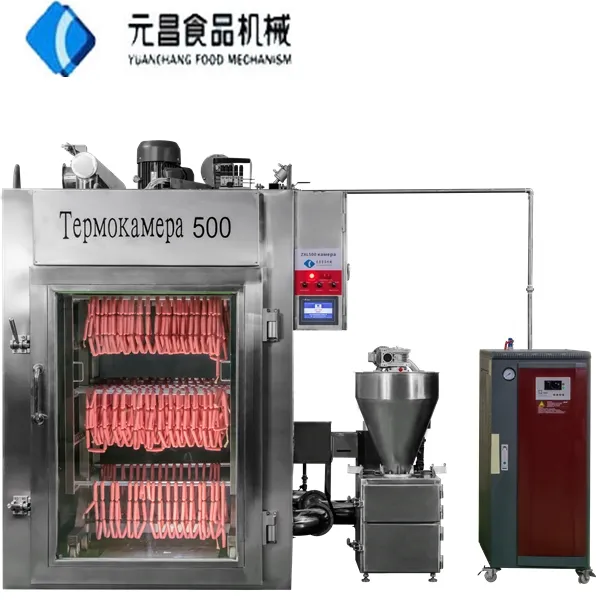
The Role of Industrial Smokehouse Systems in Food Processing
Ан industrial smokehouse is designed to handle large volumes of food products while maintaining precise control over temperature, humidity, and smoke density. These systems are widely used in processing meats such as ham, bacon, sausages, and poultry, as well as fish and even cheese. The primary purpose of smokehouse equipment is not only to enhance flavor but also to extend shelf life by reducing microbial activity through controlled smoking and cooking processes.
Modern коммерческое коптильное оборудование integrates advanced technologies such as programmable logic controllers (PLCs), automated airflow systems, and digital monitoring. These features allow operators to replicate exact smoking conditions, ensuring product consistency across batches. This is particularly important for large-scale food manufacturers who must comply with strict regulatory standards and maintain brand reliability.
In addition, contemporary smoke house equipment often supports multiple functions, including drying, cooking, roasting, and smoking within a single chamber. This multifunctionality reduces the need for separate processing units, saving both space and operational costs.
Key Features of Commercial Smokehouse Equipment
When selecting коммерческое коптильное оборудование, several key features should be considered to ensure optimal performance and return on investment. One of the most important aspects is temperature and humidity control. Advanced smokehouse equipment allows precise adjustments, which are essential for achieving the desired texture and flavor profiles in different food products.
Another critical feature is the smoke generation system. High-quality industrial smokehouse units use efficient smoke generators that can produce natural smoke from wood chips, sawdust, or liquid smoke alternatives. This flexibility enables manufacturers to tailor flavors to meet diverse consumer preferences.
Automation is another defining characteristic of modern smoke house equipment. Automated loading systems, programmable recipes, and real-time monitoring significantly reduce labor requirements and human error. With automation, operators can manage multiple production cycles simultaneously, improving overall productivity.
Energy efficiency and sustainability are also increasingly important. Many newer коммерческое коптильное оборудование models are designed with energy-saving technologies, such as heat recovery systems and insulated chambers, which help reduce operational costs and environmental impact.
Applications and Benefits in the Food Industry
The application of industrial smokehouse systems extends across various segments of the food industry. In meat processing plants, smokehouse equipment is essential for producing smoked sausages, cured meats, and ready-to-eat products. In the seafood industry, it is used for smoking salmon, trout, and other fish varieties, enhancing both flavor and preservation.
One of the main benefits of using коммерческое коптильное оборудование is consistency. Unlike traditional smoking methods, which can be unpredictable, modern systems ensure uniform results in every batch. This consistency is crucial for maintaining product quality and meeting consumer expectations.
Food safety is another significant advantage. Advanced smoke house equipment is designed to meet stringent hygiene standards, with features such as stainless steel construction, easy-to-clean surfaces, and controlled environments that minimize contamination risks.
Moreover, the use of industrial smokehouse technology allows for scalability. Businesses can start with smaller units and expand their operations by integrating larger or additional systems as demand grows. This flexibility makes smokehouse equipment suitable for both small-scale producers and large industrial operations.
Future Trends in Smokehouse Equipment Technology
The future of коммерческое коптильное оборудование is shaped by innovation and sustainability. As the food industry continues to evolve, manufacturers are focusing on developing smarter, more efficient systems. One emerging trend is the integration of Internet of Things (IoT) technology into smoke house equipment, enabling remote monitoring and control through digital platforms.
Another trend is the increasing demand for eco-friendly solutions. Modern industrial smokehouse systems are being designed to reduce emissions and energy consumption, aligning with global sustainability goals. This includes the use of cleaner smoke generation methods and improved filtration systems.
Customization is also becoming more important. Food producers are seeking smokehouse equipment that can be tailored to specific products and processes. This includes adjustable racks, modular designs, and customizable smoking programs that allow for greater flexibility in production.
Finally, there is a growing interest in preserving traditional flavors while using modern technology. Advanced коммерческое коптильное оборудование can replicate artisanal smoking techniques, combining authenticity with efficiency. This allows producers to offer high-quality smoked products that appeal to both traditional and modern consumers.
In conclusion, industrial smokehouse systems are an essential component of modern food processing. With advancements in smoke house equipment и коммерческое коптильное оборудование, manufacturers can achieve higher efficiency, better product quality, and improved food safety. As technology continues to evolve, the role of smokehouse equipment will only become more significant in meeting the demands of a dynamic and growing food industry.
By investing in the right industrial smokehouse solutions, businesses can enhance their production capabilities, reduce costs, and deliver consistently high-quality products to the market.

-
Advancing Meat Processing Efficiency with Meat Vacuum Mixer, Meat Tumbler Mixer, and Vacuum Meat MixerНовостиApr.22,2026
-
The Role of Meat Filling Machine and Salami Filling Machine in Modern Food ProcessingНовостиApr.22,2026
-
The Role of Vacuum Bowl Chopper and Silent Cutter Machine in Modern Food ProcessingНовостиApr.22,2026
-
Meat Dicing Technology in Modern Food Processing IndustryНовостиApr.22,2026
-
The Role of Smoke House Technology in Modern Meat Processing IndustryНовостиApr.08,2026