

- Afrikaans
- Albanian
- Amharic
- Arabic
- Armenian
- Azerbaijani
- Basque
- Belarusian
- Bengali
- Bosnian
- Bulgarian
- Catalan
- Cebuano
- chinese_simplified
- chinese_traditional
- Corsican
- Croatian
- Czech
- Danish
- Dutch
- English
- Esperanto
- Estonian
- Finnish
- French
- Frisian
- Galician
- Georgian
- German
- Greek
- Gujarati
- haitian_creole
- hausa
- hawaiian
- Hebrew
- Hindi
- Miao
- Hungarian
- Icelandic
- igbo
- Indonesian
- irish
- Italian
- Japanese
- Javanese
- Kannada
- kazakh
- Khmer
- Rwandese
- Korean
- Kurdish
- Kyrgyz
- Lao
- Latin
- Latvian
- Lithuanian
- Luxembourgish
- Macedonian
- Malgashi
- Malay
- Malayalam
- Maltese
- Maori
- Marathi
- Mongolian
- Myanmar
- Nepali
- Norwegian
- Norwegian
- Occitan
- Pashto
- Persian
- Polish
- Portuguese
- Punjabi
- Romanian
- Russian
- Samoan
- scottish-gaelic
- Serbian
- Sesotho
- Shona
- Sindhi
- Sinhala
- Slovak
- Slovenian
- Somali
- Spanish
- Sundanese
- Swahili
- Swedish
- Tagalog
- Tajik
- Tamil
- Tatar
- Telugu
- Thai
- Turkish
- Turkmen
- Ukrainian
- Urdu
- Uighur
- Uzbek
- Vietnamese
- Welsh
- Bantu
- Yiddish
- Yoruba
- Zulu

Industrial Meat Grinders: Efficient Solutions for Frozen and Fresh Meat Processing
In the modern food and meat processing industry, efficiency, consistency, and hygiene are essential for producing high-quality meat products. One of the most important machines in this sector is the industrial meat grinder, which is widely used to process fresh meat and frozen meat blocks into uniform minced products.
Whether processing fresh cuts or frozen blocks, industrial grinders play a critical role in ensuring consistent texture, precise particle size, and high production efficiency. These machines are widely used in industrial meat processing plants, food factories, and large-scale sausage production lines.
From fresh meat cuts to large frozen meat blocks, different types of industrial grinders allow processors to meet the demands of high-volume production. Specialized machines such as frozen meat grinders and frozen block grinders enable efficient processing of frozen meat while minimizing labor and maintaining strict food safety standards.
This article explores the technology, applications, and benefits of industrial meat grinders in modern food and meat processing.
Types of Meat Grinders and Their Applications
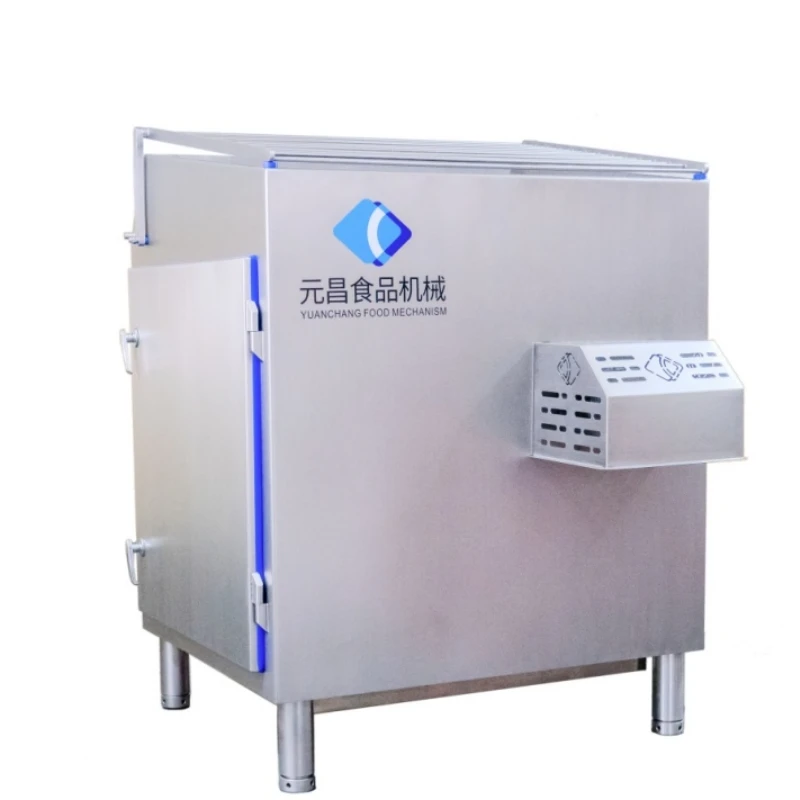
The term industrial meat grinder refers to a range of heavy-duty machines designed to process fresh or frozen meat into minced or ground products. These machines are widely used in meat processing plants, commercial food factories, and large-scale food production facilities.
A grinder tal-laħam iffriżat is specifically engineered to handle frozen meat blocks that are difficult to process using conventional grinding equipment. Equipped with high-torque motors and durable cutting systems, these machines can efficiently break down frozen meat while maintaining uniform particle size.
For large-scale operations, an grinder tal-laħam iffriżat industrijali is commonly used. These machines are designed for continuous high-capacity production, allowing factories to grind large quantities of meat efficiently. Industrial grinders can process frozen blocks as well as smaller frozen pieces, providing flexibility for different production requirements.
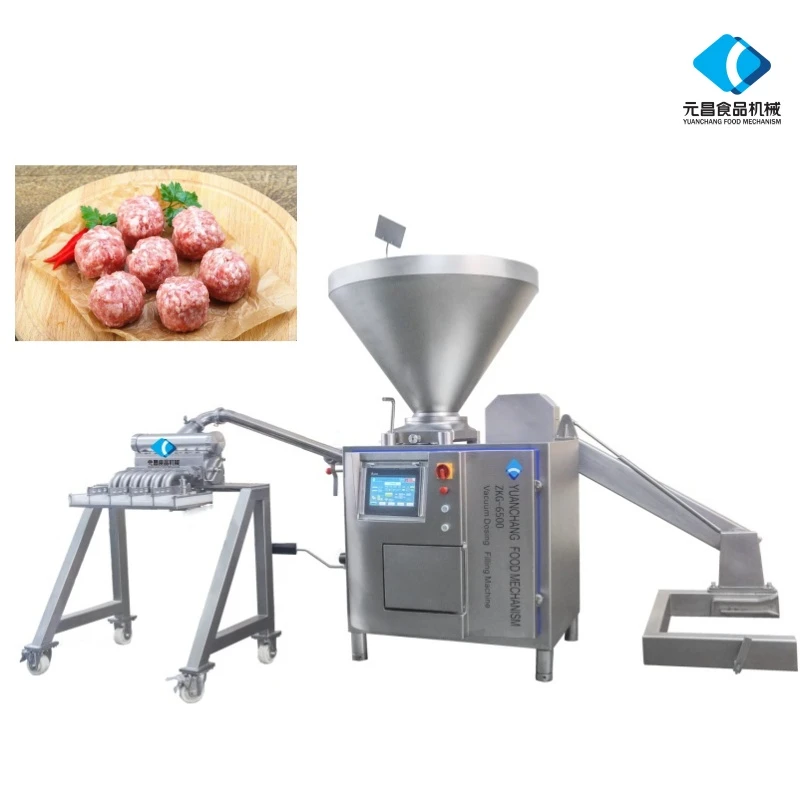
When processing fresh raw materials, fresh meat can be quickly transformed into minced meat for products such as sausages, burger patties, meatballs, and prepared food fillings. Advanced grinding systems use precision cutting plates and knives to ensure consistent texture and optimal product quality.
Specialized equipment such as frozen block grinders allows processors to grind large frozen meat blocks directly without thawing. This capability is critical for maintaining hygiene, reducing bacterial growth risks, and improving production efficiency.
Modern grinding systems can process a wide range of raw materials, including beef, pork, poultry, and lamb, making them highly versatile for diversified food production.
Benefits of Using Industrial Meat Grinders
Using an grinder tal-laħam iffriżat industrijali provides numerous advantages for modern meat processing operations.
High Efficiency and Productivity
Industrial grinders are designed for high-capacity production environments. Powerful motors and heavy-duty cutting systems allow the machine to process large volumes of meat continuously, significantly improving production efficiency.
Consistent Product Quality
Industrial grinding systems ensure uniform particle size and consistent texture, which are essential for products such as sausages, minced meat, burger patties, and ready-to-cook meals. Consistent grinding improves cooking performance, product appearance, and overall product quality.
Versatility in Meat Processing
Modern industrial meat grinders can handle both fresh meat and frozen meat blocks, making them suitable for a wide variety of meat processing applications. Different grinding plates and cutting configurations allow processors to produce different particle sizes depending on the product requirements.
Improved Hygiene and Food Safety
Industrial grinders are typically constructed with food-grade stainless steel and designed for easy cleaning and sanitation. Removable components and smooth machine surfaces help food processors comply with strict hygiene standards in the food industry.
Reduced Labor Requirements
Manual meat processing is labor-intensive and inefficient. Automated grinding systems significantly reduce manual labor while improving processing speed and consistency, allowing operators to focus on quality control and production management.
Reduced Raw Material Waste
Precision grinding systems help processors control product output more accurately, minimizing waste caused by uneven grinding or over-processing. This is especially important when processing high-value meat raw materials.
By integrating industrial meat grinders into production lines, food processors can improve efficiency, product consistency, and food safety compliance.
Applications of Meat Grinders in the Food and Meat Industry
Industrial meat grinders are widely used throughout the food processing industry. From large meat processing plants to commercial food manufacturing facilities, these machines are essential for transforming raw meat into value-added food products.
A grinder tal-laħam iffriżat is particularly important for facilities that handle frozen meat blocks. These machines enable direct grinding of frozen raw materials without the need for thawing, helping preserve meat quality and reduce microbial risks.
Similarly, an grinder tal-laħam iffriżat industrijali is ideal for factories producing large quantities of minced meat, sausages, burger patties, and ready-to-cook products.
For specialized food production, fresh meat can also be processed into various products such as kebabs, dumpling fillings, and prepared meat mixtures. Advanced grinding technology ensures consistent texture and uniform particle distribution.
Frozen block grinding systems are particularly valuable in large-scale meat storage and international supply chains, where frozen meat blocks are commonly used as raw materials.
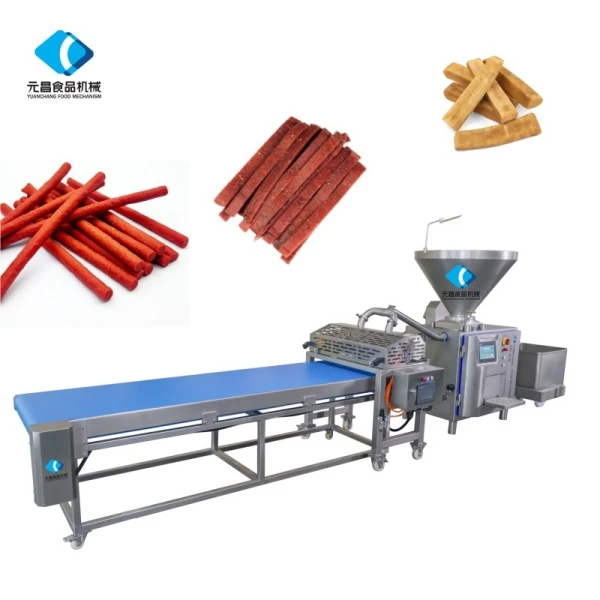
Industrial grinding machines are also widely used in sausage production lines, where consistent minced meat quality is essential for proper seasoning distribution and casing filling.
Overall, industrial meat grinders provide high efficiency, reliability, and processing flexibility, making them indispensable equipment in modern food manufacturing.
Conclusion
In the modern food and meat processing industry, magni tat-tħin tal-laħam industrijali play a crucial role in producing high-quality minced and ground meat products.
Machines such as frozen meat grinders, industrial frozen meat grinders, and frozen block grinders enable processors to efficiently handle both fresh and frozen meat while maintaining high hygiene standards and consistent product quality.
By integrating advanced grinding technology into production lines, food processing facilities can significantly improve productivity, reduce labor costs, and maintain stable product quality across large production batches.
Whether producing sausages, burger patties, meatballs, or ready-to-cook meals, industrial meat grinders remain essential equipment that enhances efficiency, precision, and profitability in modern meat processing operations.
-
The Role of Smoke House Technology in Modern Meat Processing IndustryAħbarijietApr.08,2026
-
The Role of Frozen Meat Slicing Machines in Modern Meat Processing IndustryAħbarijietApr.08,2026
-
The Importance of Meat Dicing and Cutting Machines in Modern Meat ProcessingAħbarijietApr.08,2026
-
The Essential Role of Meat Grinding Technology in Modern Meat Processing IndustryAħbarijietApr.08,2026
-
Advancements in Meat Processing Equipment: The Role of Vacuum Stuffers and Filling MachinesAħbarijietApr.08,2026
-
Vacuum Bowl Cutter ZKZB-125-Hebei Yuanchang|Vacuum Processing&Stainless Steel ConstructionAħbarijietMar.16,2026