

- Afrikaans
- Albanian
- Amharic
- Arabic
- Armenian
- Azerbaijani
- Basque
- Belarusian
- Bengali
- Bosnian
- Bulgarian
- Catalan
- Cebuano
- chinese_simplified
- chinese_traditional
- Corsican
- Croatian
- Czech
- Danish
- Dutch
- English
- Esperanto
- Estonian
- Finnish
- French
- Frisian
- Galician
- Georgian
- German
- Greek
- Gujarati
- haitian_creole
- hausa
- hawaiian
- Hebrew
- Hindi
- Miao
- Hungarian
- Icelandic
- igbo
- Indonesian
- irish
- Italian
- Japanese
- Javanese
- Kannada
- kazakh
- Khmer
- Rwandese
- Korean
- Kurdish
- Kyrgyz
- Lao
- Latin
- Latvian
- Lithuanian
- Luxembourgish
- Macedonian
- Malgashi
- Malay
- Malayalam
- Maltese
- Maori
- Marathi
- Mongolian
- Myanmar
- Nepali
- Norwegian
- Norwegian
- Occitan
- Pashto
- Persian
- Polish
- Portuguese
- Punjabi
- Romanian
- Russian
- Samoan
- scottish-gaelic
- Serbian
- Sesotho
- Shona
- Sindhi
- Sinhala
- Slovak
- Slovenian
- Somali
- Spanish
- Sundanese
- Swahili
- Swedish
- Tagalog
- Tajik
- Tamil
- Tatar
- Telugu
- Thai
- Turkish
- Turkmen
- Ukrainian
- Urdu
- Uighur
- Uzbek
- Vietnamese
- Welsh
- Bantu
- Yiddish
- Yoruba
- Zulu

The Essential Role of Meat Grinding Technology in Modern Meat Processing Industry
The global meat processing industry relies heavily on advanced machinery to ensure efficiency, consistency, and food safety. Among the most critical technologies used today are the mihini miiti, nga miihini miihini ahumahi, and specialized equipment such as the miro kai tio a mīhini mīhini tio ahumahi. These machines form the backbone of meat production lines, transforming raw materials into uniform products ready for further processing or packaging.
As consumer demand for processed meat products continues to rise, businesses must invest in reliable taputapu tukatuka kai mīti to maintain quality and competitiveness. From handling te kai hou mo te huri to processing frozen raw materials, modern grinding technology has revolutionized how meat is prepared on an industrial scale.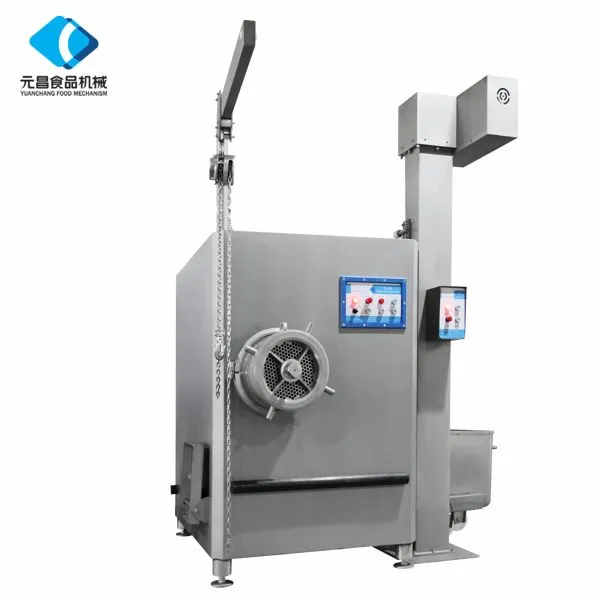
The Function and Importance of Meat Grinding Machines
A mihini miiti is designed to reduce large cuts of meat into smaller, uniform particles. This process is essential for producing a wide range of products, including sausages, burgers, meatballs, and ready-to-cook items. The machine typically consists of a feeding tray, screw conveyor, cutting blades, and grinding plates, all working together to achieve the desired texture.
One of the primary advantages of using advanced taputapu tukatuka kai mīti is consistency. Uniform grinding ensures that each batch of product meets the same quality standards, which is crucial for brand reputation and consumer satisfaction. In addition, consistent particle size improves the mixing process when spices and other ingredients are added.
For small-scale operations, basic grinders may be sufficient. However, large-scale facilities rely on nga miihini miihini ahumahi that can handle high volumes of production. These machines are built with powerful motors and durable components, allowing them to operate continuously under demanding conditions.
Another important factor is hygiene. Modern mihini miiti systems are constructed using stainless steel and designed for easy cleaning. This minimizes the risk of contamination and helps companies comply with strict food safety regulations.
The efficiency of grinding equipment also impacts overall production speed. By reducing processing time, companies can increase output while maintaining high standards of quality. This is particularly important in today’s competitive market, where efficiency directly affects profitability.
Processing Fresh vs. Frozen Meat
One of the key considerations in meat processing is whether to use te kai hou mo te huri or frozen raw materials. Each approach has its own advantages, and the choice often depends on the specific application and production requirements.
Using te kai hou mo te huri allows for greater flexibility in texture and flavor. Fresh meat is easier to process and can be ground to various levels of coarseness or fineness. This makes it ideal for products that require a specific mouthfeel, such as premium sausages or gourmet burgers.
On the other hand, frozen meat processing has become increasingly common in industrial settings. A miro kai tio is specifically designed to handle meat that has been frozen at low temperatures. Grinding frozen meat helps maintain product integrity by preventing smearing and preserving the natural structure of the meat fibers.
For large-scale operations, the mīhini mīhini tio ahumahi offers significant advantages. These machines are capable of processing large blocks of frozen meat without the need for thawing, saving both time and energy. This not only improves efficiency but also reduces the risk of bacterial growth that can occur during thawing.
Additionally, frozen meat grinding can enhance product consistency. Since the meat remains firm during processing, it is easier to achieve uniform particle sizes. This is particularly important for products that require precise formulations.
Both methods—processing fresh and frozen meat—require specialized taputapu tukatuka kai mīti to ensure optimal results. By choosing the right equipment, manufacturers can adapt to different production needs and maintain high-quality standards.
Industrial Applications and Technological Advancements
Te whakamahi o nga miihini miihini ahumahi a mīhini mīhini tio ahumahi systems has transformed the meat processing industry. These machines are now an integral part of automated production lines, working seamlessly with other equipment such as mixers, fillers, and packaging systems.
One of the most significant advancements in this field is the integration of automation and digital control systems. Modern grinders are equipped with sensors and programmable settings that allow operators to monitor performance and adjust parameters in real time. This improves accuracy and reduces the likelihood of errors.
Energy efficiency is another important consideration. Advanced mihini miiti models are designed to consume less power while delivering higher output. This not only reduces operational costs but also supports sustainability efforts within the industry.
Safety features have also improved significantly. Industrial grinders are now equipped with protective guards, emergency stop functions, and automated shut-off systems to ensure the safety of operators. These features are essential in high-volume production environments where machinery operates continuously.
The versatility of modern taputapu tukatuka kai mīti allows manufacturers to produce a wide range of products. Whether working with te kai hou mo te huri or using an mīhini mīhini tio ahumahi, companies can adapt their processes to meet changing consumer demands.
Furthermore, the growing popularity of alternative protein products has expanded the role of grinding equipment. Many nga miihini miihini ahumahi are now used to process plant-based ingredients, demonstrating their adaptability beyond traditional meat applications.
In conclusion, the mihini miiti is a fundamental component of the modern meat processing industry. From handling te kai hou mo te huri to processing frozen materials with a miro kai tio ranei mīhini mīhini tio ahumahi, these machines play a crucial role in ensuring efficiency, consistency, and food safety.
The continued development of nga miihini miihini ahumahi and other taputapu tukatuka kai mīti reflects the industry’s commitment to innovation and quality. By investing in advanced technology, manufacturers can improve productivity, reduce waste, and meet the evolving needs of consumers.
As the demand for processed meat products continues to grow, the importance of reliable and efficient grinding equipment will only increase. Companies that embrace these advancements will be well-positioned to succeed in the competitive global market.
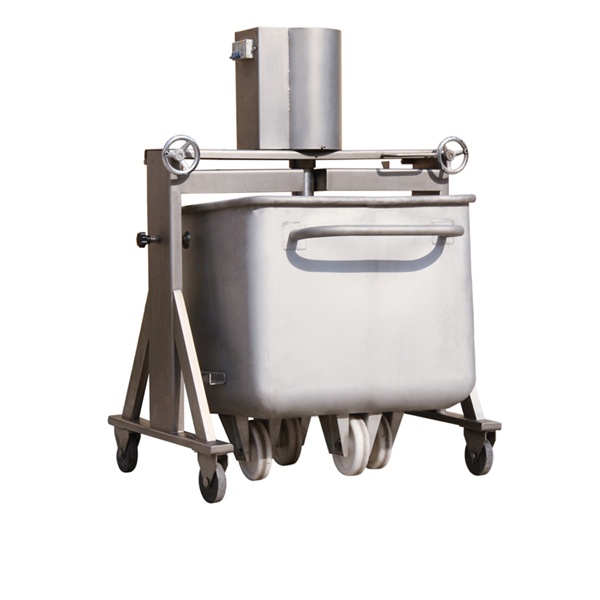
-
The Role of Smoke House Technology in Modern Meat Processing IndustryRongorongoApr.08,2026
-
The Role of Frozen Meat Slicing Machines in Modern Meat Processing IndustryRongorongoApr.08,2026
-
The Importance of Meat Dicing and Cutting Machines in Modern Meat ProcessingRongorongoApr.08,2026
-
Advancements in Meat Processing Equipment: The Role of Vacuum Stuffers and Filling MachinesRongorongoApr.08,2026
-
Vacuum Bowl Cutter ZKZB-125-Hebei Yuanchang|Vacuum Processing&Stainless Steel ConstructionRongorongoMar.16,2026