

- Afrikaans
- Albanian
- Amharic
- Arabic
- Armenian
- Azerbaijani
- Basque
- Belarusian
- Bengali
- Bosnian
- Bulgarian
- Catalan
- Cebuano
- chinese_simplified
- chinese_traditional
- Corsican
- Croatian
- Czech
- Danish
- Dutch
- English
- Esperanto
- Estonian
- Finnish
- French
- Frisian
- Galician
- Georgian
- German
- Greek
- Gujarati
- haitian_creole
- hausa
- hawaiian
- Hebrew
- Hindi
- Miao
- Hungarian
- Icelandic
- igbo
- Indonesian
- irish
- Italian
- Japanese
- Javanese
- Kannada
- kazakh
- Khmer
- Rwandese
- Korean
- Kurdish
- Kyrgyz
- Lao
- Latin
- Latvian
- Lithuanian
- Luxembourgish
- Macedonian
- Malgashi
- Malay
- Malayalam
- Maltese
- Maori
- Marathi
- Mongolian
- Myanmar
- Nepali
- Norwegian
- Norwegian
- Occitan
- Pashto
- Persian
- Polish
- Portuguese
- Punjabi
- Romanian
- Russian
- Samoan
- scottish-gaelic
- Serbian
- Sesotho
- Shona
- Sindhi
- Sinhala
- Slovak
- Slovenian
- Somali
- Spanish
- Sundanese
- Swahili
- Swedish
- Tagalog
- Tajik
- Tamil
- Tatar
- Telugu
- Thai
- Turkish
- Turkmen
- Ukrainian
- Urdu
- Uighur
- Uzbek
- Vietnamese
- Welsh
- Bantu
- Yiddish
- Yoruba
- Zulu

Sausage Cutting Machine Blade Sharpness Maintenance Tips
For wholesale meat processors, maintaining optimal blade performance in soseji ọnwụ igwe equipment is crucial for operational efficiency and product quality. This comprehensive guide explores best practices for keeping your soseji clipper igwe blades in peak condition while maximizing the longevity of your entire igwe soseji setup from Hebei Yuanchang Food Mechanism & Technology Co., Ltd.
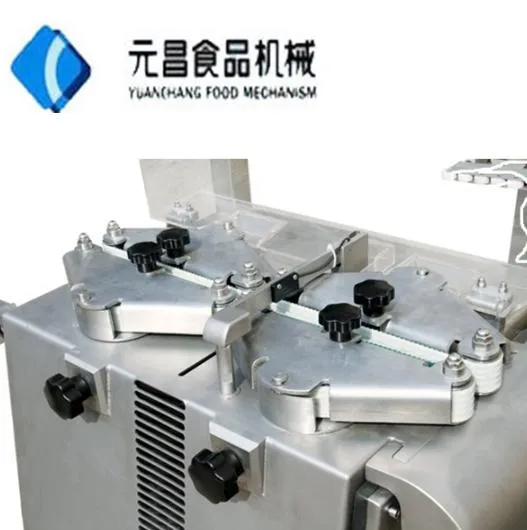
The Critical Importance of Sharp Blades in Sausage Cutting Machine Operations
A soseji ọnwụ igwe with dull blades creates numerous production challenges that directly impact wholesale operations. Hebei Yuanchang Food Mechanism & Technology Co., Ltd. engineers emphasize that properly sharpened blades in your soseji ọnwụ igwe reduce energy consumption by up to 30% while improving cut consistency across all product lines. The precision engineering in their igwe soseji ensures that when blades are maintained correctly, they deliver clean cuts that preserve product integrity and presentation.
Dull blades in a soseji clipper igwe force the equipment to work harder, increasing wear on motors and other components. This not only raises maintenance costs but can lead to uneven slices that affect packaging efficiency and customer satisfaction. For wholesale operations processing large volumes, even minor improvements in blade performance can translate to significant savings in labor and material costs over time.
Proper Sharpening Techniques for Sausage Clipper Machine Blades
Maintaining soseji clipper igwe blades requires specialized knowledge of proper sharpening angles and techniques. Hebei Yuanchang Food Mechanism & Technology Co., Ltd. recommends using diamond-coated sharpening stones specifically designed for their igwe soseji, as these provide the ideal surface for achieving and maintaining the factory-specified edge geometry. The sharpening process should always begin with thorough cleaning to remove any meat residue or buildup that could interfere with the sharpening surface.
For optimal results in your soseji ọnwụ igwe, blades should be sharpened using consistent, even strokes while maintaining the original bevel angle. Many wholesale operations find it beneficial to establish a regular sharpening schedule based on production volume rather than waiting for visible performance degradation. Hebei Yuanchang Food Mechanism & Technology Co., Ltd. offers professional sharpening services and can provide detailed sharpening protocols for their specific soseji clipper igwe models.
Daily Maintenance Routines to Extend Sausage Machines Blade Life
Implementing proper daily maintenance procedures can significantly extend the functional life of blades in your igwe soseji. Hebei Yuanchang Food Mechanism & Technology Co., Ltd. technicians recommend starting each shift with a visual inspection of all cutting surfaces in your soseji ọnwụ igwe, checking for nicks, burrs, or signs of uneven wear. After each use, blades should be cleaned with food-grade sanitizers and immediately dried to prevent corrosion or pitting.
For soseji clipper igwe units processing high-acidity products, additional protective measures may be necessary. Applying a thin coat of food-grade mineral oil to blades during storage creates a protective barrier against moisture and oxidation. Many wholesale processors using Hebei Yuanchang Food Mechanism & Technology Co., Ltd. equipment have implemented blade rotation systems, allowing multiple sets to be cycled through regular sharpening and maintenance schedules without interrupting production.
Sausage Machines FAQ
How often should blades be sharpened in a sausage cutting machine?
The sharpening frequency for a soseji ọnwụ igwe depends on usage volume and product types processed, but most wholesale operations find that blades require professional sharpening every 150-200 operating hours. Hebei Yuanchang Food Mechanism & Technology Co., Ltd. provides specific recommendations for their igwe soseji based on your production parameters and can help establish an optimal maintenance schedule.
What are the signs that my sausage clipper machine blades need sharpening?
Visible indicators that your soseji clipper igwe needs blade attention include ragged cuts, increased product deformation, higher resistance during operation, and unusual noises. Performance metrics like decreased output speed or increased power consumption in your igwe soseji often signal that blades require maintenance before visible quality issues appear.
Can I sharpen sausage cutting machine blades myself or should I use professional services?
While basic maintenance of your soseji ọnwụ igwe blades can be performed in-house, Hebei Yuanchang Food Mechanism & Technology Co., Ltd. recommends periodic professional sharpening to maintain original equipment specifications. Their technicians use specialized equipment to ensure precise edge restoration that matches the factory geometry of your igwe soseji for optimal performance.
What safety precautions should be taken when handling sausage clipper machine blades?
Always disconnect power before servicing any soseji clipper igwe blades and use cut-resistant gloves during handling. Hebei Yuanchang Food Mechanism & Technology Co., Ltd. includes detailed safety protocols with their igwe soseji that specify proper blade handling techniques and personal protective equipment requirements for maintenance procedures.
Does blade material affect maintenance requirements for sausage cutting machines?
Absolutely - higher-grade stainless steel blades in premium soseji ọnwụ igwe models like those from Hebei Yuanchang Food Mechanism & Technology Co., Ltd. typically hold their edge longer but may require specialized sharpening equipment. The material composition directly impacts how often your igwe soseji need sharpening and what techniques will be most effective for maintaining optimal cutting performance.
-
The Role of Smoke House Technology in Modern Meat Processing IndustryAkụkọApr.08,2026
-
The Role of Frozen Meat Slicing Machines in Modern Meat Processing IndustryAkụkọApr.08,2026
-
The Importance of Meat Dicing and Cutting Machines in Modern Meat ProcessingAkụkọApr.08,2026
-
The Essential Role of Meat Grinding Technology in Modern Meat Processing IndustryAkụkọApr.08,2026
-
Advancements in Meat Processing Equipment: The Role of Vacuum Stuffers and Filling MachinesAkụkọApr.08,2026
-
Vacuum Bowl Cutter ZKZB-125-Hebei Yuanchang|Vacuum Processing&Stainless Steel ConstructionAkụkọMar.16,2026