

- Afrikaans
- Albanian
- Amharic
- Arabic
- Armenian
- Azerbaijani
- Basque
- Belarusian
- Bengali
- Bosnian
- Bulgarian
- Catalan
- Cebuano
- chinese_simplified
- chinese_traditional
- Corsican
- Croatian
- Czech
- Danish
- Dutch
- English
- Esperanto
- Estonian
- Finnish
- French
- Frisian
- Galician
- Georgian
- German
- Greek
- Gujarati
- haitian_creole
- hausa
- hawaiian
- Hebrew
- Hindi
- Miao
- Hungarian
- Icelandic
- igbo
- Indonesian
- irish
- Italian
- Japanese
- Javanese
- Kannada
- kazakh
- Khmer
- Rwandese
- Korean
- Kurdish
- Kyrgyz
- Lao
- Latin
- Latvian
- Lithuanian
- Luxembourgish
- Macedonian
- Malgashi
- Malay
- Malayalam
- Maltese
- Maori
- Marathi
- Mongolian
- Myanmar
- Nepali
- Norwegian
- Norwegian
- Occitan
- Pashto
- Persian
- Polish
- Portuguese
- Punjabi
- Romanian
- Russian
- Samoan
- scottish-gaelic
- Serbian
- Sesotho
- Shona
- Sindhi
- Sinhala
- Slovak
- Slovenian
- Somali
- Spanish
- Sundanese
- Swahili
- Swedish
- Tagalog
- Tajik
- Tamil
- Tatar
- Telugu
- Thai
- Turkish
- Turkmen
- Ukrainian
- Urdu
- Uighur
- Uzbek
- Vietnamese
- Welsh
- Bantu
- Yiddish
- Yoruba
- Zulu

Food Processing Machine Sanitation Standards for Meat Industry
ʻO ka mīkini hana meaʻai industry plays a critical role in ensuring food safety, particularly in meat processing where sanitation standards are paramount. As a leading manufacturer, Hebei Yuanchang Food Mechanism & Technology Co., Ltd. specializes in designing and supplying high-quality mea hoʻolako meaʻai rely on to meet stringent hygiene requirements. This comprehensive guide explores essential sanitation standards, best practices, and technological advancements in mīkini hana meaʻai systems for the meat industry.
Sanitation Standards for Food Processing Machine in Meat Industry
Maintaining rigorous sanitation standards for mīkini hana meaʻai equipment is non-negotiable in meat processing facilities. Regulatory bodies like the USDA, FDA, and EU food safety authorities mandate specific requirements for equipment design, materials, and cleaning protocols. Hebei Yuanchang Food Mechanism & Technology Co., Ltd. engineers all mea hoʻolako meaʻai demand with these standards in mind, utilizing food-grade stainless steel (AISI 304 or 316) that resists corrosion and bacterial growth.
Critical sanitation features in modern mīkini hana meaʻai systems include smooth, crevice-free surfaces, self-draining designs, and CIP (Clean-in-Place) capabilities. For meat processing applications, equipment must withstand frequent high-temperature washing and chemical sanitization without degrading. Our mea hoʻolako meaʻai solutions incorporate these features while maintaining optimal processing efficiency and throughput.
Design Principles for Hygienic Meat Processing Equipment
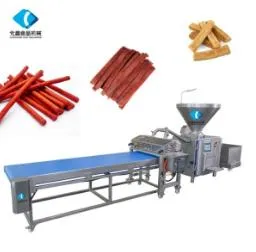
Hebei Yuanchang Food Mechanism & Technology Co., Ltd. follows EHEDG (European Hygienic Engineering & Design Group) principles when developing mīkini hana meaʻai systems for meat processing. Key design considerations include minimized dead spaces, radiused corners for easy cleaning, and quick-disconnect components that facilitate thorough sanitation. The mea hoʻolako meaʻai market increasingly demands equipment with reduced microbial harborage points, which we address through innovative design solutions.
ʻO kā mākou mīkini hana meaʻai range for meat processing includes specialized features like antimicrobial surface treatments, hygienic drive systems, and accessible inspection points. These design elements help processors meet FSSC 22000, SQF, and BRCGS food safety standards while maintaining production efficiency. The evolution of mea hoʻolako meaʻai offerings reflects the industry's growing focus on preventing cross-contamination and ensuring product safety.
Advanced Cleaning Technologies for Meat Processing Machines
Modern mīkini hana meaʻai sanitation has evolved beyond manual cleaning to incorporate advanced automated systems. Hebei Yuanchang Food Mechanism & Technology Co., Ltd. integrates cutting-edge sanitation technologies into our meat processing equipment, including dry steam cleaning systems, UV-C light sterilization, and enzymatic cleaning solutions. These innovations help mea hoʻolako meaʻai provide clients with more effective and sustainable cleaning options.
ʻO kā mākou mīkini hana meaʻai solutions for meat processing often feature sensor-based cleanliness verification and automated sanitation cycle tracking for compliance documentation. These technological advancements allow processors to reduce water usage by up to 40% while improving sanitation outcomes - a critical advantage for mea hoʻolako meaʻai serving water-conscious markets. The integration of IoT-enabled monitoring in our systems provides real-time sanitation status updates to quality control personnel.
Regulatory Compliance for Meat Processing Equipment
Navigating the complex regulatory landscape requires mīkini hana meaʻai manufacturers to maintain up-to-date certifications. Hebei Yuanchang Food Mechanism & Technology Co., Ltd. ensures all meat processing equipment meets or exceeds international standards including NSF/ANSI 14159-1, 3-A Sanitary Standards, and ISO 22000. For mea hoʻolako meaʻai, these certifications demonstrate compliance with the most stringent food safety protocols.
ʻO kā mākou mīkini hana meaʻai designs for meat processing undergo rigorous validation processes, including microbial testing and material compatibility assessments. This thorough approach gives mea hoʻolako meaʻai confidence in recommending our systems for high-risk applications like raw meat handling and ready-to-eat product processing. We maintain documentation packages that simplify our clients' audit processes and regulatory submissions.
Meat Processing Equipment FAQS
What are the most critical sanitation features to look for in food processing machine equipment?
When evaluating mīkini hana meaʻai options for meat processing, prioritize equipment with seamless welds, easy-disassembly designs, and corrosion-resistant materials. Hebei Yuanchang Food Mechanism & Technology Co., Ltd. designs all mea hoʻolako meaʻai products with these critical features, plus additional sanitation enhancements like rounded edges and sloped surfaces that prevent bacterial accumulation in processing environments.
How often should meat processing equipment undergo deep sanitation?
The frequency of deep sanitation for mīkini hana meaʻai systems in meat processing depends on production schedules and risk categories. Most facilities using our mea hoʻolako meaʻai solutions implement daily deep cleaning for high-contact surfaces, with full equipment teardown and sanitation weekly. Our equipment's design minimizes the time required for these critical cleaning procedures without compromising effectiveness.
What certifications should meat equipment suppliers provide for sanitation compliance?
Reputable mea hoʻolako meaʻai should provide documentation showing compliance with 3-A, EHEDG, and NSF standards at minimum. Hebei Yuanchang Food Mechanism & Technology Co., Ltd. maintains these plus additional certifications specific to mīkini hana meaʻai applications in meat processing, including material safety data sheets and cleanability validation reports for all equipment surfaces and components.
Can older meat processing equipment be upgraded to meet current sanitation standards?
Many existing mīkini hana meaʻai systems can be retrofitted with sanitation upgrades, though the feasibility depends on the original equipment design. Hebei Yuanchang Food Mechanism & Technology Co., Ltd. offers modernization services for meat processing facilities, including component replacements and surface treatments that bring older mea hoʻolako meaʻai products up to current hygiene standards at a fraction of full replacement cost.
How does equipment design impact sanitation chemical usage in meat processing?
Properly designed mīkini hana meaʻai systems significantly reduce chemical usage in meat processing sanitation. Our mea hoʻolako meaʻai solutions feature optimized surface finishes and geometries that enhance cleaning efficiency, typically reducing chemical consumption by 25-30% compared to conventional designs while achieving superior microbial reduction results.
Hebei Yuanchang Food Mechanism & Technology Co., Ltd. remains at the forefront of mīkini hana meaʻai innovation for the meat processing industry. Our commitment to advancing sanitation technology ensures mea hoʻolako meaʻai worldwide can provide their clients with the safest, most efficient processing solutions available. By combining rigorous engineering with ongoing research into food safety best practices, we continue to set new benchmarks for hygienic equipment design in the global meat industry.
-
The Role of Smoke House Technology in Modern Meat Processing IndustryNūhouApr.08,2026
-
The Role of Frozen Meat Slicing Machines in Modern Meat Processing IndustryNūhouApr.08,2026
-
The Importance of Meat Dicing and Cutting Machines in Modern Meat ProcessingNūhouApr.08,2026
-
The Essential Role of Meat Grinding Technology in Modern Meat Processing IndustryNūhouApr.08,2026
-
Advancements in Meat Processing Equipment: The Role of Vacuum Stuffers and Filling MachinesNūhouApr.08,2026
-
Vacuum Bowl Cutter ZKZB-125-Hebei Yuanchang|Vacuum Processing&Stainless Steel ConstructionNūhouMar.16,2026