

- Afrikaans
- Albanian
- Amharic
- Arabic
- Armenian
- Azerbaijani
- Basque
- Belarusian
- Bengali
- Bosnian
- Bulgarian
- Catalan
- Cebuano
- chinese_simplified
- chinese_traditional
- Corsican
- Croatian
- Czech
- Danish
- Dutch
- English
- Esperanto
- Estonian
- Finnish
- French
- Frisian
- Galician
- Georgian
- German
- Greek
- Gujarati
- haitian_creole
- hausa
- hawaiian
- Hebrew
- Hindi
- Miao
- Hungarian
- Icelandic
- igbo
- Indonesian
- irish
- Italian
- Japanese
- Javanese
- Kannada
- kazakh
- Khmer
- Rwandese
- Korean
- Kurdish
- Kyrgyz
- Lao
- Latin
- Latvian
- Lithuanian
- Luxembourgish
- Macedonian
- Malgashi
- Malay
- Malayalam
- Maltese
- Maori
- Marathi
- Mongolian
- Myanmar
- Nepali
- Norwegian
- Norwegian
- Occitan
- Pashto
- Persian
- Polish
- Portuguese
- Punjabi
- Romanian
- Russian
- Samoan
- scottish-gaelic
- Serbian
- Sesotho
- Shona
- Sindhi
- Sinhala
- Slovak
- Slovenian
- Somali
- Spanish
- Sundanese
- Swahili
- Swedish
- Tagalog
- Tajik
- Tamil
- Tatar
- Telugu
- Thai
- Turkish
- Turkmen
- Ukrainian
- Urdu
- Uighur
- Uzbek
- Vietnamese
- Welsh
- Bantu
- Yiddish
- Yoruba
- Zulu

High-Speed Sausage Twisting Machines and Filling and Linking Machines in the Meat Processing Industry
In the modern meat processing industry, efficiency, precision, and hygiene are critical for producing high-quality products. Among the most important equipment in sausage production are the high-speed sausage twisting machine and the filling and linking machine. These machines streamline the production process by automating filling, portioning, and linking sausages, allowing manufacturers to meet increasing demand while maintaining product consistency.
Sausage production is a complex process that requires careful handling of meat mixtures, accurate portioning, and consistent casing formation. Manual methods are labor-intensive, slow, and prone to errors, making automation a necessity in large-scale operations. Advanced machines like the filling and linking machine and the high-speed sausage twisting machine have revolutionized the industry, enabling processors to produce uniform sausages efficiently.
This article explores the technology, benefits, and applications of these machines in the meat processing sector, highlighting why they are essential for modern sausage manufacturing.
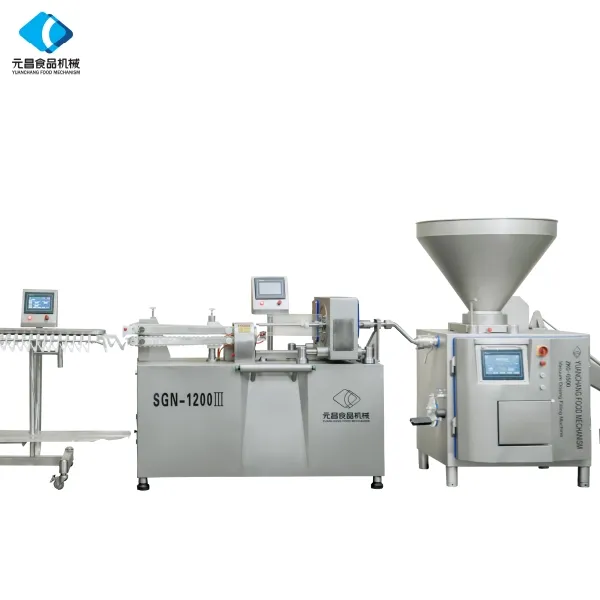
The Technology Behind High-Speed Sausage Twisting Machines
A high-speed sausage twisting machine is designed to automate the linking and twisting of sausages after they have been filled. In traditional sausage making, workers manually twist the casings to form individual links, a process that is slow, inconsistent, and physically demanding. The high-speed machine eliminates these challenges by performing twisting operations automatically at a controlled speed.
These machines work in conjunction with a sausage filler, ensuring that the meat mixture is evenly packed into the casing before twisting. Advanced models can adjust link length and twisting frequency, producing uniform sausages that meet specific size requirements. This precision is critical for retail packaging, portion control, and regulatory compliance.
High-speed twisting machines are also built to handle a variety of sausage types, including fresh, cooked, smoked, and seasoned products. Their adaptability allows processors to switch between different casing diameters and link sizes without significant downtime.
The efficiency of a high-speed sausage twisting machine translates into higher output and reduced labor costs. By automating the twisting process, meat processors can maintain consistent product quality, increase production speed, and minimize waste caused by irregularly twisted sausages.
Filling and Linking Machines: Streamlining Sausage Production
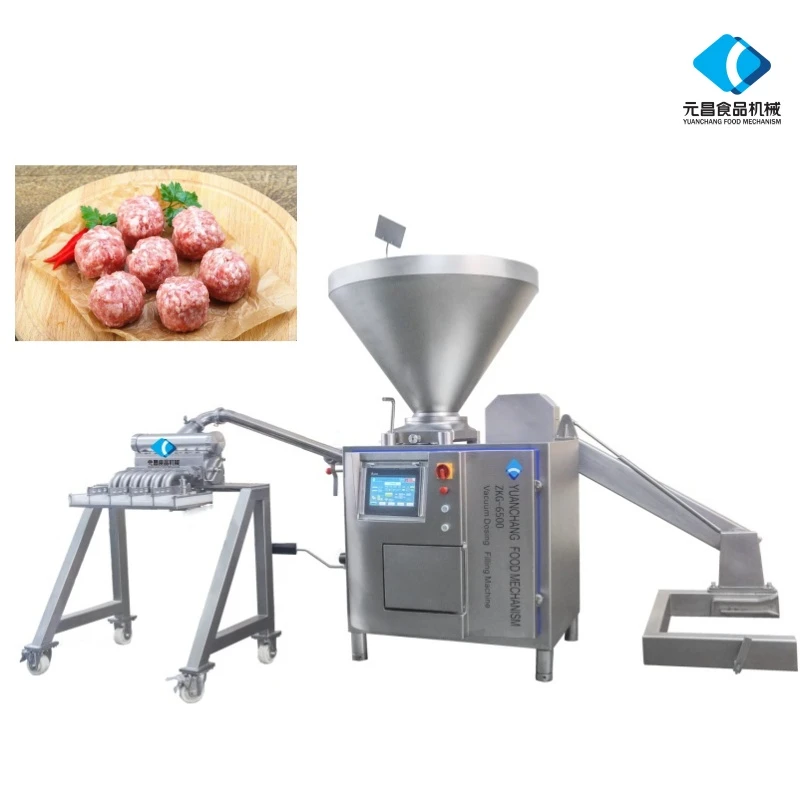
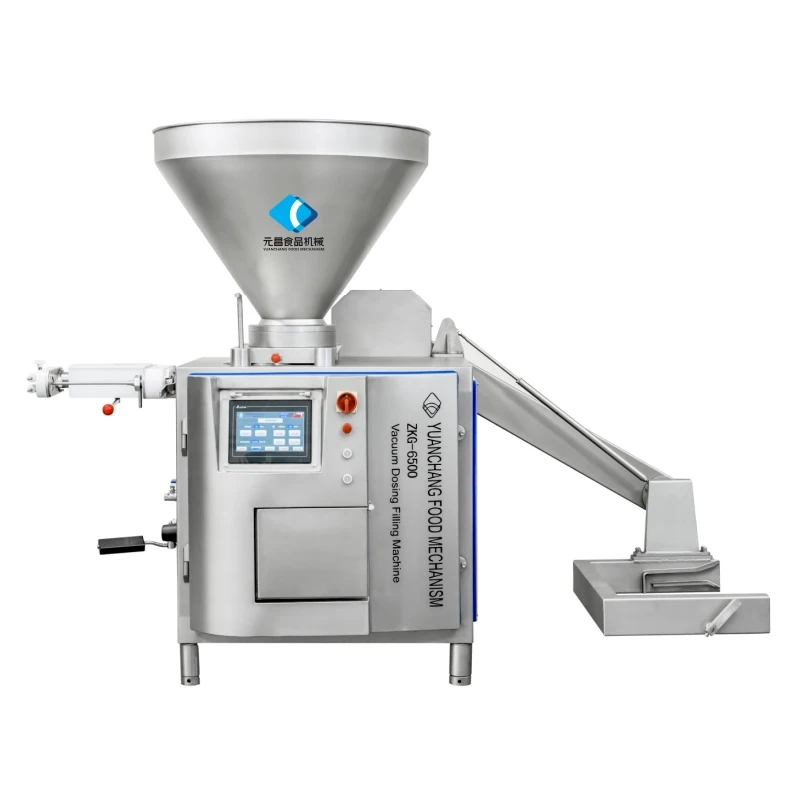
The filling and linking machine is a critical piece of equipment in modern sausage manufacturing. This machine combines two essential operations—filling the casing with meat mixture and linking individual sausages—into a single automated process.
By integrating filling and linking, manufacturers achieve precise portioning and consistent sausage length. The machine ensures that each sausage receives the correct amount of filling, preventing overstuffing or underfilling, which can lead to product defects or packaging challenges.
Filling and linking machines are especially valuable in high-volume production environments. They can process large batches of sausage mixture continuously, maintaining steady output while reducing manual handling. This not only increases efficiency but also enhances hygiene, as the meat mixture is exposed less frequently to potential contaminants.
Modern filling and linking machines often include programmable controls, allowing operators to set parameters such as sausage diameter, link length, and twisting speed. Some advanced models can even adjust automatically to different casing sizes, providing flexibility for producing multiple sausage types with minimal setup.
با استفاده از یک filling and linking machine also improves product consistency. Uniform sausages are easier to package, store, and transport, ensuring that customers receive a high-quality product every time. The automation of these machines reduces human error, which is particularly important in large-scale meat processing facilities.
Advantages of Automating Sausage Production
Integrating high-speed sausage twisting machines و filling and linking machines into production lines provides numerous advantages for meat processors.
Increased Productivity: Automation significantly increases the number of sausages produced per hour compared to manual methods. High-speed twisting machines can create links rapidly, while filling and linking machines maintain continuous flow of production.
Consistency and Quality: Uniform portioning and precise twisting ensure that all sausages are consistent in size and shape. This is critical for retail standards and brand reputation.
Labor Efficiency: Automating the most physically demanding tasks, such as twisting and portioning, reduces reliance on manual labor. Workers can focus on other critical areas like quality control, seasoning, and packaging.
کاهش ضایعات: By controlling the amount of meat in each sausage and ensuring proper casing use, these machines minimize product loss due to overfilling, underfilling, or uneven links.
Hygiene and Food Safety: Automated systems reduce the handling of meat, lowering the risk of contamination. Stainless steel construction and easy-to-clean components ensure compliance with food safety regulations.
Flexibility: Modern machines allow producers to adjust parameters for different sausage types, from thin snack sausages to thick bratwurst-style links. This versatility is essential for processors looking to expand product lines.
Overall, these advantages make automation a cornerstone of modern sausage production, enabling meat processors to meet market demand while maintaining quality and safety.
Applications in the Meat Processing Industry
High-speed sausage twisting machines و filling and linking machines are used across a wide range of meat processing applications. They are suitable for producing fresh, cooked, smoked, and specialty sausages for retail, foodservice, and industrial markets.
Large-scale processors rely on these machines to maintain consistent output for supermarket-ready products. Smaller artisanal producers also benefit from compact versions that allow precise control over portion size and casing use.
These machines are compatible with various meat types, including pork, beef, chicken, lamb, and mixed meat blends. They also accommodate different casing materials, such as natural, collagen, or synthetic casings, making them versatile for diverse sausage products.
By integrating automated filling and linking machines و high-speed sausage twisting machines into production lines, meat processors can achieve faster production cycles, consistent product quality, and improved operational efficiency.
In the meat processing industry, automation is essential for efficiency, quality, and food safety. The high-speed sausage twisting machine and the filling and linking machine have transformed sausage production by streamlining the filling, portioning, and linking processes.
These machines increase productivity, ensure uniformity, reduce labor costs, and improve hygiene, making them indispensable for modern meat processors. Whether producing high-volume retail sausages or specialty products, automated sausage machines provide consistency, flexibility, and efficiency that manual methods cannot match.
By investing in high-speed sausage twisting machines و filling and linking machines, meat processing companies can enhance production capacity, minimize waste, and maintain the high standards required in today’s competitive market.
-
The Role of Smoke House Technology in Modern Meat Processing IndustryاخبارApr.08,2026
-
The Role of Frozen Meat Slicing Machines in Modern Meat Processing IndustryاخبارApr.08,2026
-
The Importance of Meat Dicing and Cutting Machines in Modern Meat ProcessingاخبارApr.08,2026
-
The Essential Role of Meat Grinding Technology in Modern Meat Processing IndustryاخبارApr.08,2026
-
Advancements in Meat Processing Equipment: The Role of Vacuum Stuffers and Filling MachinesاخبارApr.08,2026
-
Vacuum Bowl Cutter ZKZB-125-Hebei Yuanchang|Vacuum Processing&Stainless Steel ConstructionاخبارMar.16,2026